
The Liberation of Mobile Location Data: A New Frontier for Privacy Risks
Report from Dagstuhl: The liberation of mobile location data and its implications for privacy research
This position paper, stemming from a Dagstuhl seminar, analyzes the fundamental shift of mobile location data collection from regulated telecommunications operators to a complex, international ecosystem of mobile platform service providers (MPSPs) and app service providers (ASPs). It explores the technical mechanisms of data flow—including GPS, WiFi positioning, and sensor-based inference—while detailing the escalating privacy risks in the modern app economy.
TL;DR
User location data has escaped the grip of regulated telecom operators and is now flowing into a global, unregulated ecosystem of app developers and platform giants. This paper details how modern smartphones use a sophisticated mix of GPS, WiFi, and even motion sensors to profile users, rendering traditional privacy protections and "anonymization" largely obsolete.
Background: The Paradigm Shift
Historically, location data was the exclusive domain of Mobile Network Operators (MNOs), strictly governed by national laws for emergency services and billing. The emergence of the smartphone app economy has "liberated" this data. Today, Mobile Platform Service Providers (MPSPs) like Google and Apple, and Application Service Providers (ASPs), collect movement data at an unprecedented scale.
Within this new coordinate system, location is no longer just a dot on a map; it is a tradable commodity exchanged for "free" services.
Why Current Protections are Failing
The authors identify a critical gap between user perception and technical reality. While users might turn off "Location Services," the paper highlights several "backdoor" methods for data collection:
- WiFi & Cell Tower Crowdsourcing: Even without GPS, platforms map your location by looking at nearby MAC addresses and signal strengths.
- The MPSP Monopoly: Platforms act as both the provider of location APIs and the broker for ads, creating a massive conflict of interest where aggregate data is consolidated in ways never anticipated by early privacy researchers.
- Jurisdictional Chaos: Unlike cellular carriers, app data moves across borders instantly, making national privacy laws difficult to enforce.
Methodology: Mapping the Data Flow
The researchers categorize data into three distinct layers of observation:
- Network Layer (MNO): Uses Cell-IDs and Timing Advance (TA) for coarse tracking.
- Platform Layer (MPSP): Concentrates various sensors into a single API, managing the "privacy settings" which they themselves often bypass for "system improvements."
- Application Layer (ASP): Uses third-party libraries (like AdMob) to siphon location and device identifiers (IMEI/UDID).
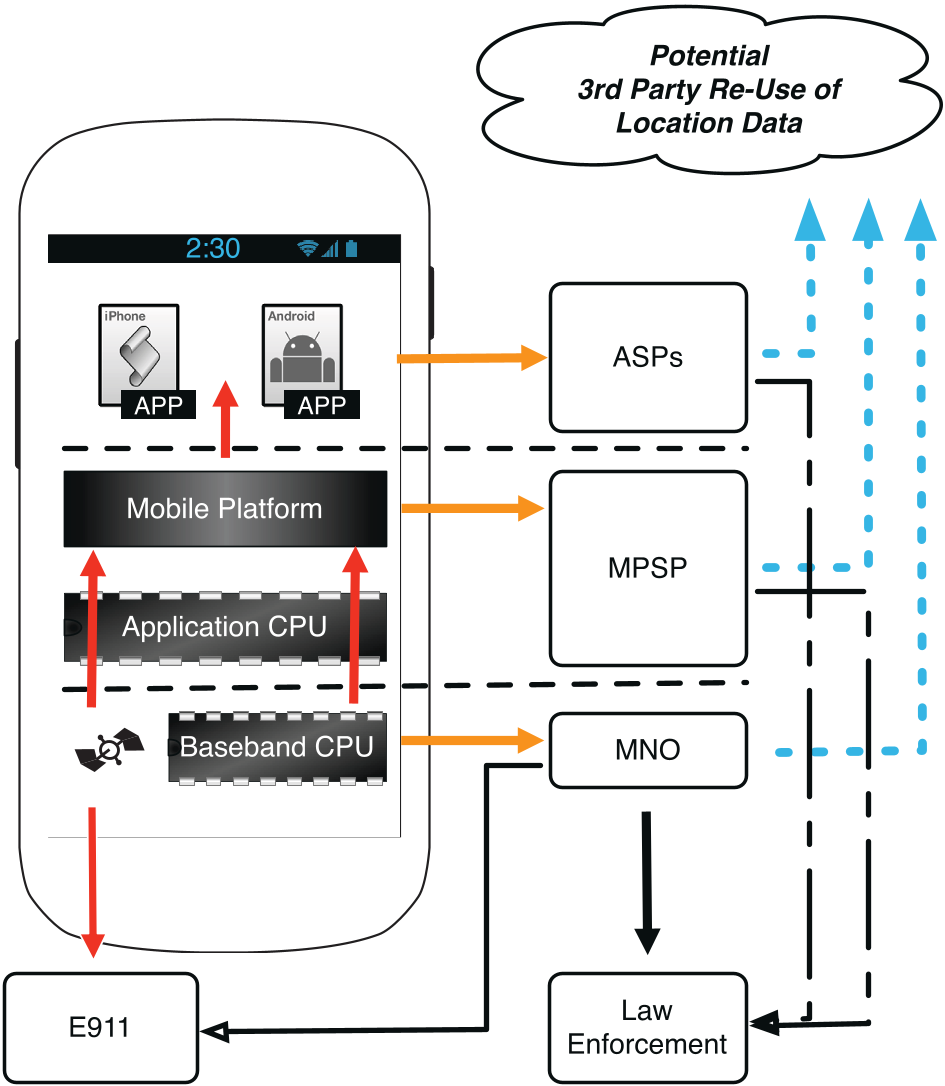 Figure 1: The building blocks of a smartphone and the entities controlling the data flow.
The Hidden Danger: Episodic vs. Continuous Data
One of the paper's most salient points is the distinction between Continuous GPS trajectories and Episodic movement data.
- Continuous Data: High-frequency pings (like Google Maps navigation).
- Episodic Data: Sparse "episodes" (checking in at a cafe, a weather update in a new city).
While episodic data seems "less invasive" due to the gaps, the authors argue it is arguably more dangerous. Using Visual Analytics, researchers can infer "significant places" (home, work, clinics) from just a few sparse pings, allowing for deep semantic profiling of a user’s lifestyle.
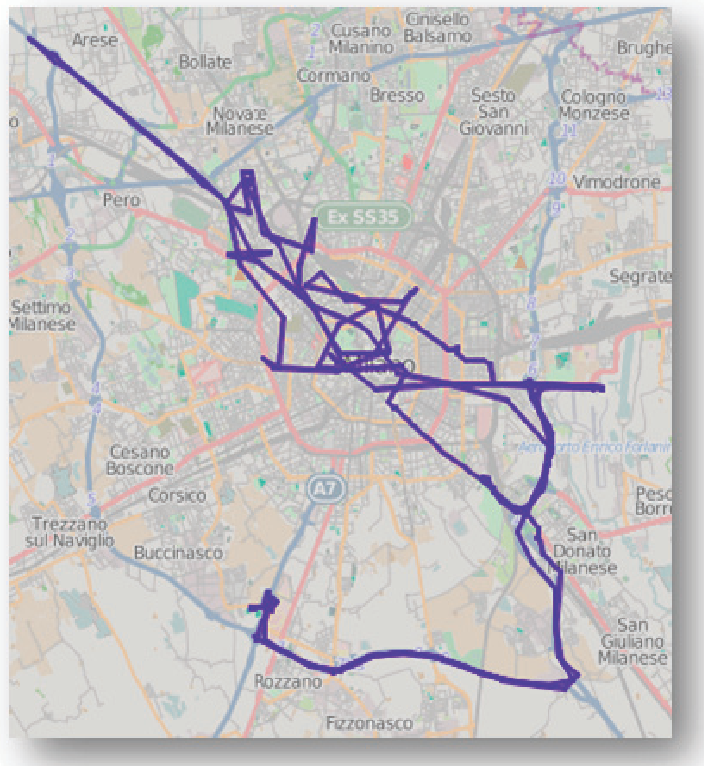 Figure 2: Contrast between smooth GPS tracks and the abrupt, discrete nature of phone-based episodic data.
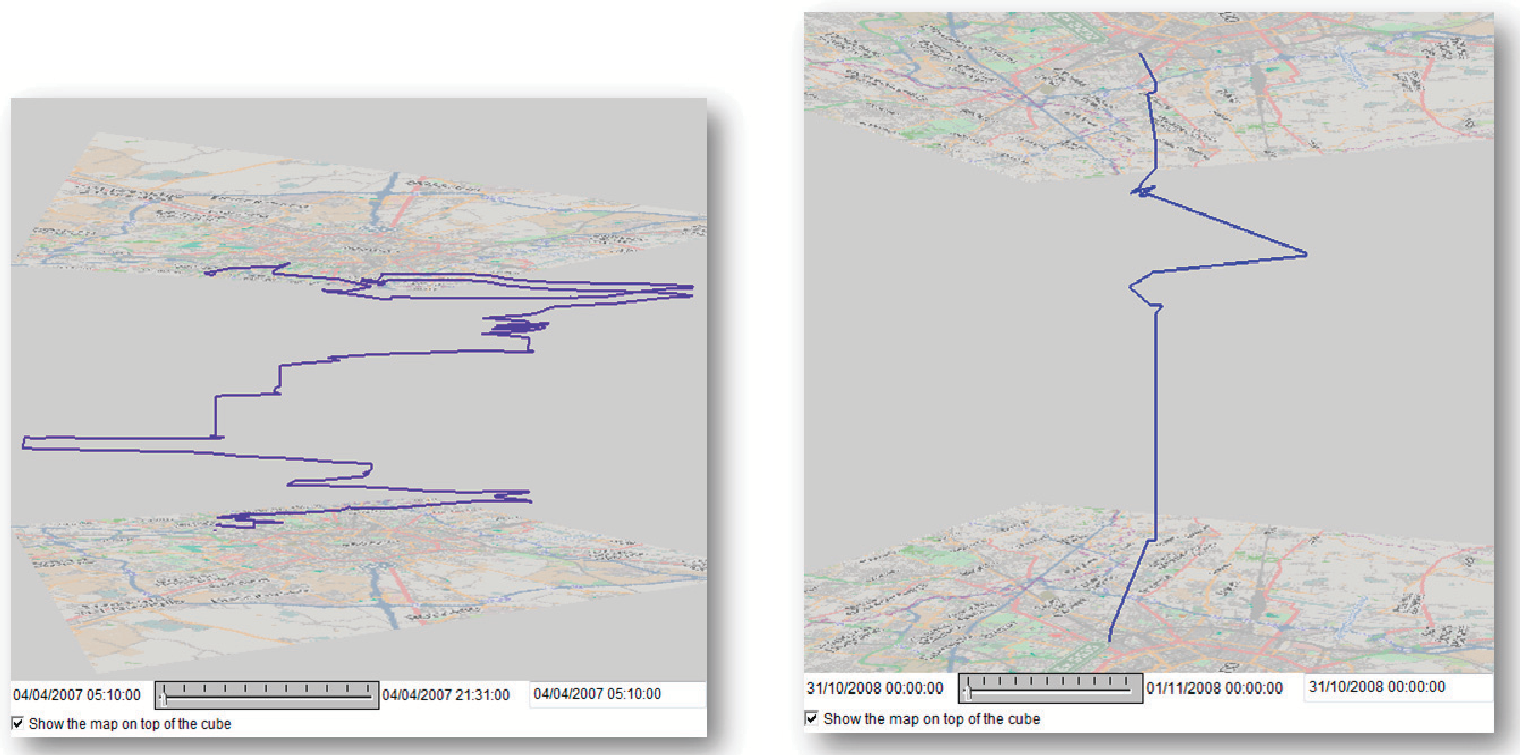 Figure 3: A space-time cube comparison showing how episodic data still reveals clear patterns of human behavior.
Critical Insight: Sensor-Based Side Channels
Perhaps the most alarming finding is that non-location sensors can be used as proxies for location.
- Accelerometers: Can be used to reconstruct a 3D movement trace or infer a user's trajectory with 200m accuracy without accessing GPS.
- Keystroke Inference: Motion sensors can identify screen taps with 90% accuracy, potentially leaking passwords or private messages to malicious apps.
Conclusion & The Path Forward
The paper concludes that anonymization is not a silver bullet. Simply removing a name from a location trace is insufficient when the "home/work" pair acts as a unique biological fingerprint.
The authors call for:
- Transparency Tools: Moving beyond long, unreadable "Privacy Policies" toward real-time technical monitors that show users where their data is going.
- Regulatory Harmonization: Addressing the cross-border nature of the app ecosystem.
- Heuristic Awareness: Helping users understand that their data is part of an "implicit bargain"—free services in exchange for the intimate details of their physical lives.
As location data moves from the "grip" of telecom to the "cloud" of platforms, the privacy research community must pivot from protecting the "where" to protecting the "who" behind the data.