
Dynamic Anonymization: Balancing Data Utility and Privacy in Social Networks
Data Anonymization According to the Combination of Attributes on Social Network Sites
The paper proposes a multi-level data anonymization algorithm for Social Network Sites (SNS) to protect user identities during data publishing. Using a graph-based representation, the method categorizes attributes into Identifiers, Quasi-identifiers, and Sensitive data, applying different masking levels based on third-party authorization.
TL;DR
Social Network Sites (SNS) are treasure troves of data for researchers and advertisers, but they are also a privacy minefield. This paper introduces a Multi-level Anonymization Algorithm that treats user data as a graph (Nodes, Edges, Attributes). By calculating the mathematical "Likelihood of Information Sharing," the system decides how much data to mask based on who is asking—be it a government agency or a commercial advertiser.
Background: The Illusion of "Going Private"
Most SNS users rely on built-in privacy settings. However, as the authors point out, these are often insufficient. Even if a user "hides" their profile, data mining techniques like web crawlers can aggregate information. The real danger lies in Quasi-identifiers (QS)—seemingly harmless data like zip codes, age, and gender which, when combined, can uniquely identify an individual with alarming accuracy.
The Problem: Why Current Methods Fail
The paper identifies a critical gap in existing SOTA (State Of The Art) methods:
- k-anonymity: Vulnerable to "Background Knowledge Attacks."
- l-diversity: Struggles with semantic relationships between attributes.
- t-closeness: Hard to measure the distance between multiple sensitive attributes effectively.
The technical intuition here is that privacy is not a binary (on/off) state but a spectrum that depends on the context of the request.
Methodology: The Three-Level Hierarchy
The authors represent the social network as a graph . The innovation lies in the Attribute Set , divided into:
- Identifiers (ID): Name, SSN (Unique).
- Quasi-identifiers (QS): Age, Zip code (Combinatory).
- Sensitive (S): Health status, private hobbies.
The Level System
The algorithm processes requests through three tiers:
| Level | Target User | Strategy |
|---|---|---|
| L1 | High-Auth (e.g., Gov) | Retain IDs, use sequence-based selection. |
| L2 | Med-Auth (e.g., Analysts) | Strip IDs, keep QS and Sensitive data. |
| L3 | Low-Auth (e.g., Ads) | Strip IDs and Sensitive data; provide only QS. |
Mathematical Intuition
The "Information Sharing" (IS) metric is defined as: Where is the number of selected attributes. If the likelihood is high, the system triggers higher data perturbation (masking) to prevent re-identification.
Experiments and Results
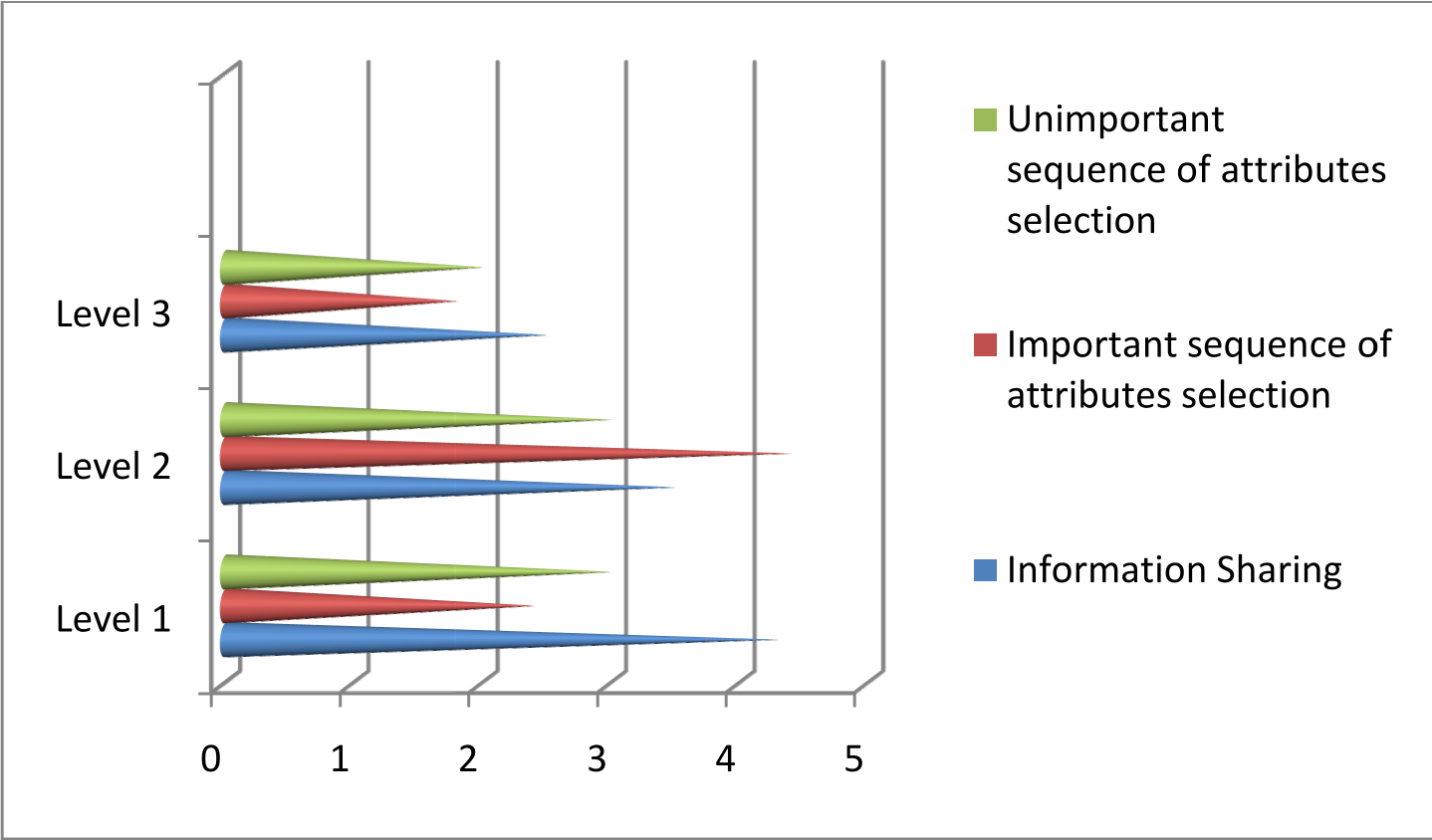
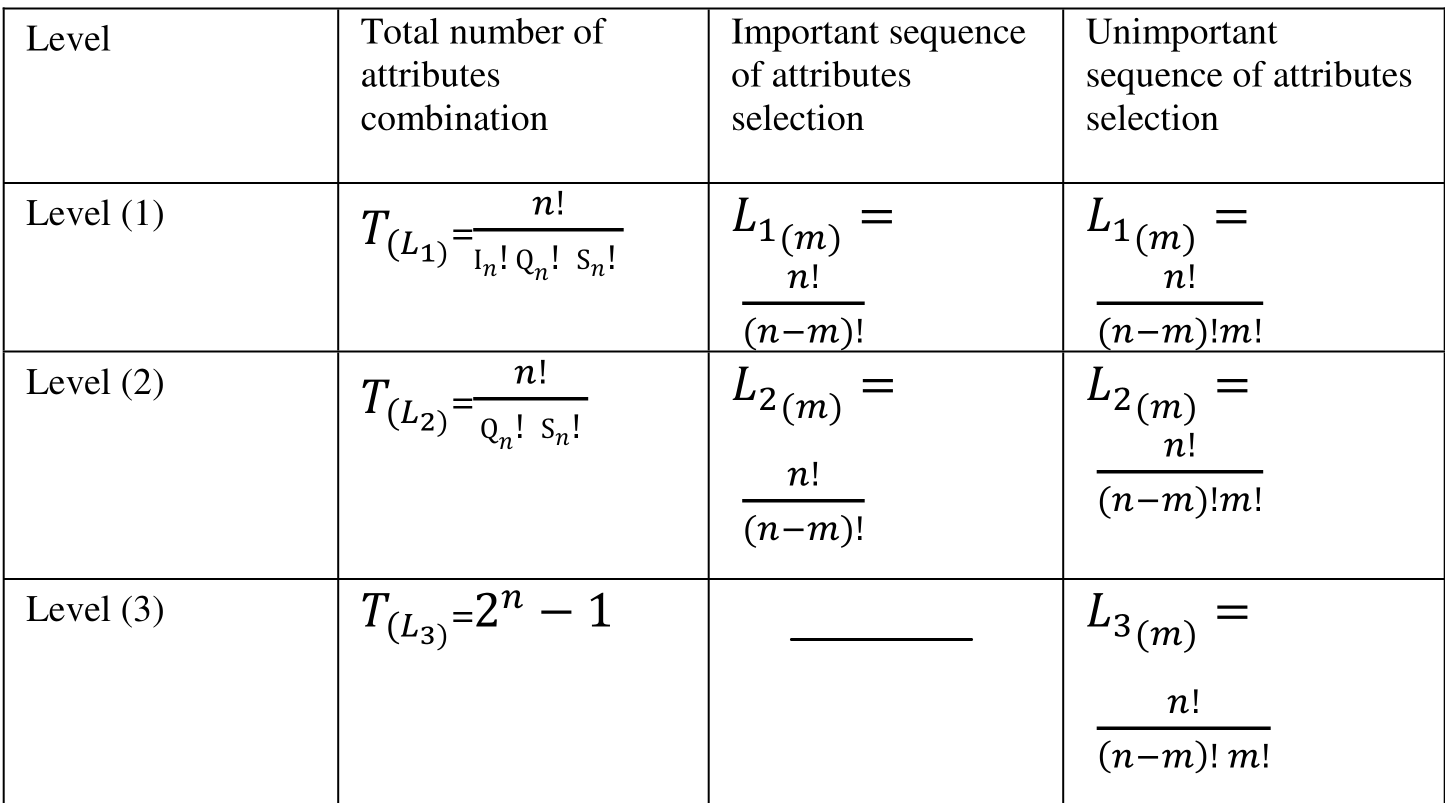
The paper evaluates the risk levels across these tiers. A key finding is that the sequence of selection matters. In L1 and L2, the probability of exposure is significantly higher. By quantifying the total number of attribute combinations , the algorithm can precisely measure how much "uncertainty" it needs to add to the dataset to satisfy privacy laws while keeping the data useful for mining.
Critical Insight: Data Utility vs. Privacy
The central takeaway is that Anonymization Absolute Security. It is a tool for risk mitigation. The proposed algorithm is superior to static masking because it minimizes "data distortion." Instead of blanking out all sensitive fields, it only perturbs what is necessary for that specific requester.
Limitations & Future Work
While the math for attribute combinations is solid, the paper leaves room for exploration in:
- Computational Overhead: How does this scale with billions of SNS nodes?
- Adversarial AI: Can modern machine learning "guess" masked attributes better than traditional statistical models?
Conclusion
This research provides a structured framework for SNS providers to handle third-party data requests responsibly. By moving toward a quantifiable, multi-level approach, the industry can move closer to a future where data dissemination and personal privacy aren't mutually exclusive.