
Twitter Streaming API: Academic Goldmine or Biased Trap?
Is Data Collection through Twitter Streaming API Useful for Academic Research?
This paper investigates the reliability and representativeness of the free Twitter Streaming API for academic research. By conducting controlled experiments during the 2018 FIFA World Cup, the authors evaluate how filtering keywords affects data completeness and whether the "random" sampling provided by Twitter is truly stochastic or potentially biased.
Executive Summary
TL;DR: This study deconstructs the "black box" of Twitter’s free data collection tools. While the API is highly reliable for low-traffic keywords, it becomes a deterministic sampling engine during viral events (like the World Cup), potentially skewing research results by systematically dropping specific tweets rather than selecting them randomly.
Background: In the hierarchy of data science, Twitter's "Firehose" is the gold standard, but its price tag is prohibitive. Most academics settle for the Free Streaming API. This paper positions itself as a critical audit of what researchers are actually getting when they "pull the stream."
The "1% Mystery" and Researcher Motivation
For years, the academic community has operated under the assumption that Twitter's free stream provides a "random 1% sample." But as any statistician knows, a non-random sample is often worse than no sample at all—it introduces "hidden bias."
The authors' intuition was simple: if we run multiple connections at the same time for the same keywords, do they get the same data? If the sampling is truly random, the overlaps should follow specific probability distributions. If they are identical, the system is deterministic and likely biased.
Methodology: Stress-Testing the 2018 World Cup
The researchers leveraged the 2018 FIFA World Cup to create three scenarios:
- Low Traffic: Keywords like "Portugal" during non-game times.
- Medium Traffic: "Griezmann" following a French goal.
- High Traffic: "Perisic" following an equalizer goal.
They built a custom Python pipeline (TweetCollect.py, TweetParseWithRE.py) to compare four simultaneous streams.
The Regular Expression for Ground Truth
The authors had to reverse-engineer how Twitter filters tokens. They discovered that Twitter matches keywords in the text and url fields but ignores the description field.
 Table 1: Intersection analysis showing that filtered streams (B, C, D) provide data not found in the global 1% sample (A).
Key Financial & Technical Insights
- The 1% Confirmation: By intersecting the general stream with filtered streams, the authors mathematically verified the general sample is consistently ~1% of the total firehose.
- The Deterministic Cap: When a keyword becomes too popular (e.g., "Perisic"), Twitter injects
{"limit": {"track": ...}}messages. The study found that different collectors received nearly identical dropped counts at the same millisecond.
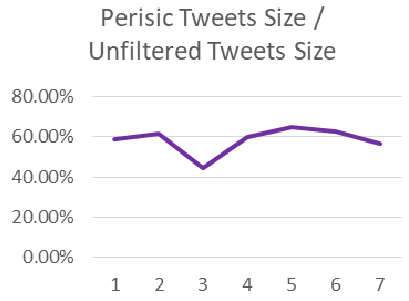 Figure 5: Surge in tweets during high-popularity events showing the API's struggle to stay representative.
Experiments & Results: The "Perisic" Peak
During the peak of the World Cup final, the API hit a ceiling. The "Perisic" experiment showed that while the volume in the filtered stream was higher than the 1% sample, it still missed about 5.71% of matching tweets.
Crucially, since concurrent processes missed the same tweets, the sampling isn't based on a random number generator for each user; it’s likely a global rate-limit applied to the Firehose before it even reaches the API endpoint.
Critical Analysis: Is it Useful?
Takeaway for Researchers:
- Safe Zone: If your research topic generates less than 600 tweets/minute, you are likely getting the full picture.
- Danger Zone: If you are studying a viral breaking news event (e.g., elections, major sports, or disasters), the API is clipping your data deterministically. This means your sentiment analysis or network graph might be missing specific "clusters" of data that were dropped by Twitter's load balancer.
Limitations: The study was conducted on the now-deprecated version of the Twitter API (v1.1). However, the fundamental logic of rate-limiting in distributed systems suggests that these findings remain relevant for current "Basic" and "Pro" tier users of the new API v2.
Conclusion: Twitter data remains a vital resource, but academics must stop treating the Streaming API as a "random" window. It is a filtered lens, and the more popular the topic, the more distorted the lens becomes.