
From Gut-Feeling to Algorithms: Revolutionizing Email Marketing with Machine Learning
3639_Data-driven marketing how machine learning will improve decision-making for marketers.
This paper explores the transition from "gut-feeling" marketing to data-driven decision-making using Machine Learning. It specifically focuses on predicting "click" and "conversion" rates in email marketing campaigns by comparing C4.5 Decision Trees and Support Vector Machines (SVM).
TL;DR
Despite the rise of social media, email remains the powerhouse of lead generation. However, "spray and pray" tactics are dying. This research demonstrates how moving from intuition to Machine Learning (ML) models—specifically Decision Trees and SVMs—can accurately predict user "clicks" and "conversions," potentially boosting marketing ROI by up to 20%.
The Strategic Shift: Why "Gut-Feeling" is No Longer Enough
For decades, marketing was an art of intuition. According to IBM, an astounding 80% of marketers still rely on their "gut-feeling" when making campaign decisions. In the modern era of Big Data, this approach is a liability.
Traditional segmentation (grouping users by broad categories) is too blunt a tool. The paper argues that the modern consumer is "more responsible and engaged," requiring individualized personalization rather than group-level targeting. The core problem is relevance: as spam filters get smarter, the only way to avoid the junk folder is to ensure every email sent is statistically likely to be opened.
Methodology: Decoding the Click
The authors treat the "click" prediction as a binary classification problem. By feeding historical data into ML algorithms, the goal is to determine if a specific recipient will interact with an email based on its metadata.
1. Data Profiling
The model utilizes specific feature sets to build a "Digital Twin" of the consumer's context:
- Geographic Data: Country and State via IP address.
- Technographic Data: OS type, Device type (iPad vs. PC), and Browser type.
- Email Metadata: The domain (Gmail vs. Yahoo) and crucially, the Subject Line and Sender Name.
2. The Model Architecture
The research compares two heavyweights in classical ML:
- Support Vector Machines (SVM): Excellent for recognizing complex patterns but often treated as a "black box."
- Decision Trees (C4.5): Highly interpretable. It breaks down records into a sequence of simple decision rules that a human marketer can actually understand and act upon.
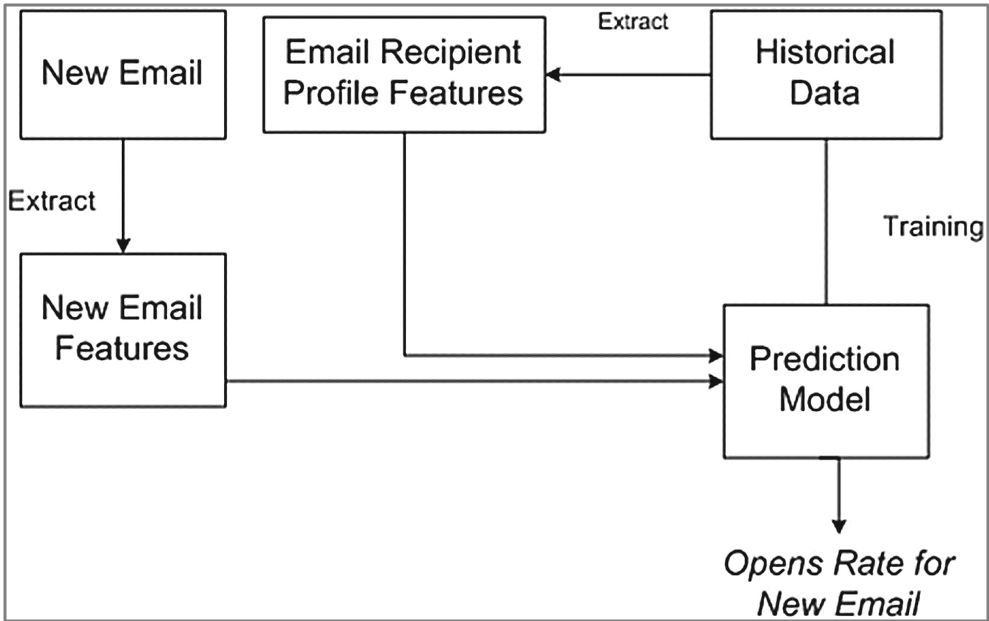
Figure 1: The proposed prediction workflow from data collection to classification.
Key Insights from Experiments
The study didn't just look for the most accurate model; it looked for the most stable one.
- Feature Selection: Out of 350 initial data points, the authors discovered that only 20 key features were necessary to achieve high predictive power. This suggests that "Big Data" doesn't mean "All Data"—smart filtering is key.
- The Winner: The C4.5 Decision Tree outperformed SVM across the board. Its ability to handle categorical data and produce readable "rules" made it superior for the noisy environment of email marketing.
- Stability over Raw Accuracy: By using Bootstrap Aggregating (Bagging), the authors ensured the model wouldn't fail when encountering new, unseen customer segments.
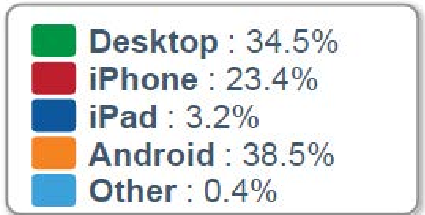
Figure 2: Analysis of open rates across different device types—a critical feature for the ML model.
Critical Analysis & Real-World Impact
The implications of this study are clear: Personalization is a revenue driver.
- ROI Boost: Implementing these data-driven decisions can increase ROI by 15-20%.
- Engagement: Personalized emails see a 29% increase in open rates and a 41% increase in click rates.
Limitations & Future Work
While the study proves the efficacy of Decision Trees, it primarily focuses on historical metadata. The next frontier involves Natural Language Processing (NLP) to analyze the sentiment and semantics of the subject lines themselves, rather than just treating them as categorical inputs. Furthermore, the "Sensitivity" of parameters in SVMs remains an area for deeper exploration.
Conclusion
Data-driven marketing is no longer a luxury of giants like Amazon; it is a necessity for any brand looking to survive the "deliverability crisis." By leveraging Machine Learning to predict behavior at the individual level, marketers can stop guessing and start converting.