
TMID: Redefining Social Influence through the Lens of Trust
Data & Knowledge Engineering
The paper introduces TMID (Trust-based Most Influential node Discovery), a novel method for Influence Maximization (IM) in social networks. It leverages a multi-faceted trust evaluation mechanism to quantify node impact, outperforming traditional greedy and heuristic approaches by considering both explicit active influence and implicit potential influence.
Executive Summary
In the era of viral marketing and information cascading, identifying the "right" influencers is no longer just about who has the most followers. TMID (Trust-based Most Influential node Discovery) proposes a paradigm shift: treating influence propagation as a trust-driven event rather than a purely stochastic one. By quantifying direct and indirect trust and introducing the concept of Potential Influence, this research achieves a more robust and accurate mapping of how information actually flows through complex social fabrics like Sina Weibo.
The Core Problem: Why Followers Don't Equal Influence
Classic influence models (like the Mountain Climbing Greedy algorithm) suffer from high computational complexity and a "blind spot" regarding relationship quality. They overlook two critical factors:
- Relationship Closeness: An out-degree of 1,000 means little if most followers "mute" the source.
- Latent Potential: Nodes currently inactive aren't necessarily immune; they might just require a cumulative "potential" threshold to be reached before they flip to an active state.
Methodology: The Trust-Influence Calculus
The authors break down influence into a structured pipeline of trust and influence evaluation.
1. The Trust Foundation
Trust is divided into Direct Trust (based on immediate interactions like comments and approvals) and Indirect Trust (propagated through serial or parallel paths).
2. Binary Influence Models
- Active Influence (ain): Measured by explicit behaviors—Labeling, Forwarding, and Approving.
- Potential Influence (pin): This is the "hidden" impact on inactivated nodes, calculated by looking at how many of an inactivated node's trusted neighbors have already been "flipped."
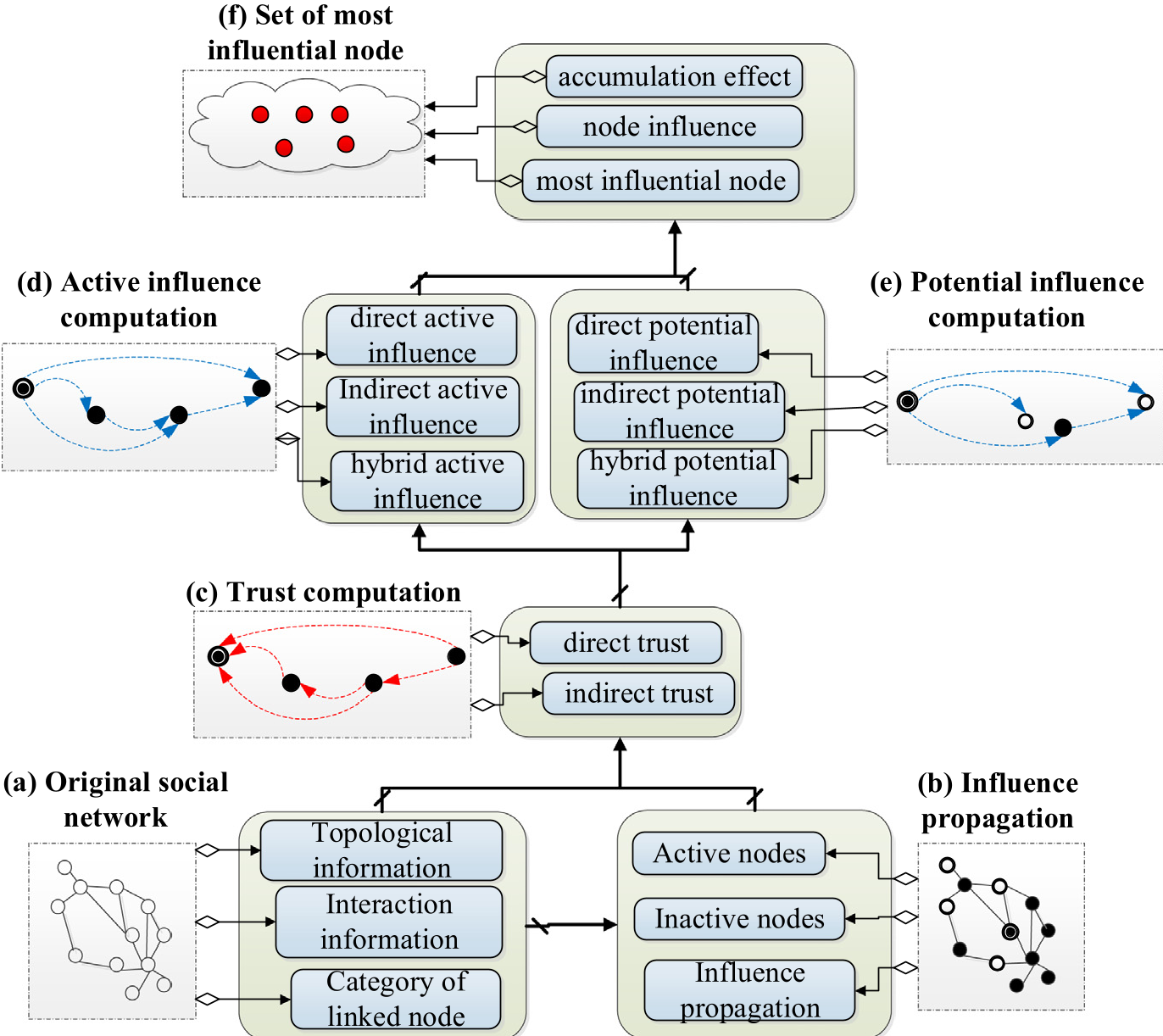 Fig 1: The TMID Workflow - From raw interaction data to final node discovery.
The Discovery Algorithm: Heuristic Meets Greedy
The discovery of the "Top-K" group occurs in two distinct stages:
- Heuristic Phase: Fast selection of "seeds" based on historical activation records and explicit node influence.
- Greedy Phase: Refinement of the set by selecting nodes that maximize the sum of actual activated nodes and potentially activated nodes.
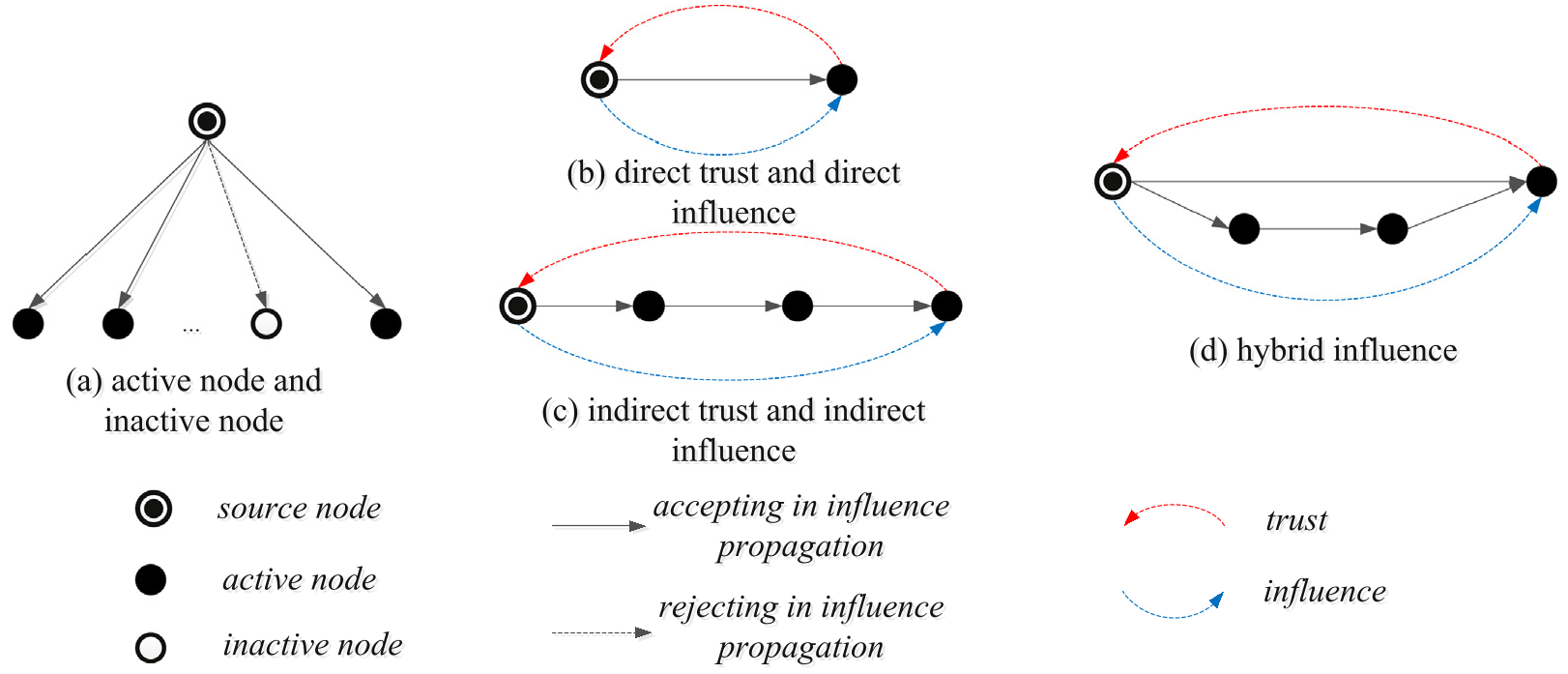 Fig 2: Conceptual mapping of trust and active influence across direct and indirect links.
Experimental Results: SOTA Performance
Using 400,000 records from Sina Weibo, the team compared TMID against several baselines (MG, HG, SD, and RAN).
- Effectiveness: TMID consistently resulted in a larger scale of activated nodes (approx. 5-10% improvement over the runner-up HG method).
- Trust Sensitivity: The inclusion of the trust parameter was the differentiator. As seen in the charts, models without trust (NT-HAI, etc.) showed significantly lower activation probabilities.
- Propagation Depth: Most influence cascades stopped by the 3rd step, confirming the "small world" nature of these social interactions.
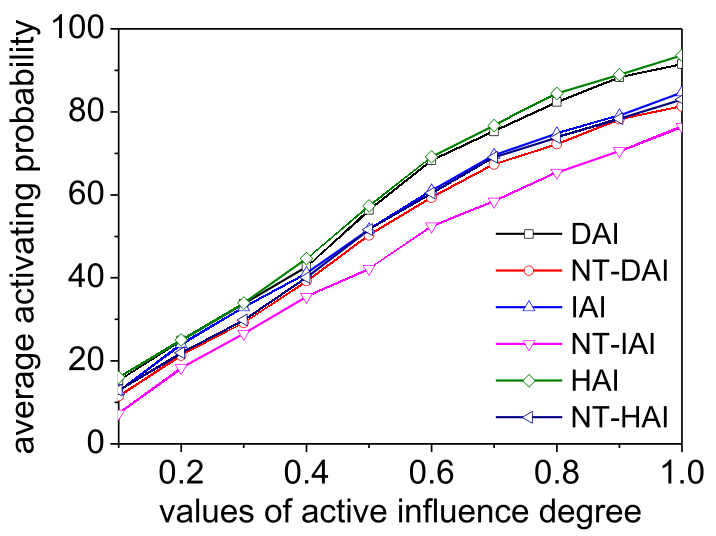 Fig 3: Comparative performance showing the superiority of Trust-integrated HAI (Hybrid Active Influence).
Critical Insight & Conclusion
TMID proves that Influence = Trust × Action. By modeling not just who is talking, but who is listening and believing, the authors have created a framework that is remarkably sensitive to the real-world dynamics of social networks.
Limitations: The computational cost remains higher than simple heuristic models due to the recursive nature of indirect trust and potential influence calculation. For hyper-scale networks (billions of nodes), further optimization of the potential influence path-finding is necessary.
The Takeaway? If you are designing a viral campaign, don't just look for high-degree nodes; look for nodes that possess Hybrid Trust over their neighbors.