
Data Mining the Cross-Strait Markets: How ECFA Reshaped Taiwan & China’s Stock Co-movements
Data mining investigation of co-movements on the Taiwan and China stock markets for future investment portfolio
2012-09-18
Summary
Problem
Method
Results
Takeaways
Abstract
This study investigates the co-movement between Taiwan and China (including Hong Kong) stock markets using data mining techniques such as Association Rules and K-means Clustering. By analyzing 30 categories of stock indexes during different stages of the Economic Cooperation Framework Agreement (ECFA), the research identifies critical cross-strait market dependencies and proposes evidence-based investment portfolios.
## TL;DR
This research utilizes advanced data mining—specifically **Association Rules** and **K-means Clustering**—to map the evolving financial synergy between Taiwan and China following the landmark **Economic Cooperation Framework Agreement (ECFA)**. By analyzing 30 industrial categories, the study uncovers deep-seated sector dependencies that traditional time-series models often miss, providing a blueprint for modern cross-strait investment portfolios.
## Background: The ECFA Paradigm Shift
Since the signing of the ECFA in 2010, the economic landscape between Taiwan and Mainland China has shifted from mere trade exchange to deep financial integration. While global investors often view these markets through the lens of political risk, this paper argues that the real story lies in the **Co-movement** of specific industrial sectors. The authors set out to determine if the "Early Harvest Program" and subsequent implementation phases created predictable patterns for investors.
## Methodology: Beyond Simple Correlations
The researchers moved away from standard linear regressions, opting instead for a data-mining approach to handle the non-linear complexities of market behavior:
* **Star Schema Database**: Used to organize massive amounts of transaction data across four major exchanges (TAIEX, SSE, SZSE, HKEX).
* **Apriori Algorithm**: Used to find "Association Rules" (If sector A rises in HK, then sector B falls in Taiwan).
* **K-means Clustering**: Grouped industrial sectors based on their sensitivity to market shocks and growth periods.
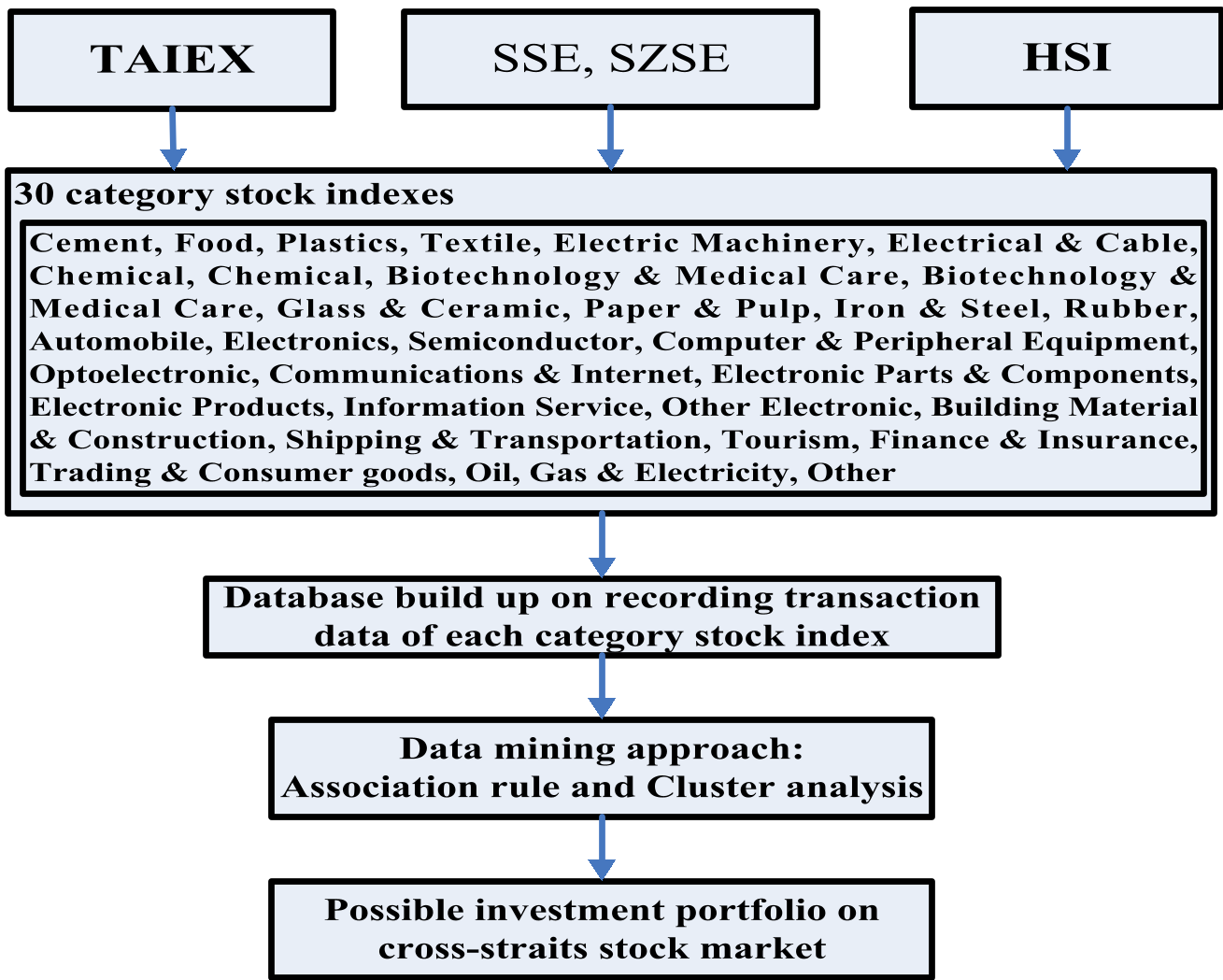
*Figure 1: The Multi-stage Research Framework for Data Extraction and Mining.*
## Key Insights: Who Leads Whom?
The study produced several "Aha!" moments for technical analysts:
1. **The Hong Kong Barometer**: The Hong Kong market (HSI) acts as a primary lead indicator for Taiwan’s efficiency. When HK Real Estate or IT indexes fluctuate, Taiwan's Electronics and Shipping sectors often follow with high confidence.
2. **Sector Specificity**: In the Shenzhen (SZSE) market, a rising trend is strongly associated (Lift: 1.252) with Taiwan's **Semiconductor** and **Optoelectronic** sectors.
3. **The Crowding-Out Effect**: The paper identifies a competitive-cooperative tension. For instance, expansion in China’s domestic appliance subsidies directly mirrors movements in Taiwan’s electronic component stocks.
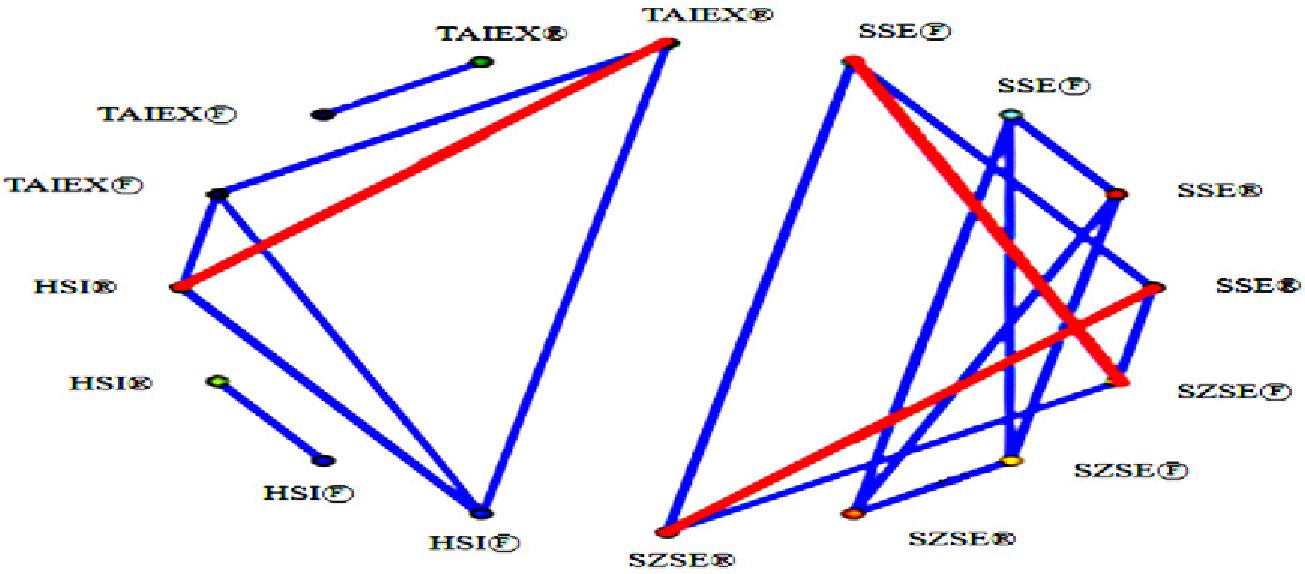
*Figure 4: The Visual Association Map illustrating the strength of connections between the four stock exchanges.*
## Strategic Investment Portfolios
Based on the data clusters, the authors propose four high-potential portfolios:
* **Information & Cloud Services**: Leveraging the supply chain integration between Taiwan’s tech expertise and China’s massive market scale.
* **Green Transportation**: Focusing on lithium batteries and electric motor units, sectors that showed positive co-movement during the ECFA period.
* **Biotechnology**: A sector bolstered by the Cross-Strait Medicine and Health Agreement.
* **Tourism**: Benefiting from the opening of independent travel routes.

*Table 2: Mined Association Rules for the Shenzhen (SZSE) and Taiwan (TAIEX) markets.*
## Deep Insight & Conclusion
The "Technical Takeaway" here is that market integration isn't uniform. While the overall indexes might show moderate correlation, the **underlying industrial sub-sectors** are tightly coupled through the "Early Harvest" tariff exemptions.
**Limitations**: The study primarily focuses on the early years of ECFA (up to 2011). As global geopolitical tensions rise in 2026, the "political risk" variable—which the authors treat as an "outside factor"—may now require more explicit modeling in the data mining stream. However, the methodology remains a robust template for any researcher looking to decode the links between regional trade agreements and equity performance.