
Data Mining for the Corporate Masses: From Niche Alchemy to Ubiquitous Intelligence
9463_Data Mining for the Corporate Masses
This paper explores the evolution of data mining from an expensive, niche enterprise tool to a mainstream business intelligence asset. It highlights key advancements in scalability, database integration, and the transition toward user-friendly "corporate mass" accessibility by 2006.
TL;DR
The early 2000s marked a pivotal "democratization" period for data mining. This report analyzes how advancements in Parallel Database Integration, Scalable Tree-based Classifiers, and Usability Standards transformed data mining from an expensive luxury for giants into a strategic necessity for the broader corporate mass. It highlights the shift from sampling small datasets to analyzing multi-terabyte warehouses in real-time.
Background: Breaking the "Expertise Barrier"
For years, data mining was the "black box" of large corporations, guarded by statistical priesthoods. The industry faced a dual crisis: technical scalability (databases hitting the terabyte ceiling) and operational friction (the gap between statistical accuracy and business value). The emergence of e-commerce accelerated the need for proactive decision-making, forcing the technology to evolve or become obsolete.
The Core Shift: Why and How It Changed
1. The Death of Sampling: In-Database Mining
Traditionally, data had to be extracted from a database into a separate "mining engine," creating massive latency and redundant infrastructure.
- The Insight: By moving the algorithms to the data (In-Database Mining), vendors like IBM, Oracle, and NCR enabled parallel processing at a granular level.
- Impact: This decreased response times and allowed models to be trained on entire datasets rather than representative samples, significantly boosting predictive accuracy.
2. Standardizing the "Predictive DNA"
One of the most significant hurdles was the inability to share models across different platforms. The introduction of PMML (Predictive Model Markup Language), an XML-based standard, allowed models built in one environment to be deployed in another.
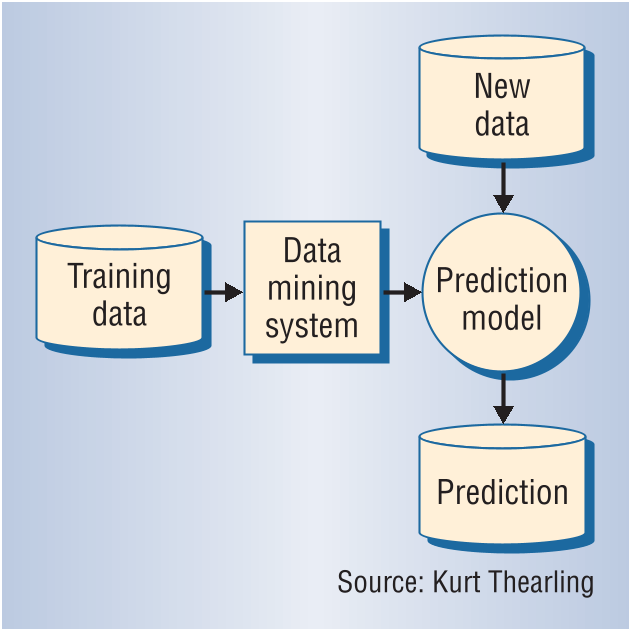 Figure 1: The standard lifecycle of predictive modeling: from training data ingestion to real-time prediction deployment.
Methodology: The Rise of Scalability and Text Mining
As e-commerce data exploded, the industry moved toward Scalable Tree-based Classifiers. These models were unique because they could "put structure into unstructured data," even for 20-terabyte environments.
Furthermore, the paper identifies a critical frontier: Text Mining. Since 80% of corporate data is unstructured text (emails, health records, news), the development of techniques to convert text into structured formats for traditional mining became the new SOTA (State-of-the-Art) goal for vendors like SAS and SPSS.
Market Evolution & Results
The transition was not just theoretical; it was reflected in massive market shifts:
- Market Growth: Expansion from ~1.85B (roughly 4x growth)**.
- Data Volume: Transition from gigabyte-scale to 100-terabyte data warehouses.
- Usability: The shift from "Programming-only" interfaces to Graphical User Interfaces (GUIs) allowed marketing analysts to lead projects formerly reserved for PhD statisticians.
Critical Analysis: A Human-Centric Conclusion
Despite the technological leaps, the paper leaves us with a profound Inductive Bias: Context is King.
The rise of "Corporate Mass" data mining doesn't mean the "Data Scientist" is obsolete. Instead, it changes their role from a "number cruncher" to a "business strategist." The closing sentiment—"A fool with a tool is still a fool"—serves as a timeless reminder for today's AI era. As we move toward even more automated systems (AutoML, LLMs), the requirement for human alignment with business goals remains the primary bottleneck for success.
Takeaways for the Future
- Integration is Efficiency: The more "hidden" the ML is within the data storage layer, the higher the performance.
- Unstructured is the Future: Text mining was the precursor to the NLP revolution we see today.
- Scaling is Non-Negotiable: As databases grow to petabyte scales, the efficiency of the underlying classifier becomes the only moat.
Note: This analysis is based on industry trends and reports from Neal Leavitt, reflecting the critical transition point of data science in the mid-2000s.