
Deciphering Complex Diseases: A Hybrid GA-K-Means Approach to Genomic Data Mining
A data mining approach to discover genetic and environmental factors involved in multifactorial diseases
The paper proposes a two-phase data mining framework combining a Genetic Algorithm (GA) and K-means clustering to identify significant genetic and environmental risk factors in multifactorial diseases like Type 2 Diabetes and Obesity. The method specifically targets the discovery of complex "gene-gene" and "gene-environment" associations within large-scale genomic datasets.
TL;DR
Researchers have developed a robust two-phase methodology to tackle the complexity of multifactorial diseases like Diabetes. By combining a feature-hungry Genetic Algorithm (GA) with the grouping power of K-means, the framework filters massive genomic datasets to find the "needle in the haystack"—the specific combinations of genes and environment that trigger disease—reducing processing time from days to minutes.
Contextual Positioning
In the landscape of bioinformatics, this work represents a critical bridge between evolutionary computation and clinical diagnostics. While most genomic studies in the early 2000s focused on single-gene correlations, this paper acknowledges that diseases like obesity are "polygenic," requiring a move toward high-dimensional interaction modeling.
The Problem: The High-Dimensional Haystack
Multifactorial diseases do not have a single "smoking gun" gene. Instead, they result from the subtle interplay between multiple DNA loci (SNPs) and environmental factors (like BMI or age).
The technical challenge is twofold:
- Sparse Relevance: Less than 1% of the thousands of measured genetic markers are actually relevant.
- Combinatorial Explosion: Testing every possible combination of 3 or 4 genes across thousands of patients is mathematically impossible for standard statistical tools.
Methodology: The Two-Phase Filter
The authors propose a "Wrapper-Filter" hybrid architecture to solve this.
Phase 1: Feature Selection via Genetic Algorithm
The GA mimics natural selection to "evolve" the best subset of features.
- Chromosomal Encoding: Each potential solution is a binary string where '1' means a feature is included.
- Fitness Function: The researchers designed a unique fitness metric based on Support. It favors subsets that appear frequently in affected populations but involve the minimum number of features.
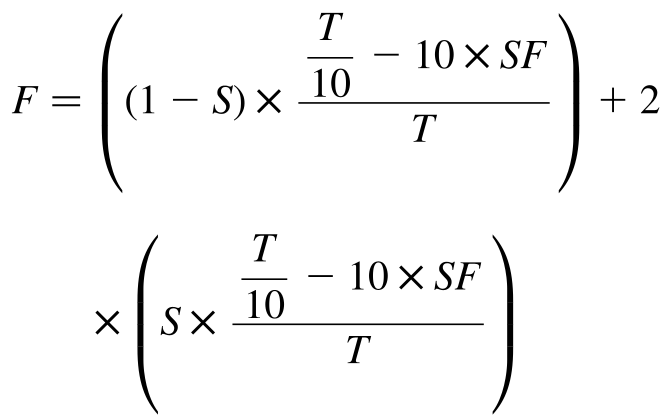
- Maintaining Diversity: To prevent the GA from getting stuck on a single local optimum, they used "Niche Sharing" (penalizing over-represented solutions) and "Random Immigrants" (injecting new random DNA into the population).
Phase 2: Interpretable Clustering
Once the GA identifies the ~10 most influential features, K-means clustering is applied. Because the dimensionality is now low, K-means can rapidly group patients into sub-types, allowing biologists to see exactly which gene combinations are shared by which patient groups.

Experimental Results & Evidence
The power of this method was demonstrated using both artificial benchmarks and real clinical data from the Biological Institute of Lille.
Efficiency Gains
On the GAIW benchmarking dataset:
- Standard K-means: Took ~5,500 minutes and produced uninterpretable results.
- GA + K-means: Took 1 minute for the clustering phase after the GA finished.
Biological Insight
In real-world diabetes data (4,000+ individuals), the system consistently identified a core set of 7-8 features (DNA loci + Environmental factors). As shown in the table below, certain associations between specific loci (A, B, D) and environmental factors (E1) appeared in 100% of the test runs, providing high confidence for clinical follow-up.

Critical Analysis & Future Outlook
Strengths: This framework successfully handles the "curse of dimensionality" by using the GA as an intelligent pre-filter. It is one of the early precursors to modern ensemble learning in genomics.
Limitations: The model assumes that "Support" is the primary indicator of relevance. However, some disease-causing interactions might be rare but highly potent, which this frequency-based fitness function might overlook.
Future Work: This methodology paves the way for integrating more diverse data types—such as proteomic or metabolic data—into a single evolutionary framework to provide a truly holistic view of human health.
Conclusion
By treating genomic discovery as an optimization problem, the authors have provided a scalable roadmap for unraveling the complexities of human disease. This hybrid approach ensures that we don't just collect "Big Data," but actually extract the "Big Insight" hidden within it.