
Data Mining in Healthcare: Transforming Raw Complexity into Clinical Wisdom
Study and analysis of data mining for healthcare
This paper provides a comprehensive overview of Data Mining (DM) and Big Data applications within the healthcare sector. It investigates the transition from paper-based to electronic health records (EHR/EMR) and evaluates various machine learning algorithms used to process complex medical datasets for clinical and administrative improvements.
TL;DR
The healthcare industry is currently drowning in data but starving for insights. This paper analyzes how Data Mining (DM) and Machine Learning (ML) can navigate the "Big Data" explosion—moving from 150-exabyte data silos to systems that predict disease outbreaks, detect insurance fraud, and personalize patient care. By leveraging both descriptive and predictive algorithms, the research identifies a potential $300 billion in annual savings while highlighting the critical barriers in ethics and interdisciplinary communication.
Problem & Motivation: The Exabyte Crisis
The shift from paper to digital systems (EHR/EMR) has created a double-edged sword. While digitization improves monitoring, the sheer volume of data—driven by high-throughput sequencing, real-time imaging, and wearable devices—is overwhelming.
The authors point out that healthcare data is uniquely difficult because it is:
- Unstructured: Much of the clinical narrative does not fit into neat tables.
- High-Dimensional: Thousands of variables (genetics, lifestyle, environment) affect a single outcome.
- Siloed: Data exists across labs, clinics, and insurance databases with no unified standard.
The motivation is clear: McKinsey estimates that efficient analytics could reduce national healthcare expenditures by 8%, targeting the $165 billion wasted in clinical operations.
Methodology: The Architecture of Insight
The paper defines a rigorous process for extracting knowledge from medical "raw ore." The core methodology follows a refined KDD (Knowledge Discovery in Databases) pipeline:
1. The Processing Pipeline
To transform "dirty" medical data into valid results, the authors emphasize:
- Dimensionality Reduction: Using Fisher criterion and Principal Component Analysis (PCA) to strip away noise.
- Dual-Track Learning:
- Descriptive Mining: Using Clustering to group similar patient profiles and Association Rules to find hidden correlations between environmental factors and disease.
- Predictive Mining: Employing Classification (Decision Trees, SVMs, Bayesian Networks) to predict patient outcomes (e.g., survival rates or tumor malignancy).
2. Clinical Decision Support Systems (CDSS)
A major focus is the HELP (Health Evaluation through Logic Processing) system. This architecture acts as a "second opinion" for doctors by providing:
- Alerting: Monitoring lab results for life-threatening anomalies.
- Suggestion: Offering protocols for complex conditions like Adult Respiratory Distress Syndrome (ARDS).
- Prediction: Forecasting individual risks of hospital death using models like APACHE.
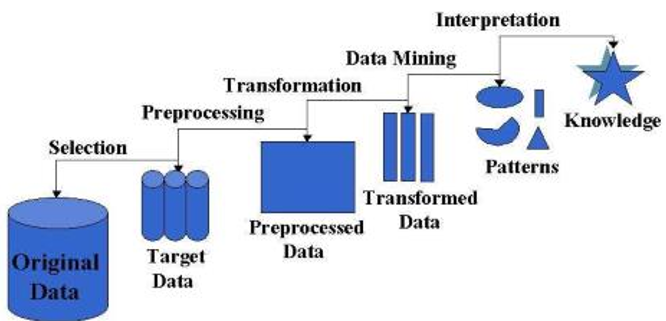 Fig. 1: The iterative flow from domain understanding to pattern visualization.
Experiments & Results: Real-World Impact
The paper synthesizes various applications where Data Mining has moved from theory to practice:
- Population Health: Implementation of Bayesian Networks and POMDPs (Partially Observable Markov Decision Processes) for detecting disease outbreaks like airborne anthrax.
- Oncology: Comparison of classification algorithms for breast cancer diagnosis, proving that DM can identify significant survival factors that human observation might miss.
- Fraud Detection: Supervised learning methods applied to Taiwan’s National Health Insurance to flag deviations from defined clinical pathways, preventing "drug claiming" fraud.
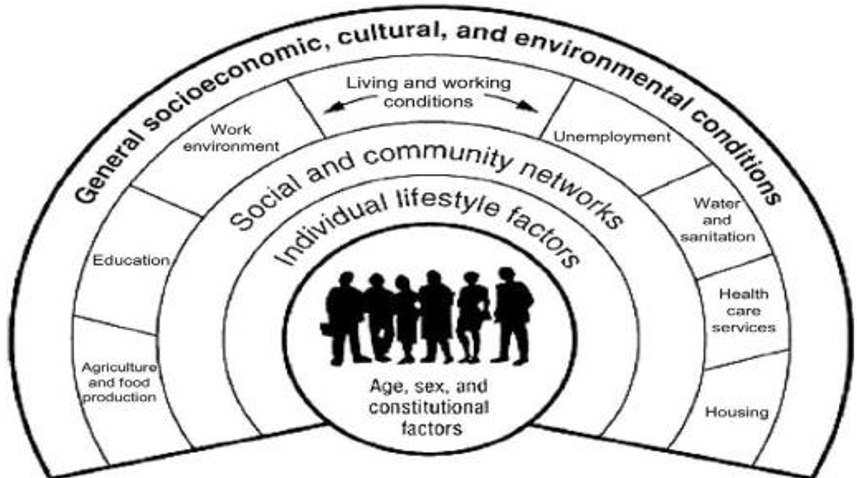 Fig. 2: The complex web of environmental and clinical factors that DM must untangle.
Critical Analysis: The Human Bottleneck
Despite the mathematical power of SVMs and Neural Networks, the authors identify three "Limiters" that technology alone cannot solve:
- The "Black Box" Trust Gap: Clinicians often reject complex, high-accuracy models in favor of "simple, understandable" ones. If a doctor doesn't understand why an algorithm made a suggestion, they won't use it.
- The Ownership Paradox: Who owns the data? The patient, the lab, or the insurance provider? This legal ambiguity stifles the sharing of datasets necessary for training robust models.
- Data Quality: "Garbage in, garbage out." Missing values and the lack of a standard clinical vocabulary remain significant technical hurdles.
Conclusion: The Road Ahead
This study confirms that Data Mining is no longer optional; it is a necessity for the financial and clinical survival of modern healthcare. Future research must focus not just on "better algorithms," but on Explanability and Privacy-Preserving Mining to bridge the gap between computer scientists and the medical community.
Takeaway: The next frontier isn't just generating more data—it's building the ethical and technical infrastructure to trust the patterns we find.