ADMIRE Framework: Bridging Distributed Data Heterogeneity for Environmental Forecasting
Data mining and integration for environmental scenarios
The paper introduces a specialized data mining and integration framework developed under the ADMIRE project to handle complex environmental scenarios like flood forecasting. It leverages the DISPEL language and an OGSA-DAI based architecture to integrate distributed, heterogeneous hydro-meteorological data for predictive modeling.
TL;DR
Predicting floods and reservoir behavior requires massive amounts of data from diverse sources—radar images, sensor logs, and meteorological GRIB files. The ADMIRE project introduces a framework that uses a specialized language (DISPEL) and a modular Service-Oriented Architecture (SOA) to automate the integration and mining of this distributed data, providing a faster, data-driven alternative to traditional physical modeling.
Background: The Infrastructure Crisis in Environmental Science
Environmental forecasting in regions like Slovakia faces a significant "Data Silo" problem. Vital information is scattered across organizations like the Slovak Hydrometeorological Institute (SHMI) and the Slovak Water Enterprise (SWE).
The challenge isn't just the distance—it's the format. We are dealing with:
- GRIB (Gridded Binary) files for weather predictions.
- Relational Databases for historical water levels.
- Raw Radar Images requiring heavy preprocessing to estimate rainfall.
The ADMIRE Approach: Methodology
The authors argue that we should move away from manual "ad-hoc" data preparation. Instead, they propose a structured pipeline based on DISPEL (Data-Intensive Systems Process Engineering Language).
Core Architecture
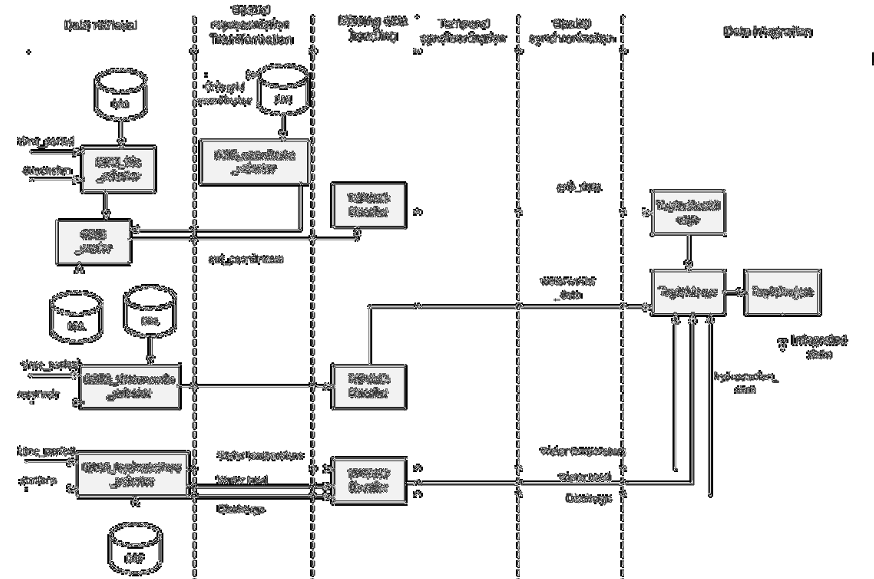
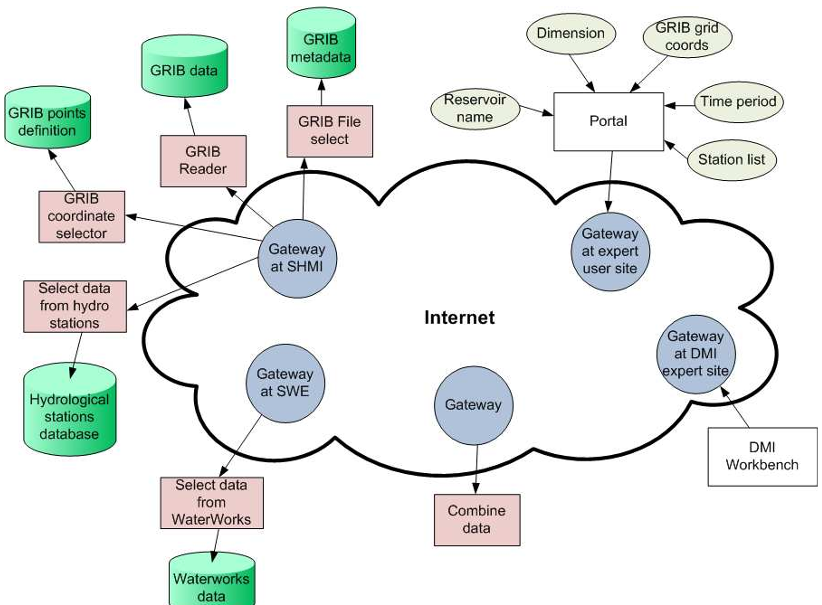
The system is built on a "Gateway" architecture. Each gateway acts as a point of entry to local resources (file systems or databases) and streams processed data through Processing Elements (PEs). These PEs are high-level abstractions of data operations (interpolation, cleaning, or mining).
Workflow Automation
By defining the data pipeline in DISPEL, the framework eliminates the repetitive steps of the CRISP-DM cycle. When a new environmental scenario—like the Orava reservoir discharge prediction—needs to run, the system automatically:
- Queries distributed GRIB files.
- Performs spatial transformation to match the local grid.
- Interpolates missing values to synchronize temporal resolution.
- Streams the "clean" data into a mining model.
Experimental Scenarios
The paper highlights two primary testbeds:
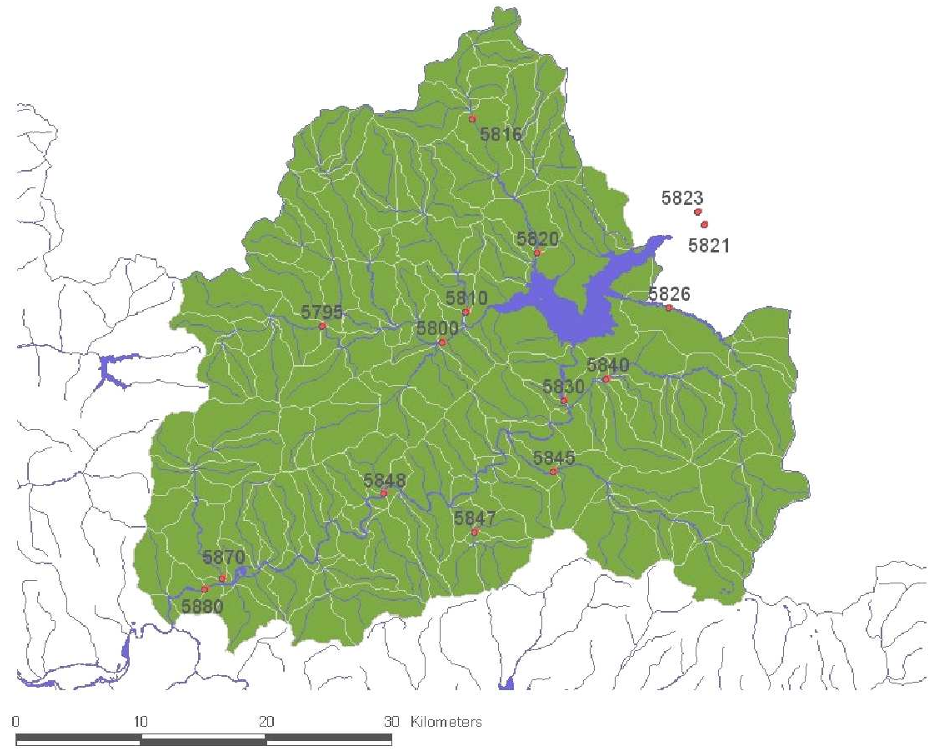
- ORAVA Scenario: Predicting water discharge and temperature propagation below Slovakia’s largest reservoirs. It uses 10 years of historical data to augment standard physical models.
- RADAR Scenario: Improving precipitation accuracy by mining radar reflectivity data in conjunction with ground station measurements.
Critical Insight & SOTA Comparison
Historically, environmental tasks relied on models like FESWMS (Finite Element Surface Water Modeling System). While physically accurate, these models are "stiff"—they don't easily incorporate real-time data from heterogeneous sensors.
The ADMIRE framework represents a shift towards Inductive Bias through data mining. By treating the environment as a complex data-generating system rather than a set of differential equations, the authors allow for nearly real-time updates and faster-than-real-time predictions, which is crucial for early warning systems.
Conclusion & Limitations
The ADMIRE project successfully demonstrates that a high-level language (DISPEL) can abstract away the "grunt work" of distributed data integration.
However, some limitations remain:
- Scalability: While SOA offers modularity, the latency of streaming massive GRIB datasets across gateways could become a bottleneck.
- Model Complexity: The paper focuses heavily on the integration aspect; the specific "mining" algorithms (whether they are simple regressions or complex neural networks) are treated as pluggable modules rather than the primary focus.
As we move further into the era of satellite-based earth observation, the ADMIRE philosophy of "Automated Data-Intensive Pipelines" will be essential for managing the sheer volume of environmental Big Data.