
Predictive Analytics for Global Health: Tackling Malnutrition in Afghan Children
Data Mining Based Prediction of Malnutrition in Afghan Children
This study proposes a data mining framework to predict malnutrition status (stunted, underweight, wasted, and nutritional oedema) in Afghan children under five using the SMART Survey dataset. By comparing multiple classifiers, the researchers identified Random Forest and PART rule induction as the top-performing models, achieving near-perfect accuracy when utilizing transformed anthropometric indices.
TL;DR
Researchers have developed a data mining approach to address the malnutrition crisis in Afghanistan, targeting children under five. By leveraging the SMART Survey dataset and implementing Random Forest and PART rule induction algorithms, the study achieved high-accuracy predictions for stunting, wasting, and—crucially—nutritional oedema, providing a roadmap for automated clinical decision support systems.
Background: A Silent Emergency
Malnutrition is responsible for nearly half of all deaths in children under five globally. In Afghanistan, the situation is dire; conflict has decimated healthcare infrastructure, leaving 22 out of 32 provinces at emergency levels of acute malnutrition. While traditional statistical methods have been used to describe the situation, they often lack the predictive power needed for rapid intervention. This study pivots from "description" to "prediction," using machine learning to identify at-risk children.
The Challenge of Data: Anthropometrics and Clinical Signs
The study focuses on four primary indicators:
- Stunting: Chronic malnutrition (Height-for-Age).
- Wasting: Acute malnutrition (Weight-for-Height).
- Underweight: A composite of both (Weight-for-Age).
- Nutritional Oedema: A dangerous clinical sign involving fluid retention in tissues.
The Methodology
The authors followed a rigorous Knowledge Discovery Process (KDP). A significant hurdle was the imbalanced nature of the data—for instance, children with oedema represented only a small minority of the dataset. To solve this, they employed SMOTE (Synthetic Minority Oversampling Technique) to balance the classes, ensuring the models didn't simply learn to ignore the minority cases.
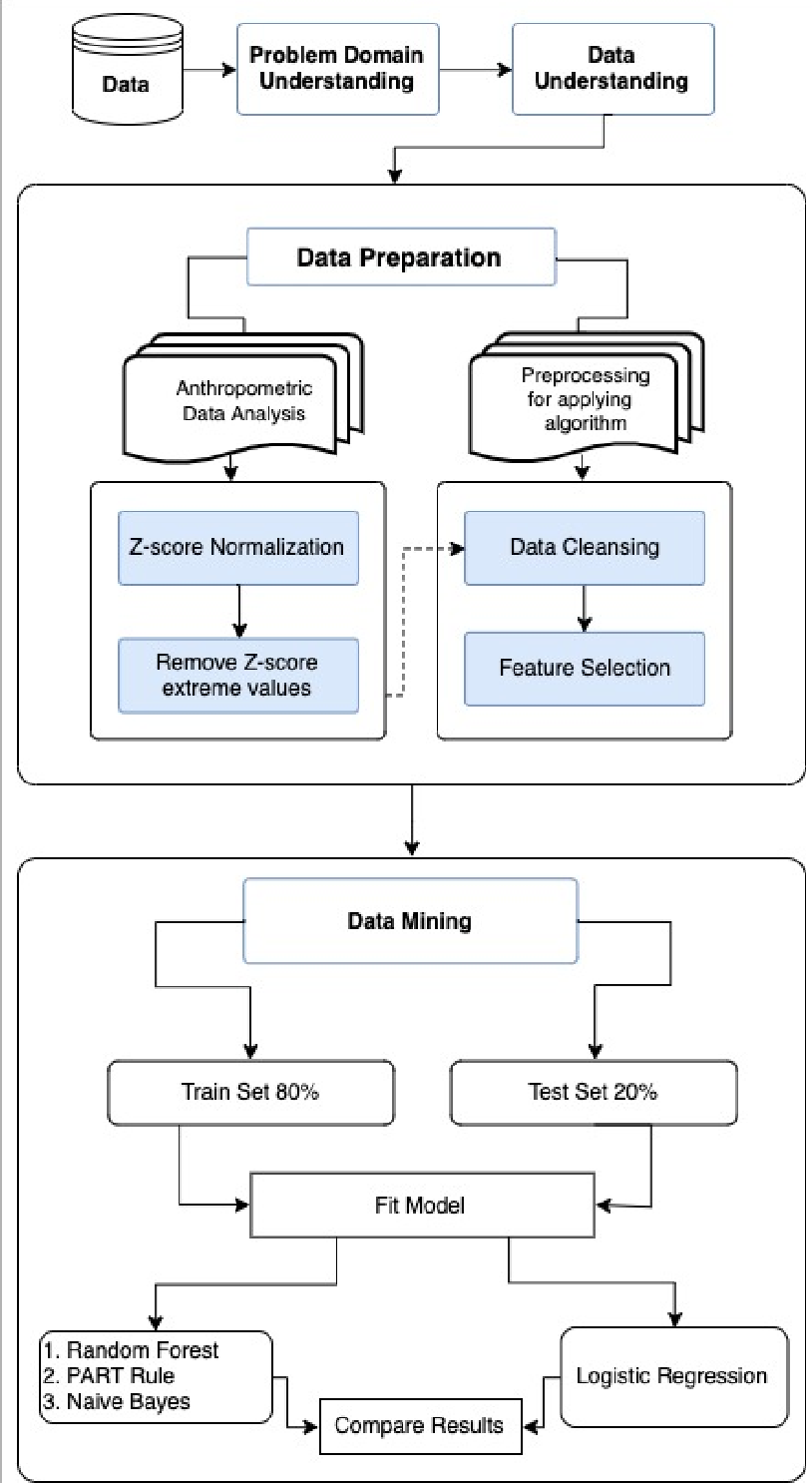 Figure 1: The proposed KDP-based predictive framework.
Architecture and Logic: Why Decision Trees?
The study compared four algorithms: Random Forest (RF), PART, Naïve Bayes (NB), and Logistic Regression (LR).
The logic behind the superiority of RF and PART lies in their Inductive Bias. Malnutrition diagnosis is inherently rule-based (e.g., "IF Z-score < -2 THEN Wasted"). Decision tree-based models (like RF and PART) are exceptionally efficient at capturing these non-linear, threshold-based relationships.
Moreover, the PART algorithm generates IF-THEN rules, which are highly valued in medicine for their interpretability. For example:
- If MUAC < 125mm and Weight/Height ratio is below threshold, then "Wasted".
Experimental Results & Performance
The results were categorized by whether "Transformed Attributes" (pre-calculated Z-scores based on WHO standards) were used.
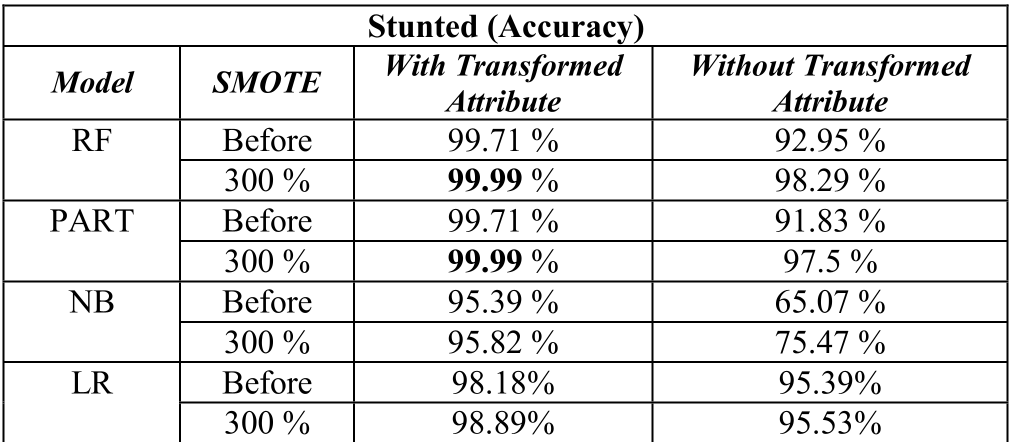 Table 1: Performance of various models for Stunting.
Key Findings:
- Random Forest was the most robust, often achieving 99% accuracy when Z-scores were provided and maintaining high performance (98%) even without them.
- SMOTE was essential for the Oedema model, raising accuracy from mid-80s to 97.20%.
- Logistic Regression and Naïve Bayes lagged behind, struggling to capture the complex partitioning of the multi-dimensional anthropometric space.
Critical Insight: Clinical Integration
The standout contribution of this paper is the inclusion of Oedema. Most data mining studies focus exclusively on height and weight. By including nutritional oedema, the authors ensure the model covers Severe Acute Malnutrition (SAM), the most life-threatening form of the condition.
Limitations and Future Outlook
While the models are technically sound, the authors acknowledge a lack of socioeconomic data (income, education, maternal care). Future iterations of this work could integrate these "Upstream Determinants" to predict malnutrition before physical symptoms even manifest.
The ultimate goal? Deploying these models into a web-based decision support system that local health workers in remote Afghan provinces can use on tablets to diagnose and monitor children in real-time.
Takeaway
This research proves that data mining is not just for tech giants; it is a vital tool for humanitarian aid. By automating the classification of malnutrition, we can move closer to an era of "Precision Public Health."