
C-KDD: Beyond Linear Mining—Building a Continuous Knowledge Engine for CRM
Data mining process model for marketing and CRM
The paper proposes the C-KDD (Cohesive Knowledge Discovery in Database) model, a novel integrative framework for data mining in marketing and CRM. It introduces a multi-stage approach—planning, session mining, merge mining, and post-processing—designed to shift from static analysis to a continuous, autonomous knowledge discovery process.
TL;DR
Data mining in Marketing and CRM has long been stifled by static, project-based workflows. This paper introduces the C-KDD (Cohesive Knowledge Discovery in Database) process model. It moves away from the linear constraints of CRISP-DM by implementing a four-stage cyclic framework (Planning, Session Mining, Merge Mining, and Post-processing) that integrates domain ontology to turn raw data into strategic enterprise "Wisdom."
The "Linear Trap" of Traditional Data Mining
For years, the industry has relied on CRISP-DM (Cross Industry Standard Process for Data Mining). While effective for project management, it suffers from a fatal flaw: it is essentially sequential. In the fast-paced world of e-marketing and Customer Relationship Management (CRM), customer behavior changes in real-time.
The author points out that current research obsesses over algorithm speed/accuracy but ignores the human-in-the-loop bottleneck. We don't just need faster algorithms; we need a system that understands business logic and evolves its rules as new customer data flows in.
Methodology: The C-KDD Framework
The core of the paper is the C-KDD model, which breaks down the "black box" of mining into manageable, autonomous sub-processes.
1. The Multi-Stage Architecture
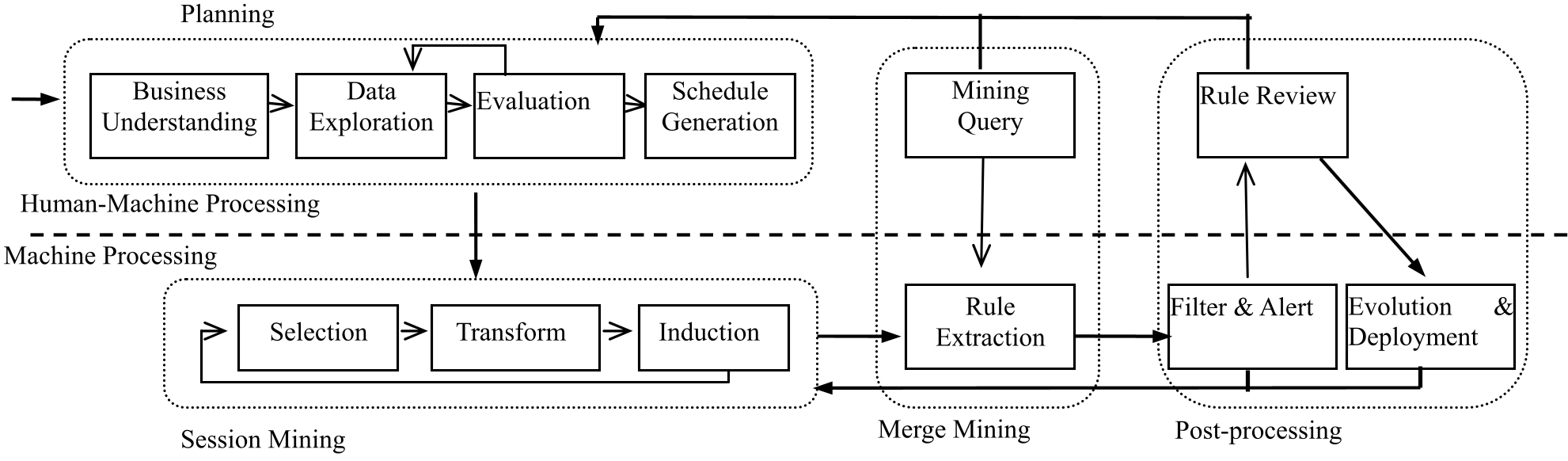
The model is divided into four critical phases:
- Planning: Uses marketing domain knowledge to filter attributes and define Task Schedules (TS).
- Session Mining: The "Utility" layer. It induction local/static rules at regular intervals (e.g., monthly) on incremental data.
- Merge Mining: The "Dynamic" layer. It triggers when queries or specific events occur, merging rules from different "Rule Bins" to find global trends.
- Post-processing: The "Evolution" layer. It filters useless patterns and integrates "Interesting" findings back into the knowledge base.
2. The Knowledge Conceptual Hierarchy
To make sense of these processes, the author maps them to the DIKW (Data, Information, Knowledge, Wisdom) hierarchy, providing a roadmap for how a company moves from "Technical" data collection to "Strategic" wisdom.
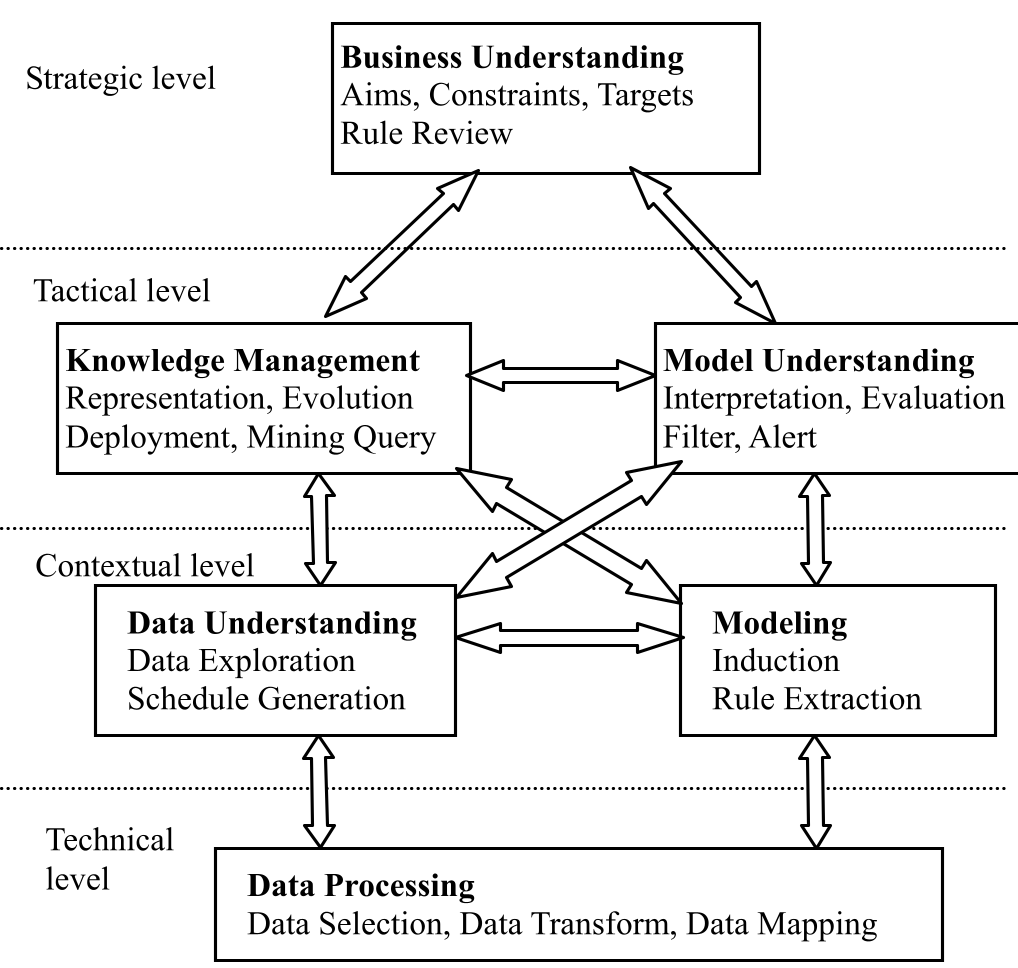
- Strategic Level: "Know-why." Aligning mining targets with business aims.
- Tactical Level: Managing known knowledge to evaluate new findings.
- Contextual Level: Using DM tools to transform data into information.
- Technical Level: The raw mechanics of data capture and storage.
Implementation: Mastering Campaign Management
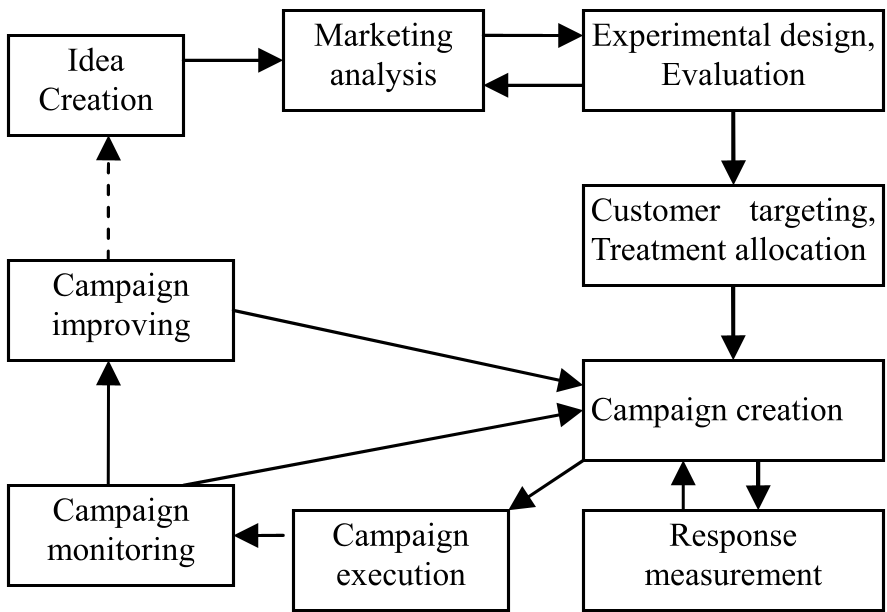
How does this apply to real-world marketing? The paper links the C-KDD model directly to a Campaign Management Process. By automating the "Response Measurement" and "Campaign Monitoring" steps through the C-KDD session mining, enterprises can execute thousands of personalized treatments simultaneously without waiting for a manual data science cycle.
Critical Insight: The Need for KDD-Epistemology
The most profound contribution of this work is the call for a "Theory of Knowledge" (Epistemology) for Data Mining. The author argues that we must move beyond asking "What does the model show?" to "What can be known from this data?" This theoretical grounding ensures that the "interestingness" of a rule isn't just a statistical fluke, but a business-critical insight.
Conclusion & Future Outlook
The C-KDD model offers a structured path toward Autonomous Data Mining. By separating local incremental mining from global rule merging, it provides the scalability needed for modern CRM.
Limitations: While the framework is robust, it assumes "all data is clear," which is rarely the case in real-world CRM environments where data pipelines are often broken or biased. Future researchers should look into how this integrative framework handles "Noisy" or "Missing" business logic.
Takeaway for Practitioners: Stop viewing Data Mining as a report-generating task. View it as a continuous organizational learning process where the goal is to build a self-evolving knowledge repository.