
The Ghost in the Machine: How Data Quality Distorts Corporate Power Networks
The effects of data quality on the analysis of corporate board interlock networks
This paper presents a systematic framework for assessing data completeness and accuracy in large-scale social networks, specifically focusing on the global corporate board interlock network. By leveraging Gibrat's Law and lognormal revenue distributions, the authors develop a method to quantify missing data and a topology-based pruning technique to resolve entity duplication, achieving a more realistic representation of corporate structures.
TL;DR
Big data in social science often suffers from a "veracity" problem: we have millions of rows, but much of it is incomplete or redundant. This paper demonstrates that failing to account for these issues creates "phantom" network structures. By applying a combination of macro-economic modeling and graph-theoretic pruning, the authors show how to transform noisy raw data into a clean, actionable map of global corporate influence.
Problem: The Mirage of Big Data
In the study of corporate interlock networks—where nodes are firms and edges represent shared board members—more data is not always better data. The authors identify two critical failures in current research:
- Missingness (MNAR): Data is rarely missing at random. Small firms in developing nations are often omitted, biasing the network toward large, Western corporations.
- Accuracy (Duplication): Large corporations often register multiple legal entities for tax or administrative reasons. Blindly crawling this data creates artificial "cliques" that don't represent real social ties, but rather legal paperwork.
Methodology: Fixing the Network Lens
1. Assessing Completeness via Gibrat's Law
The authors operate on the insight that firm sizes (revenue) naturally follow a lognormal distribution with power-law tails, a result of multiplicative growth processes (Gibrat's Law).
- The Trick: They used World Development Indicators (WDI) like GDP per capita to estimate the theoretical mean and distribution of firms in any given country.
- The Gap: By comparing the "observed" distribution in the Orbis database to this theoretical model, they could precisely quantify how many firms were missing in specific revenue brackets.
2. Pruning Duplicates via Structural Topology
To solve the accuracy issue, the authors moved beyond simple string matching (which fails if "Apple Inc." and "Apple Ltd." are both listed). They proposed a two-step "structural" merge:
- Board Similarity: Utilizing Jaccard similarity to find nodes sharing >50% of the same directors.
- Local Equivalence: Merging nodes that occupy nearly identical positions in the network (e.g., identical degree, clustering coefficients, and neighbor profiles).

Results: A Reality Check
The case study of Sweden reveals a startling reality: the "Original" network appeared to be a dense, highly clustered social world. However, after the proposed "Step 2" correction, the network metrics shifted dramatically:
- Nodes: Dropped by ~46%.
- Clustering Coefficient: Plummeted from 0.93 to 0.41, proving that the original "cliquishness" was mostly administrative noise.
- Community Detection: Instead of hundreds of tiny, fragmented clusters, the corrected network revealed stable, geographically-aligned business groups.
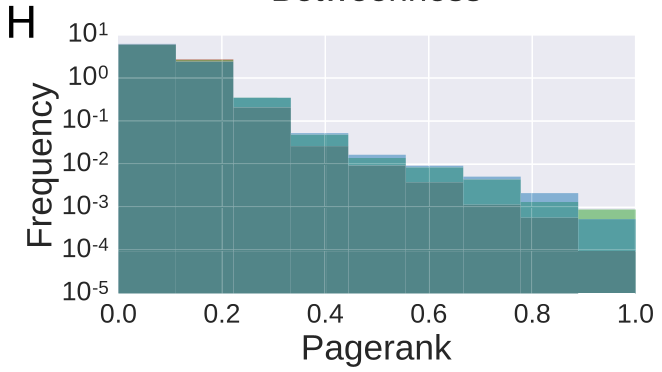
The authors also tested an SIR Diffusion Model. In the noisy data, information (or financial contagion) spread significantly faster because the duplicate nodes acted as "infection reservoirs." The cleaned data showed a much slower, more realistic saturation rate.
Critical Insight: Beyond Corporate Boards
While this work focuses on firms, the methodology is a wake-up call for any field using "found data." Whether you are analyzing Twitter interactions, co-citation networks, or email logs, the Inductive Bias of your collection method (e.g., snowball sampling) will create structural artifacts.
The value of this paper lies in its Generalizability. By using external "ground truth" distributions (like the WDI indicators here), researchers can finally move from "Big Data" to "Reliable Data."
Conclusion
The study proves that without rigorous data quality assessment, social network analysis is often just the study of database errors. By merging statistical physics (lognormal distributions) with network science, we can strip away the administrative noise to reveal the true skeleton of global corporate power.
Takeaway: Always ask, "Is this cluster a community, or just a multi-headed legal entity?"