
Automated OSN Profiling: Uncovering Vulnerabilities in Semi-Structured Data
Data retrieval from online social network profiles for social engineering applications
This paper presents an automated data retrieval framework specifically designed for semi-structured Online Social Network (OSN) profiles. Using a Breadth-First Search (BFS) algorithm and HTML tokenization, the method successfully extracted over 800 profiles and personal attributes from MySpace to facilitate social engineering vulnerability research.
TL;DR
This research addresses the technical challenge of scraping highly customized, semi-structured social networking profiles. By combining HTML tokenization with a Breadth-First Search (BFS) traversal, the researchers successfully automated the extraction of personal attributes and social graphs from MySpace, demonstrating how easily "private" data can be aggregated for social engineering analysis.
Context & Positioning
In the landscape of 2000s-era social media, MySpace represented the "Wild West" of semi-structured data—where users could inject custom HTML and CSS, breaking traditional rigid scrapers. This paper positions itself as a bridge between manual sociological studies and fully automated web crawling, focusing on the security implications of data that lives in the "Deep Web" (content not indexed by standard search engines).
The Problem: The Chaos of Customization
The primary difficulty in scraping social networks lies in Representation Variance. Unlike XML or XHTML, which follow strict syntax, OSN profiles are:
- Semi-structured: Data fields (age, location, interests) exist, but their positions change.
- Customized: Users modify templates, making "absolute tag path" wrappers (like traditional wrappers) brittle and prone to failure.
- Hidden: Much of the rich data is only visible to logged-in users or through specific relationship paths (the "Deep Web").
Methodology: Tokenization and Graph Traversal
The authors propose a multi-stage pipeline designed to handle structural unpredictability:
- HTML Tokenization: Instead of relying on a fixed DOM tree, the system parses the HTML into a vector of tokens. By stripping tags and analyzing the remaining character arrays, the system identifies key attributes (e.g., "Horoscope," "Location") regardless of where they appear on the page.
- Repository Management: Data is stored in a PostgreSQL database to allow for offline mining, reducing the need for repeated, expensive live requests.
- BFS Algorithm: To map the social network, the authors use a Breadth-First Search. This allows the crawler to discover "A's friends," then "A's friends' friends," creating a comprehensive map of affiliations.
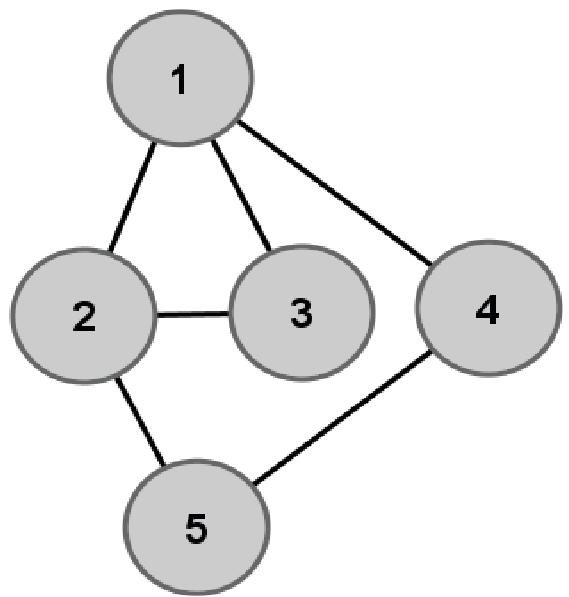 Figure 1: The BFS model used to traverse the social network, ensuring a layered discovery of profile connections.
Experimental Findings & Security Insight
The pilot test was remarkably successful, extracting 800+ profiles and their associated metadata.
Key Observations:
- Data Leakage: Even profiles marked as "private" leaked metadata including nickname, age, and location because the underlying HTML provided these tokens to the browser even if the UI hid them.
- Social Engineering Vectors: The authors highlight that minor attributes (horoscope + location) can be fused to predict birthdays, a common security question for identity theft.
- Relationship Clustering: The extraction focused on "Top Friends," assuming these represent the strongest social ties—the most potent vectors for transitivity-based attacks (e.g., "If A trusts B, and I impersonate B, I can attack A").
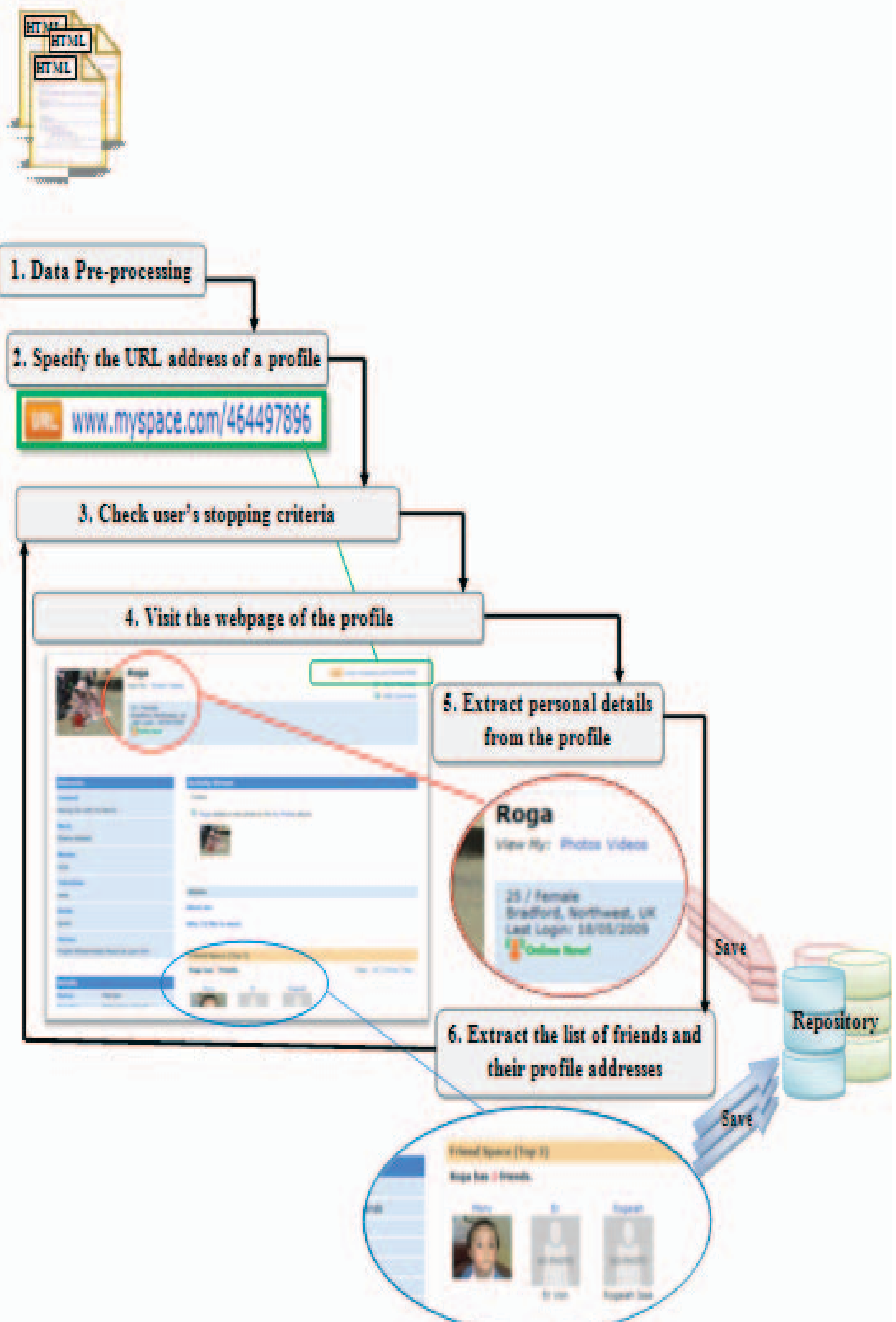 Table 1: A comparison highlighting the shift from manual and random sampling to the paper's structured automated approach.
Critical Analysis & Future Directions
While effective, the paper acknowledges significant limitations. The reliance on BFS can be memory-intensive as the search depth increases. Furthermore, the "fan-based" relationships (following a band or celebrity) differ structurally from "friend-based" relationships, requiring more nuanced heuristic filters.
Takeaway for Today's AI Era: While this paper used basic tokenization, its core logic—that semi-structured social data is a goldmine for profiling—remains the foundation for modern OSINT (Open Source Intelligence) and the training of Large Language Models. The transitivity of trust in a social graph is still the primary weakness exploited in modern phishing and social engineering.
Summary
The work by Alim et al. proves that automation is the "only way forward" for analyzing social networks. By moving beyond rigid wrappers to a token-based approach, they laid the groundwork for identifying personal vulnerabilities on a massive scale.