
Secure V2HX: Bridging Vehicular Networks and Healthcare via Zero-Knowledge Proofs
Data Security Through Zero-Knowledge Proof and Statistical Fingerprinting in Vehicle-to-Healthcare Everything (V2HX) Communications
This paper proposes a secure communication framework for Vehicle-to-Healthcare Everything (V2HX) using Zero-Knowledge Proof (ZKP) for authentication and Statistical Fingerprinting (SF) for data privacy. It leverages fog computing to facilitate trusted remote monitoring between Vehicular Ad hoc Networks (VANETs) and Healthcare Enterprises (HEs) while maintaining low computational overhead.
TL;DR
As healthcare moves toward an "omni-inclusive" model, the need to connect Vehicular Ad hoc Networks (VANETs) with Healthcare Enterprises (HE) has grown. This paper introduces a novel framework that uses Zero-Knowledge Proof (ZKP) for authenticating mobile nodes and Statistical Fingerprinting (SF) for data obfuscation. By focusing on hardware-level execution cycles and time-series variance, the system provides high security for Personal Health Devices (PHD) without the heavy overhead of traditional encryption.
The Problem: The Vulnerable Intersection of Mobility and Health
The US Department of Homeland Security classifies healthcare as critical infrastructure, yet it remains highly vulnerable. As patients move through systems, their medical records—a time-series of sensitive hierarchical data—are increasingly exposed to cyber threats.
Current constraints include:
- Heterogeneity: Medical devices (PHD), legacy information systems, and vehicular units (OBU) all have different computational capacities.
- Incompatibility: No single encryption scheme fits all devices; traditional methods often overwhelm lightweight sensors.
- Interconnectivity Gaps: No existing framework effectively bridges the gap between VANET-based data initiatives and Healthcare Information Systems (HIS) while maintaining privacy.
Methodology: Trust Without Knowledge
The authors' "Secret Sauce" lies in two main technical pillars:
1. Zero-Knowledge Proof Authentication
Instead of relying on a Central Authority (CA) or sharing passwords, the system uses ZKP. Authentication is bound to the resident hardware platform. The system calculates the processor clock cycles () required for specific service executions in a sandboxed environment. This creates a "Blueprint Signature" for a specific On-Board Unit (OBU).
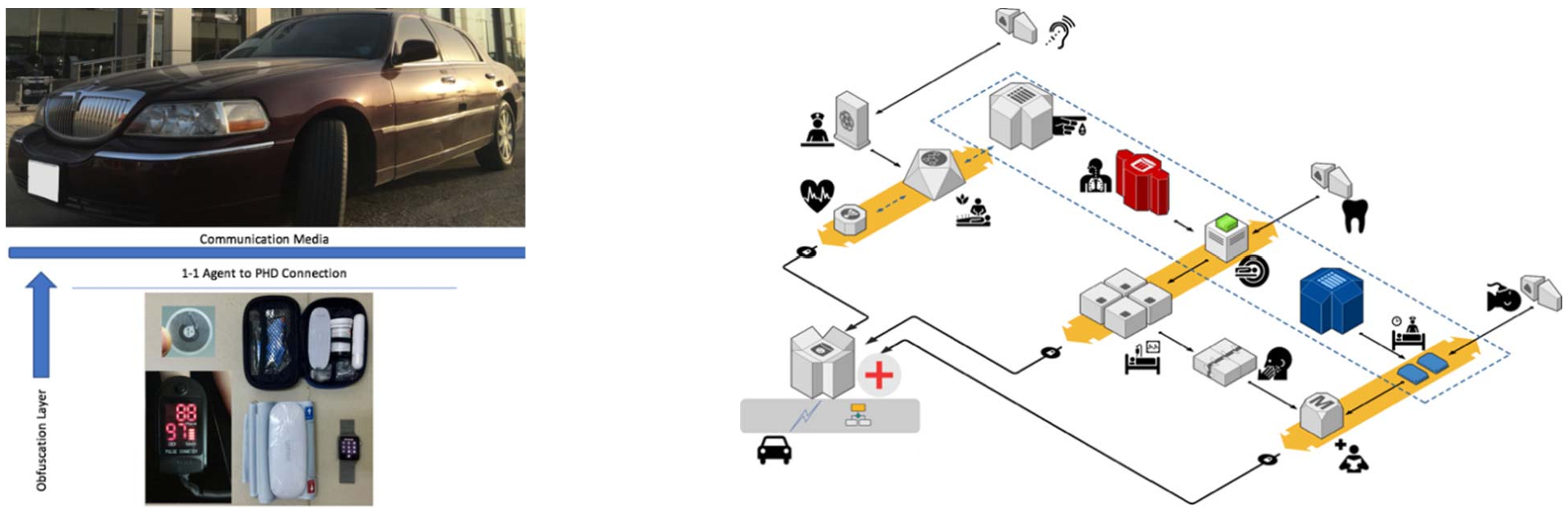 Fig 1: The proposed obfuscation layer between sensor generation and communication backhaul.
2. Statistical Fingerprinting (SF)
To secure data in transit, the paper uses SF based on ARIMA (Autoregressive Integrated Moving Average) models. Rather than sending the raw sensor reading (e.g., heart rate), the system calculates and transmits the variance from a predicted model.
- Benefit: An attacker performing a Man-in-the-Middle (MiTM) attack would need a massive volume of historical time-series data to reconstruct the baseline and calculate the original values.
Experiments and Performance
The researchers built a testbed using Arduino Uno and eHealth Sensor Shields (measuring SPO2 and ECG) to simulate a real-world fog computing environment.
Key Findings:
- Traffic Reduction: By utilizing the statistical variance model, the network traffic was reduced by 66.75%. This is crucial for low-bandwidth 6LowPAN or Zigbee healthcare networks.
- Reliability: The reconstruction of vital signs (Pulse Rate and Oxygen Saturation) at the monitoring terminal showed a perfect match with the source data, indicating zero data corruption during the obfuscation/de-obfuscation process.
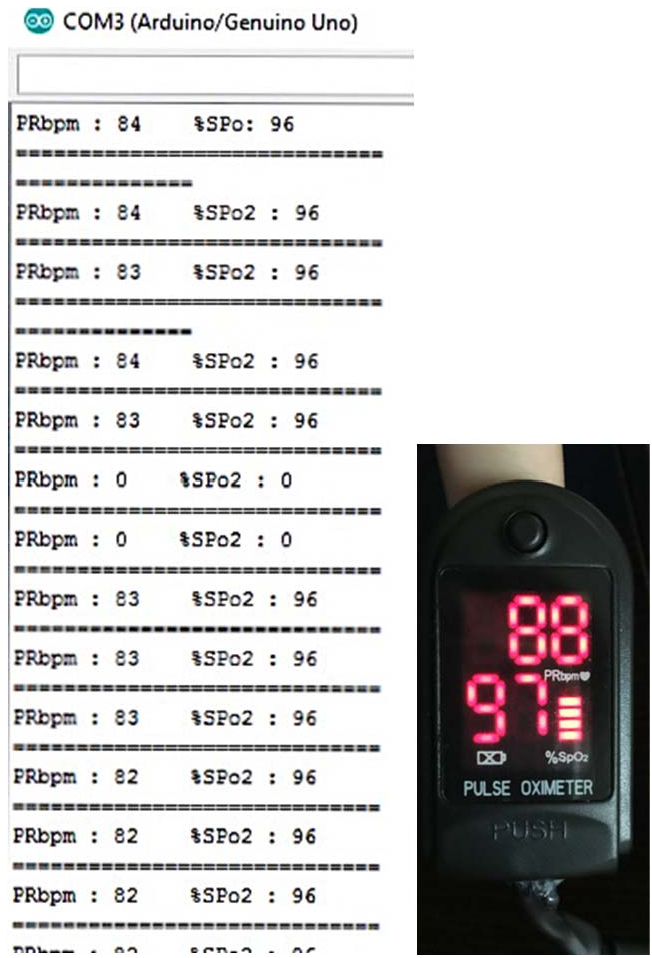 Fig 2: Reliability results showing stable data transfer for SPO2 readings through the cloud.
Critical Insight: Beyond Multi-Factor Authentication
The beauty of this framework is its autonomic self-sufficiency. By basing trust on the physical execution characteristics of the hardware (), it moves security away from the application layer down to the physical/logic layer.
The authors argue this is "framer than multi-factor authentication" because it doesn't just check what you know (password) or what you have (token), but how your specific hardware performs tasks.
Conclusion & Future Directions
The proposed V2HX framework successfully demonstrates that statistical methods can replace heavy encryption for data privacy in IoT. While the current model requires specific resource requests, the authors look toward Bayesian estimates in the future to identify target machines without explicit messaging, further reducing the network footprint.
Takeaway for Practitioners: If you are designing for the Internet of Medical Things (IoMT), consider data obfuscation through variance modeling—it's lighter, faster, and surprisingly resilient to data theft.