
Beyond Emotions: Decoding Universal Human Needs from the Social Stream
A Dataset for Psychological Human Needs Detection From Social Networks
This paper introduces a novel dataset and a multi-layer framework for detecting psychological human needs from Twitter data. Based on Self-Determination Theory (SDT), the authors categorized 6,334 manually annotated tweets into three universal needs: Autonomy, Competence, and Relatedness, achieving high inter-annotator agreement.
TL;DR
Researchers have developed a theoretically-grounded framework to move beyond simple "sentiment analysis" by identifying the underlying Psychological Human Needs (Autonomy, Competence, and Relatedness) expressed in social media. By creating a manually annotated corpus of over 6,000 tweets, this work provides the foundation for "Affect-Aware Cities" to understand the root causes of citizen behavior and well-being.
Context: Why "Happy" vs. "Sad" Isn't Enough
For years, NLP researchers have focused on What people feel—labeling tweets as positive, negative, or mapping them to Ekman’s six basic emotions. However, these are merely symptoms. To understand the Why, we must look at Human Needs Theory. Whether a person is frustrated because they lack control (Autonomy), feel incapable (Competence), or feel isolated (Relatedness) suggests entirely different interventions for mental health or urban social support.
The Multi-Layer Discovery Framework
The authors didn't just label data; they built a hierarchy of understanding based on Self-Determination Theory (SDT).
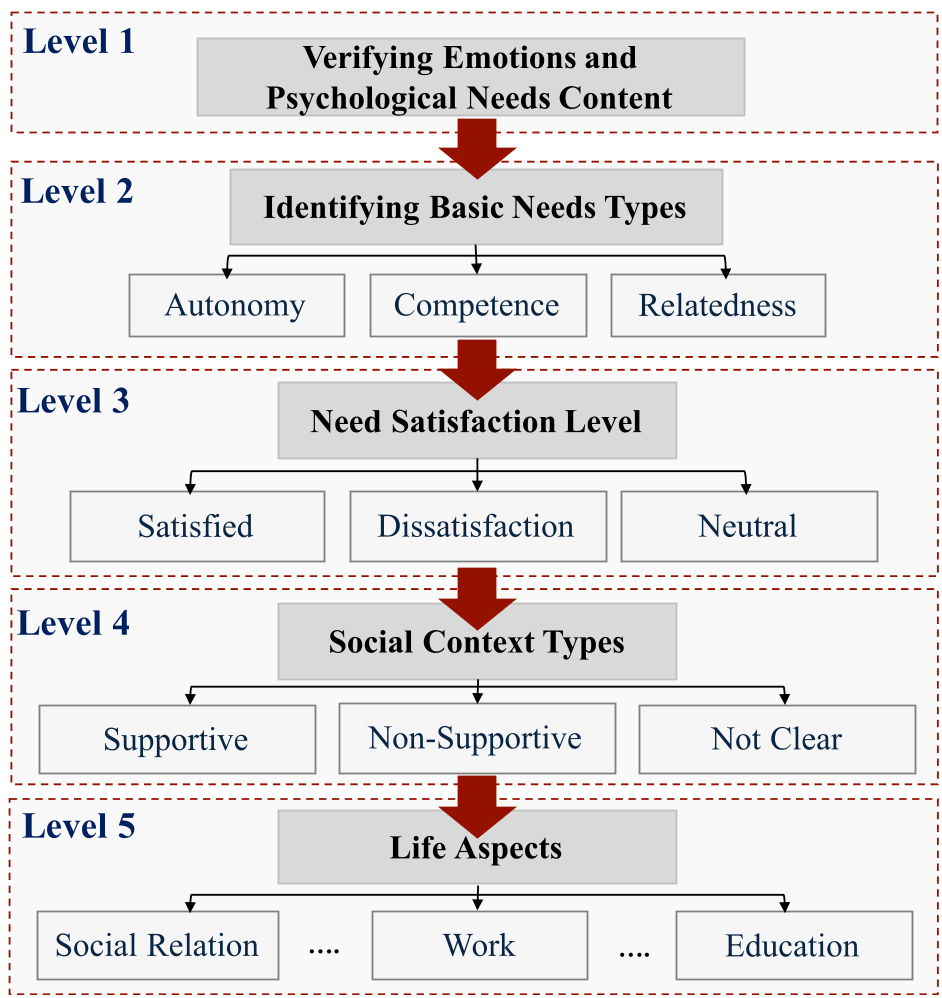
- Emotion Verification: Does the tweet actually reflect the author's state? (Filtering out "The movie #Joy was great").
- Need Identification: Mapping the text to Autonomy (Self-direction), Competence (Ability), or Relatedness (Belonging).
- Satisfaction Level: Is the need being met?
- Social Context: Does the environment (family, government, etc.) support or thwart the need?
- Life Domain: Is this happening at work, in education, or in personal life?
Methodology: Bridging Psychology and Data Science
The team collected over 313,000 tweets using emotional hashtags as "distant labels" but recognized that noise is high in social media. To ensure academic rigor, they used psychometric scales—the same tools psychologists use in clinical settings—to guide manual annotators.
The result is a high-quality dataset with a Fleiss Kappa of 0.819 for need categories, indicating "Almost Perfect" agreement among experts.
Key Insights from the Corpus
The statistical distribution of the dataset reveals fascinating patterns about how we use social media:
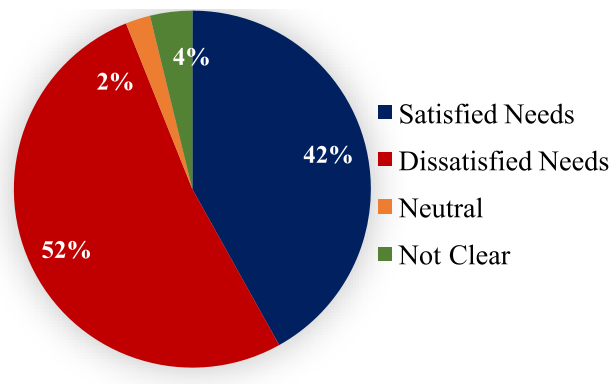
- The Power of Connection: Relatedness is the most frequent need expressed (52.71%), highlighting that social media remains primarily a tool for seeking belonging and meaningful relationships.
- The Struggle for Autonomy: Nearly 28% of tweets related to needs were about Autonomy, often expressed through frustration with external pressures or a desire for self-expression.
- Environment Matters: Over 30% of tweets revealed "non-supportive" social contexts, providing a real-time heat map of where social structures (like government or work) are failing individuals.
Deep Insight: From Data to Proactive Well-being
The true value of this work lies in its predictive potential. By identifying Dissatisfied Needs, we can move towards predicting long-term psychological states like Stress, Mood Disorders, and even potential Violence/Conflict.
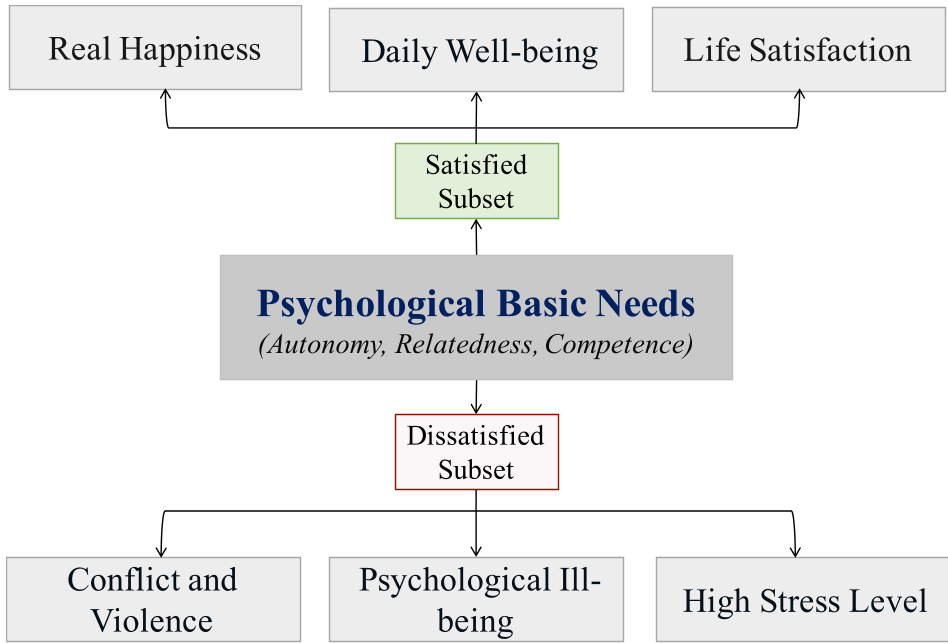
As the authors note, unsatisfied needs are often the root causes of conflict. In a "Smart City" context, an AI system that monitors these signals could allow policy makers to adapt services before a crisis occurs.
Conclusion & Future Work
This paper represents a critical bridge between Motivational Psychology and Computational Linguistics. While the dataset is a breakthrough, its current limitation lies in its scale and focus on English-language Twitter.
The next frontier? Expanding this "Need-Aware" AI to multi-modal data (images and video) and diverse cultures to see if the "universal" needs of SDT manifest differently across the global digital landscape.