
Digital Inclusion Beyond Subtitles: How Hearing Loss Profiles Shape Social Media Behavior
Examining the Characteristics of Deaf and Hard of Hearing Users of Social Networking Sites
This study investigates how the level of hearing loss impacts communication patterns and behavioral activities of Deaf and Hard of Hearing (D/HH) users on Social Networking Sites (SNSs). Using a sample of 199 German participants, the research maps relationships between hearing status, preferred communication modes (Sign vs. Written), and the perceived accessibility of digital platforms like Facebook.
TL;DR
Access to social media for the Deaf and Hard of Hearing (D/HH) community is not a "one-size-fits-all" scenario. This study reveals that the severity of hearing loss significantly dictates whether a user communicates via text or sign language and that the very act of being active—liking, commenting, and posting—actually increases a user's perception of how accessible a site is.
Background: The Hidden Linguistic Barrier
Social Networking Sites (SNSs) are often assumed to be "equalizers" because they are inherently visual. However, for many profoundly deaf individuals, written language is technically a "second language" that can take significantly longer to master than for hearing peers. This research moves beyond the binary of "hearing vs. deaf" to explore how the spectrum of hearing loss influences online social integration.
The Core Methodology: Mapping the Spectrum
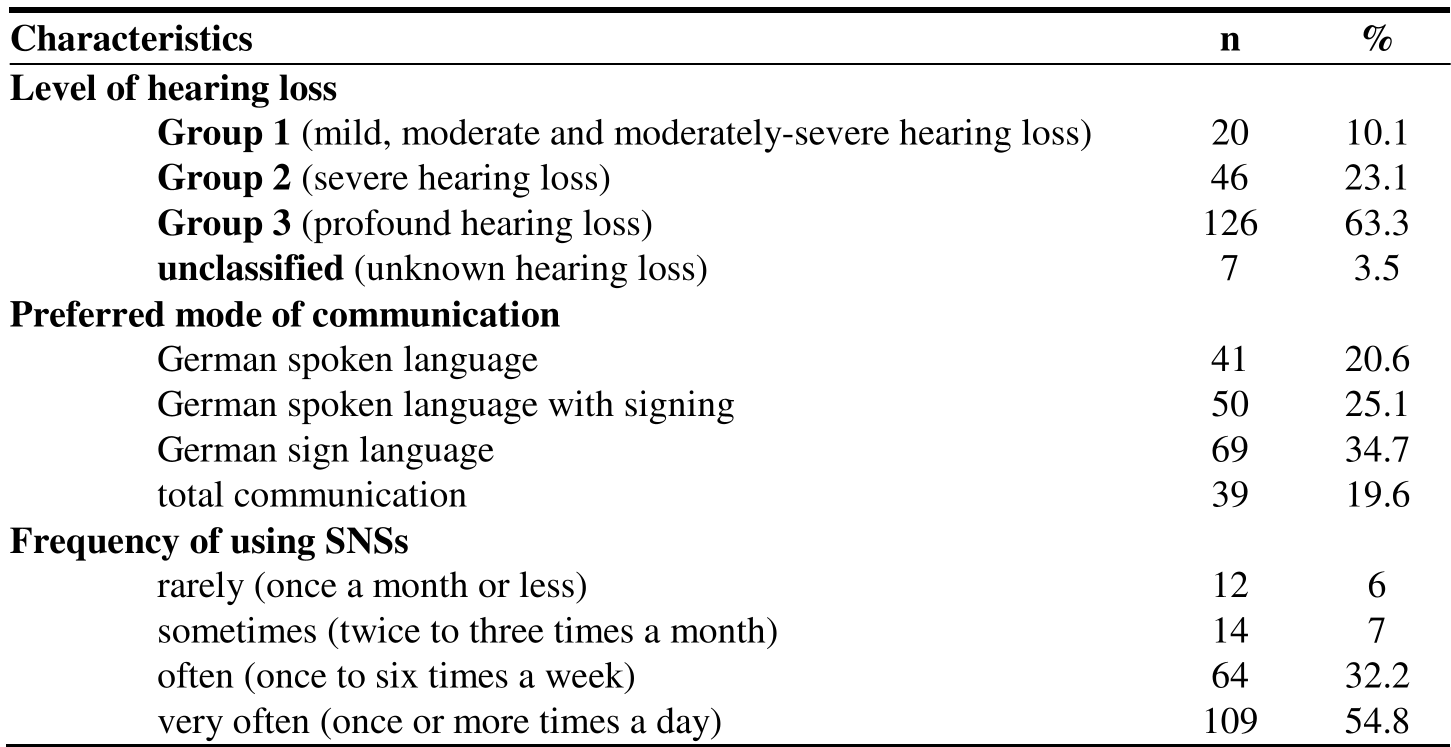
The researchers surveyed 199 D/HH users in Germany, segmenting them into three distinct groups:
- Group 1: Mild to moderately-severe hearing loss (27–70dB).
- Group 2: Severe hearing loss (71–90 dB).
- Group 3: Profound hearing loss (>90dB).
By collecting data on both offline habits (education, family communication) and online actions, the authors applied ANOVA testing to see if these physical characteristics translated into different digital footprints.
Key Insights: Who is Doing What?
1. The Written vs. Sign Language Trade-off
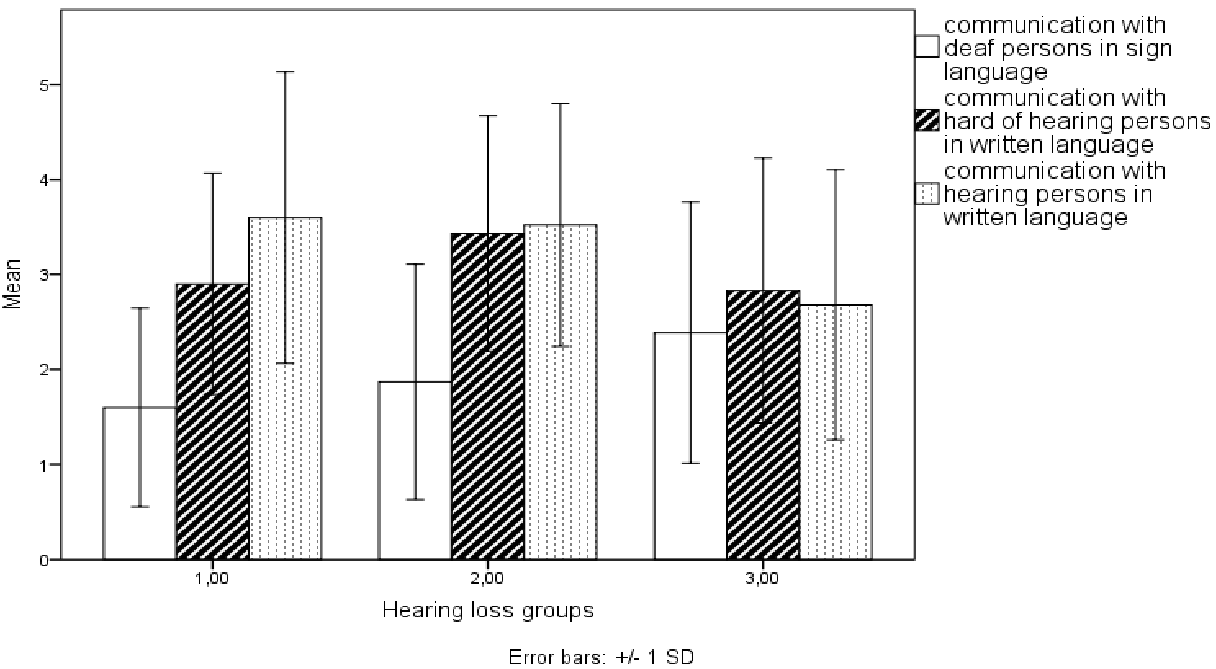
The study found a clear inverse relationship:
- Low Hearing Loss: Highly active in written communication with hearing people.
- Profound Hearing Loss: More frequent use of sign language to communicate with other deaf users, but lower frequency in written interactions.
2. The Video Paradox
While videos have the potential to be the "native" medium for sign language, the study found that users with the lowest level of hearing loss posted videos the least frequently. The highest engagement with video was found in the "middle" group (severe hearing loss), suggesting a unique niche for visual media in this demographic.
3. Activity Drives Perceived Accessibility
Perhaps the most intriguing finding is the positive correlation between activity and perception.
The data showed that the more a user "actualized" their profile, commented, or liked posts, the more they felt the site was "suitable" for them. This suggests a feedback loop: ease of use leads to activity, and activity reinforces a sense of belonging and technical accessibility.
Critical Analysis & Takeaways
The findings present a compelling argument for Universal Design that goes beyond text.
- The Literacy Gap: Because profoundly deaf users may struggle with written language, SNS platforms should move toward supporting more non-textual interaction cues.
- The Video Opportunity: The low frequency of video posting among some groups suggests that current video-sharing interfaces might not be optimized for sign-language-specific needs (e.g., lighting, framing, or stabilization specifically for signing).
Limitations
The study relies on self-reported data, which can be prone to bias, particularly regarding language proficiency. Furthermore, the data was collected in a "pre-TikTok" era where Facebook was the primary platform; today’s short-form video explosion likely offers a different landscape for D/HH users.
Conclusion
This research proves that the "Deaf community" on social media is heterogeneous. For developers and researchers, the lesson is clear: accessibility isn't just about adding a "closed caption" button; it’s about creating an environment where users of all hearing levels feel empowered to be active participants rather than passive observers.