
DEAP: Pioneering Multimodal Emotion Recognition via Physiological and Content Analysis
DEAP: A Database for Emotion Analysis ;Using Physiological Signals
The paper introduces DEAP, a large-scale multimodal database for human affective state analysis. It utilizes EEG, peripheral physiological signals, and facial videos from 32 participants watching 40 music video clips, achieving significantly better-than-random single-trial classification of arousal, valence, and liking.
TL;DR
The DEAP database is a landmark contribution to affective computing, providing a massive multimodal dataset of EEG and peripheral physiological signals. By leveraging music videos as stimuli and a sophisticated decision-fusion architecture, the researchers demonstrated that human emotions can be decoded with significant accuracy, outperforming traditional content-only systems.
Background & Motivation: The Quest for Spontaneous Emotion
Most early attempts at emotion recognition relied on "acted" datasets—actors making exaggerated faces at a camera. However, real human interaction is subtle and internal. The researchers behind DEAP (Database for Emotion Analysis using Physiological signals) recognized that to build truly "emotionally intelligent" computers, we need to capture spontaneous biological responses. They chose music videos as the medium, as these are powerful emotional triggers that reflect modern multimedia consumption patterns.
Methodology: Mapping the Internal and External
The DEAP framework is built on three distinct data pillars:
- Central Nervous System (EEG): 32-channel recordings capturing brain rhythms (Alpha, Beta, Theta, Gamma).
- Peripheral Nervous System: Heart rate (BVP), skin conductance (GSR), respiration, and temperature.
- Multimedia Content: The "external" features of the videos themselves, such as lighting, rhythm, and audio pitch.
The authors didn't just pick random videos; they used a semi-automated pipeline to find the most "emotionally charged" one-minute highlights using Last.fm tags and regression-based highlight detection.
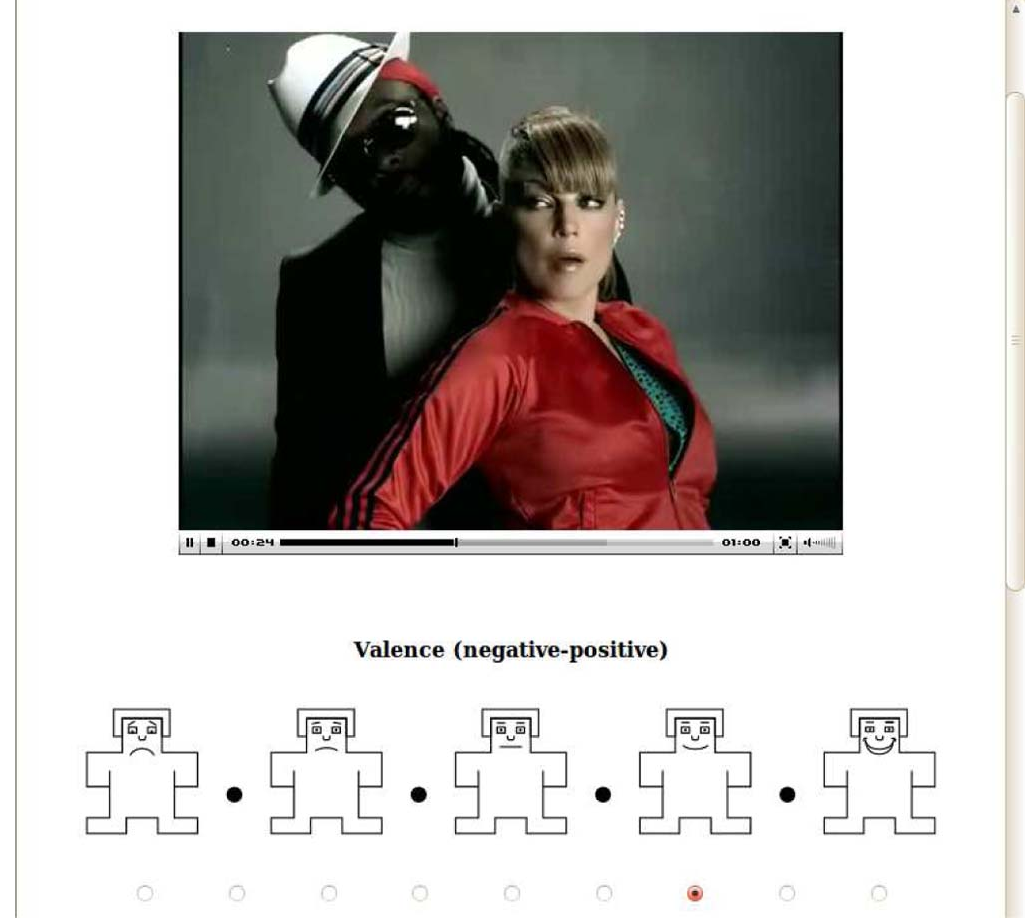 Figure 1: The Valence-Arousal distribution of the selected stimuli, highlighting the four emotional quadrants.
Exploring the Bio-Markers of Affect
One of the paper's critical contributions is the identification of EEG correlates. For instance:
- Arousal: Negatively correlated with Alpha power, confirming the theory that Alpha oscillations reflect a "resting" or inhibited brain state.
- Valence: Strongly linked to high-frequency Gamma power in the temporal regions, suggesting that "pleasantness" involves complex higher-order cognitive processing.
Results: The Power of Fusion
The researchers tested whether a machine could predict a user's self-reported emotion (Arousal, Valence, Liking) based on a single trial.
| Modality | Arousal (F1) | Valence (F1) | Liking (F1) |
|---|---|---|---|
| EEG | 0.583 | 0.563 | 0.502 |
| Peripheral | 0.533 | 0.608 | 0.538 |
| MCA (Content) | 0.618 | 0.605 | 0.634 |
While individual modalities performed well, Decision Fusion was the game-changer. By weighting the modalities based on their reliability, the system reached an F1-score of 0.652 for valence.
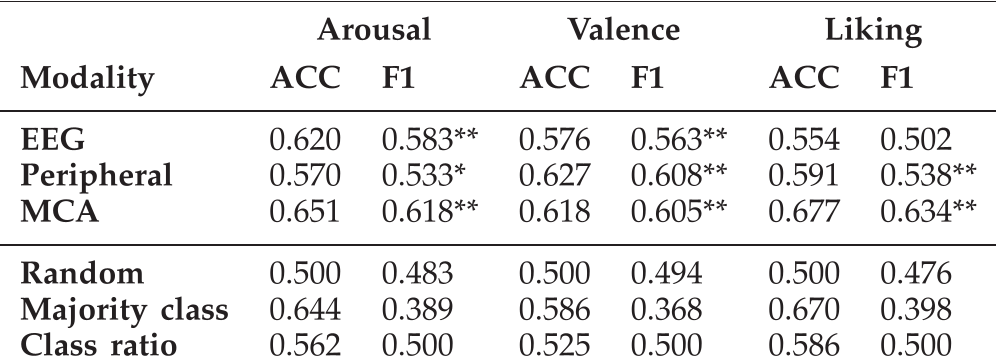 Figure 2: Performance metrics showing how each modality compares against random and majority-class baselines.
Critical Analysis & Takeaways
The DEAP paper is not just a dataset; it’s a validation of interdisciplinary research. It shows that while brain signals (EEG) are excellent for detecting intensity (Arousal), peripheral signals like skin conductance are more descriptive of the "flavor" of the emotion (Valence).
Limitations: The authors acknowledge high inter-participant variability. What makes person A "happy" might look different in their EEG than person B. This underscores the need for personalized models rather than one-size-fits-all classifiers.
Future Outlook
Today, DEAP remains one of the most cited datasets in the field. It laid the groundwork for modern AI assistants that can theoretically sense your mood through a smartwatch or a headset, moving us closer to a future where technology adapts to our feelings in real-time.