
Facebook as the Distributed Spectacle: A Modern Debordian Critique
A Debordian Analysis of Facebook.
2009-12-01
Summary
Problem
Method
Results
Takeaways
Abstract
This paper presents a "Debordian Analysis" of Facebook's rapid adoption in Italy (circa 2008-2009). Utilizing Guy Debord’s "Society of the Spectacle," the authors argue that social media acts as an advanced capitalistic mechanism that commodifies human relationships through image-mediated interactions, reaching SOTA theoretical critique by contrasting "Wikinomics" with "Spectacular" alienation.
## TL;DR
While many technologists view social media as a democratic breakthrough in collaboration, this paper argues it is the ultimate realization of **Guy Debord’s "Society of the Spectacle."** By analyzing the Italian "invasion" of Facebook in 2008, the authors reveal how the platform transforms social relations into a series of images, fostering a "distributed spectacle" where narcissism and alienation are not side effects, but core features of advanced digital capitalism.
## The Illusion of Connectivity
The mid-2000s saw a surge of optimism regarding "Wikinomics"—the idea that the internet was evolving into a giant, peer-shared economy based on openness. However, the authors posit that Facebook represents a **regression** rather than progress. The core problem is that authentic social life has declined from *being* into *having*, and finally, into *merely appearing*.
In the Italian context, where political frustration was high, Facebook became a stage. But instead of fostering real political change, it provided a "comfortable, smooth, reasonable, democratic unfreedom," as described by Herbert Marcuse. It offered a channel for voice that was ultimately mediated and controlled by the logic of the commodity.
## Methodology: The Philosophical Lens
The authors employ a multi-layered Marxist and Postmodernist framework to dissect the platform:
1. **H. Marcuse (One-Dimensional Man):** Technology is not neutral; it is a system of domination that suffocates real opposition while appearing democratic.
2. **J.F. Lyotard (Postmodern Condition):** Knowledge is only recognized if it is translatable into "computer language." Anything else is marginalized.
3. **J. Baudrillard (Simulacra):** On Facebook, the "profile" becomes a simulacrum—a copy that has no original. The digital representation *is* the reality.
### The Case of Italy
The paper highlights a staggering growth curve in Italy between 2008 and 2009.
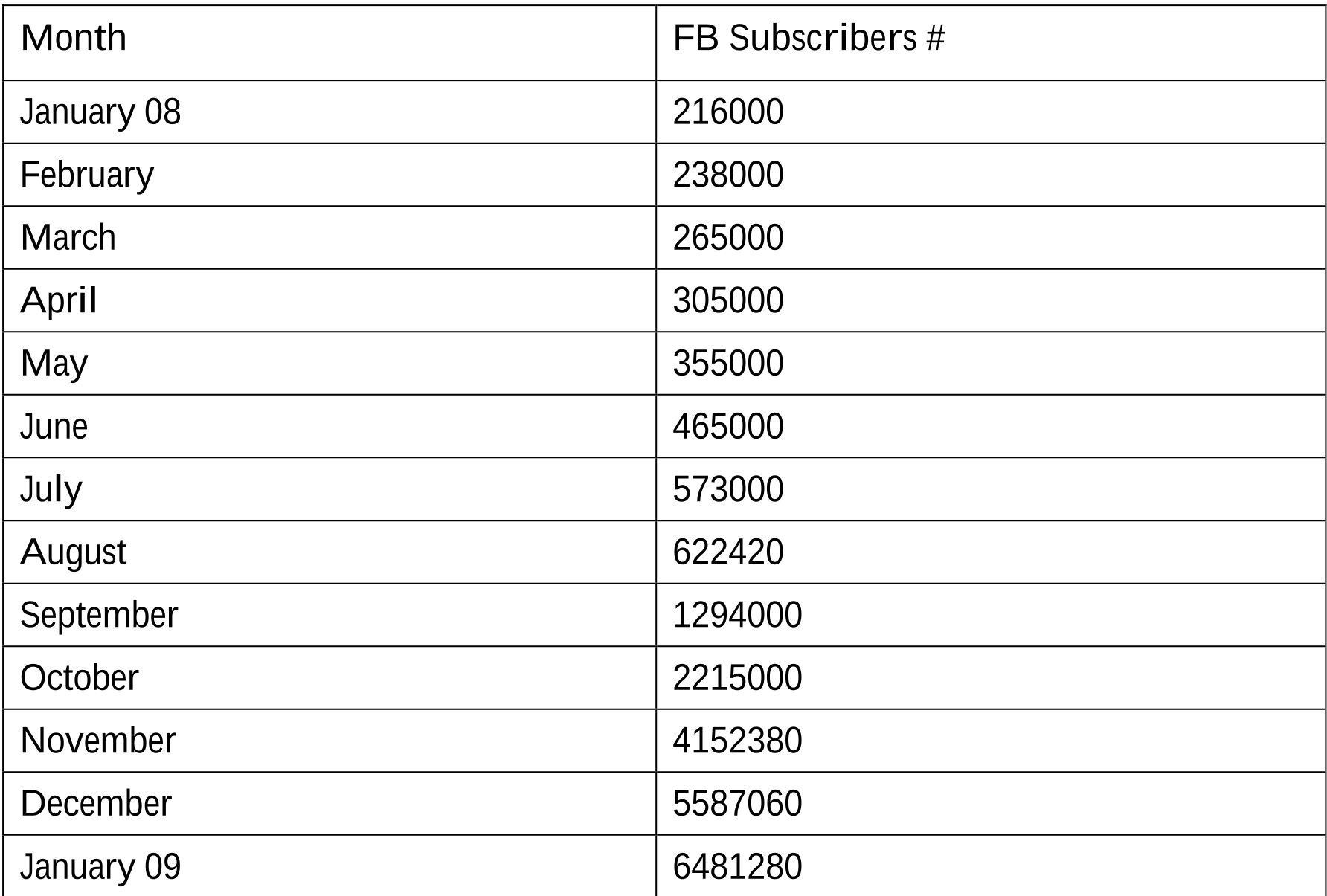
Through ethnographic observation of high-profile users (writers, mayors, and entertainers), the authors noted that even "collaborative" acts were used for self-advertisement and acknowledgment-seeking. The spectacle was not just being broadcast; it was being *distributed* among the users themselves.
## The "Integrated Spectacle" vs. Genuine Collectivism
The authors make a sharp distinction between **Wikipedia (Open Source)** and **Facebook (Advanced Capitalism)**:
* **Wikipedia:** A genuine effort of collective action and peer-production.
* **Facebook:** A "Trojan Horse" that uses the network model to hide an old-fashioned broadcasting logic. It creates a "Spectacle of the Everyday" where private life is colonized by the mercantile form of social organization.

## Critical Insights & Conclusion
The "Spectacle" is not just a collection of images; it is a **social relation mediated by images**.
### Key Takeaways:
* **Alienation 2.0:** Facebook amplifies narcissism by making the individual feel they are at the "center of a virtually networked stage."
* **Commoditized Identity:** Our identities become the exchange value that keeps the capitalistic engine of the platform running.
* **The Broadcasting Trap:** By appearing to be a network, Facebook actually reinforces traditional power structures where "opinion-makers" lead a passive or gregarious audience.
In conclusion, the paper warns that we must not mistake massive user participation for democratic progress. Facebook, in this Debordian view, is less a tool for liberation and more a sophisticated method for the spectacle to integrate itself into the very fabric of our everyday reality.