
PerMiner: Decoding Systematic Glitches through Periodic Pattern Mining
Debugging Embedded Multimedia Application Traces through Periodic Pattern Mining
The paper introduces PerMiner, a novel data mining framework for debugging embedded multimedia applications by extracting frequent periodic patterns from execution traces. It addresses the complexity of multi-core trace analysis by identifying recurring behaviors and gaps that signify performance "drop-outs" or synchronization issues.
TL;DR
Debugging modern SoC (System-on-Chip) multimedia applications is a nightmare of "big data" traces. PerMiner transforms these massive logs into Minimal Periodic Generators, allowing developers to see not just what happened, but where the expected rhythm of the system broke down. By treating trace analysis as a three-dimensional problem (Items, Time, and Periodicity), it detects hidden conflicts between drivers and applications that manual inspection would miss.
Problem & Motivation: The Chaos of Multi-Core Traces
Embedded systems for tablets and smartphones (like the STi7200) generate vast quantities of events—interrupts, context switches, and function calls. Multimedia apps are inherently periodic (processing frames at set intervals), yet "glitches"—like audio cracks or video drops—often stem from subtle disruptions in this periodicity.
The Gap in Current Research: Traditional data mining looks for Association Rules (A happens with B). However, multimedia needs Periodic Mining. Most existing algorithms assume "perfect" cycles or fixed-size gaps. In reality, a scheduler might delay a function by a few microseconds, or a USB interrupt might steal cycles sporadically. We need a way to find periodic patterns that allow for irregular gaps.
Methodology: The Core Triadic Engine
The researchers move beyond simple binary relations (Item × Transaction) to a Triadic Context:
- Items (I): The specific events/functions.
- Periods (P): The frequency of occurrence.
- Transactions (D): The specific points in the execution timeline.
1. Defining the "Periodic Pattern"
Instead of a rigid sequence, the authors define a pattern as a set of cycles with the same period that are consecutive and non-overlapping. Crucially, they allow the "distance" between cycles to be arbitrary, capturing the reality of non-deterministic OS scheduling.
2. Eliminating Redundancy (MPG)
Raw triadic mining produces thousands of redundant "concepts" (e.g., if a pattern repeats every 2ms, it also technically repeats every 4ms and 6ms). The paper introduces Minimal Periodic Generators (MPG). This is a lossless compression of the results—it keeps only the "simplest" explanation for a periodic behavior, drastically reducing the cognitive load on the developer.
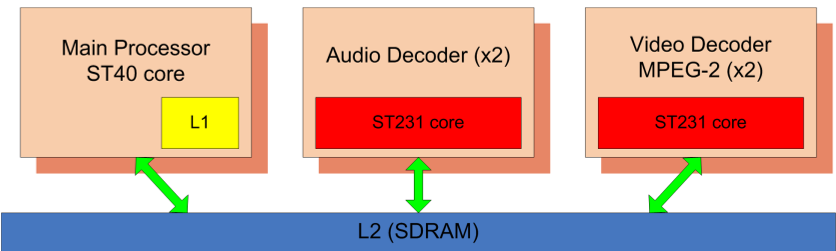 Figure 1: The STi7200 SoC architecture where these traces are generated.
The "Competitors Finder": Identifying Silent Conflicts
A standout feature of this work is the automated detection of Competitor Patterns. If Pattern A (e.g., a high-priority USB interrupt) consistently appears exactly when Pattern B (the video decoder) "gaps" or stops, the tool flags them as competitors. This provides a "smoking gun" for performance bottlenecks.
Experimental Proof: Finding the Invisible Bug
The authors tested PerMiner on two real-world scenarios:
Case 1: HNDTest (Audio/Video)
Using the Competitors Finder, they discovered that Interrupt 168 (USB) was masking Interrupt 16 (System Clock). When the application activity peaked, it prevented the processor from handling USB data, leading to buffer overwrites.
Case 2: GStreamer Audio
In a GStreamer pipeline, they expected a steady 32ms mixing period. Visualization of the periodic patterns (see below) revealed unexpected white gaps.
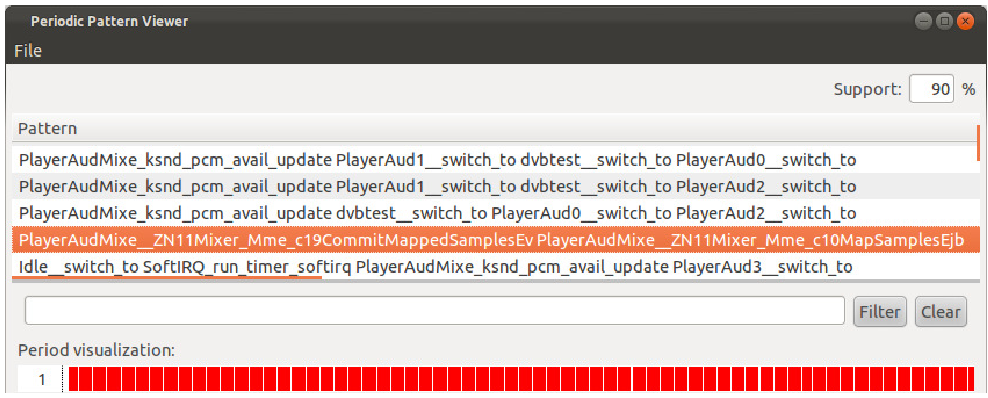 Figure 2: Pattern visualization showing clear gaps in periodicity.
The Result: The developers found that an interrupt responsible for flushing audio samples was being generated too late. This underflow issue was invisible in standard debuggers but obvious when the "rhythm" of the trace was mapped out.
Critical Insight & Conclusion
PerMiner succeeds because it stops treating execution traces as a linear stream of text and starts treating them as a frequency-domain problem.
Takeaways:
- Efficiency: Reducing ~110k concepts to ~800 MPGs makes automated debugging viable.
- Versatility: The method works across different OSs (Linux/RTOS) and architectures (ARM/ST40).
- Limitation: Currently, it doesn't account for the order of events within a transaction (e.g., if A always happens before B). Future work integrating Sequential Pattern Mining would likely make this even more powerful.
By automating the discovery of "periodic breaks," this research provides a essential map for navigating the increasingly complex world of embedded multimedia.