
iTrust: Building a Censorship-Resistant Search Engine for the Mobile Masses
Decentralized Mobile Search and Retrieval Using SMS and HTTP to Support Social Change
This paper introduces iTrust, a decentralized search and retrieval system designed to circumvent government censorship during social unrest. It specifically details an SMS-HTTP bridge and an Android interface that enable low-end and modern mobile phones to participate in a peer-to-peer network without relying on centralized search engines or stable Internet access.
TL;DR
In the face of government-mandated internet blackouts and centralized platform scrubbing, iTrust provides a decentralized alternative for search and retrieval. By bridging the ubiquity of SMS with a randomized P2P metadata distribution system, researchers at UCSB have created a framework where information remains findable and retrievable even when the master switch for the Internet is flipped.
The Fragility of Centralized Truth
The "Arab Spring" highlighted a critical vulnerability in our digital age: the "kill switch." Governments in Egypt and Syria demonstrated that by controlling a few primary ISPs or pressuring centralized tech giants, they could effectively blind and silence entire movements.
The core problem is Centralized Inductive Bias. Most search engines assume a stable, top-down hierarchy. If the central node is compromised, the whole network fails. The iTrust project flips this script by assuming that no single node is reliable and that connectivity may be transient and low-bandwidth.
Methodology: The SMS-HTTP Bridge
The genius of iTrust lies in its SMS-HTTP Bridge. Not everyone in a protest has a high-end smartphone with a 5G connection. Many rely on "dumb phones" or limited SMS plans.
The Architecture
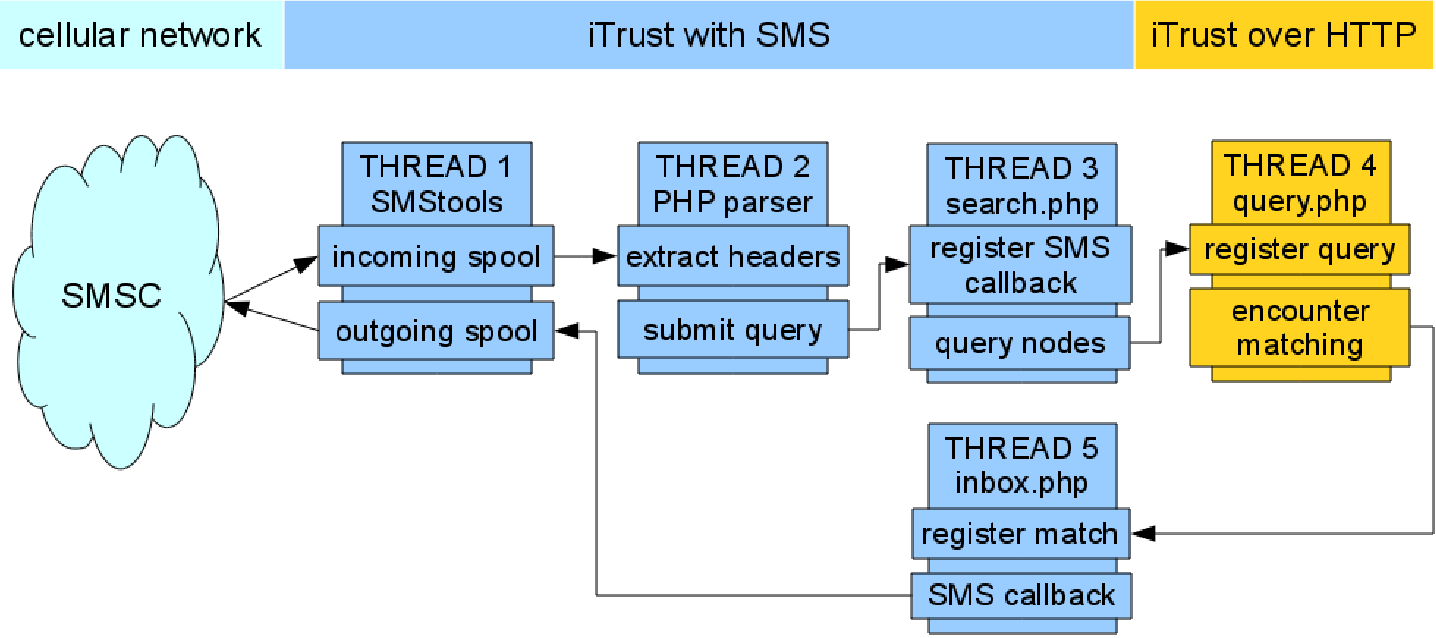
The system consists of three main layers:
- The SMS User: Sends a 140-byte keyword query.
- The iTrust Bridge: A node equipped with a cellular modem that "translates" the SMS into an HTTP GET request.
- The Decentralized Membership: A collection of peer nodes that hold randomized "shards" of metadata.
How Search Works (Without a Central Index)
Unlike Google, which crawls everything into one giant database, iTrust uses a randomized distribution strategy:
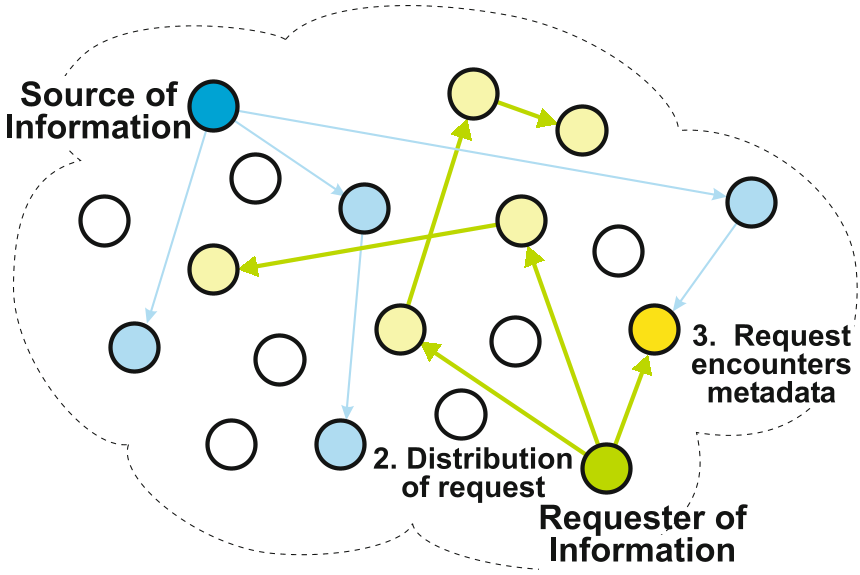
- Source Nodes: Distribute metadata (keywords + URL) to a random subset () of nodes.
- Requesting Nodes: Distribute the query to a random subset () of nodes.
The system relies on the "Birthday Paradox" logic—if and are sufficiently large, the probability of an "encounter" (a node holding both the metadata and the query) approaches 100%.
Resilience Under Fire: Experimental Evaluation
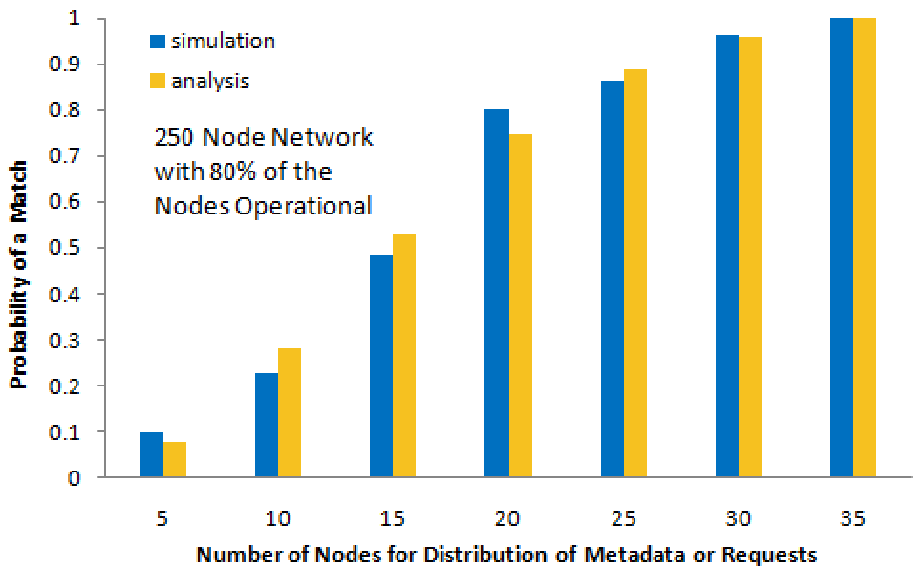
The authors tested the system's robustness by simulating "node death"—a scenario mirroring a government shutting down parts of the grid.
- Survival Rate: In a network of 250 nodes, even if 40% of the nodes were wiped out, the match probability remained remarkably high as long as the distribution parameters () were tuned.
- Efficiency: While more expensive than a single API call to a central server, iTrust avoids the "broadcast storm" of traditional flooding algorithms, making it viable for limited cellular infrastructure.
Critical Insight: Beyond the Web
What makes iTrust particularly compelling is its Protocol Agnosticism. By using SMS as a transport layer, it reaches the "last mile" of users who are traditionally cut off from sophisticated P2P networks (like BitTorrent or Kademlia) which require constant IP connectivity.
Limitations:
- Latency: SMS-based search can take upwards of a minute.
- Payload Size: Retrieving large PDFs or videos over SMS fragments (140 bytes at a time) is impractical. The authors acknowledge this, suggesting the SMS bridge is best for "nuggets" of info: meeting times, GPS coordinates, or short bulletins.
Future Outlook: The Mesh is Coming
The ultimate evolution of iTrust is clear: moving from SMS to Ad-hoc Wi-Fi Mesh Networks. When the cellular towers are also seized, the next generation of iTrust will likely allow phones to talk directly to one another via local radio, creating a truly autonomous, "off-grid" search infrastructure.
iTrust isn't just a technical paper; it's a blueprint for digital resilience in an era where information control is a primary weapon of statecraft.