
Decoding Social Influence: Is "Social Trading" the True Wisdom of the Crowd?
Decoding Social Influence and the Wisdom of the Crowd in Financial Trading Network
This paper investigates the role of social influence and crowd wisdom in financial systems using data from the eToro "social trading" platform. By analyzing 5.8 million trades, the authors demonstrate that "mirror trades" (copying experts) significantly outperform individual trades, while revealing that social feedback loops often drive market overreaction and suboptimal expert selection.
TL;DR
Based on a massive dataset of 5.8 million trades from eToro, this MIT study reveals that while social trading (copying others) is significantly more profitable than trading alone, it triggers a "herd mentality" that amplifies market overreaction. The crowd is excellent at identifying the top 10 experts but fails beyond that due to social feedback loops that favor popularity over actual performance.
The Motivation: Moving Beyond Random Walks
For decades, financial markets have been modeled as "Random Walks" or governed by the Black-Scholes equation. However, these models often ignore the human element: social influence. With the advent of platforms like eToro, we can finally observe the "Open Book"—a real-time feed of what others are buying and selling. The authors sought to answer two fundamental questions:
- Can a crowd accurately identify trading experts when real money is on the line?
- How does seeing others' trades change an individual's decision-making process?
Methodology: The Three Faces of Trading
The researchers distinguished between three distinct behaviors in the eToro ecosystem:
- Single Trades: Traditional, independent decision-making.
- Copy Trades: Manually choosing to replicate a single specific trade from a peer.
- Mirror Trades: Automatically replicating every future move of a chosen "expert."
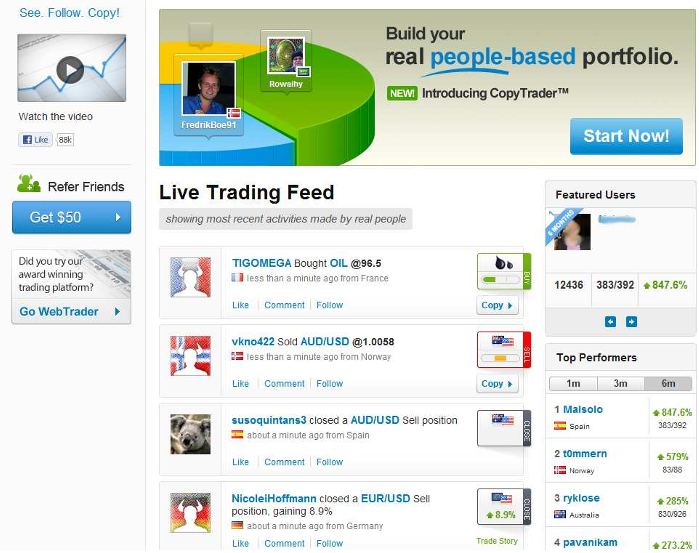 (a) The Social Trading interface where users see a live stream of peer activities.
The Wisdom (and Folly) of the Crowd
The data reveals a stark contrast: Mirror trading actually makes money (positive ROI), whereas the average individual trade loses about 2.8%.
However, the "Wisdom of the Crowd" has a ceiling. When the researchers built a portfolio based on the "Social Best" (traders with the most followers), it matched the performance of the "Simple Best" (traders with highest returns) only for the top 10 candidates. Beyond that, the crowd's performance plummeted.
Why? Because of Preferential Attachment. Users tend to follow those who already have many followers, creating a power-law distribution of popularity that isn't always aligned with the exponential distribution of actual trading skill.
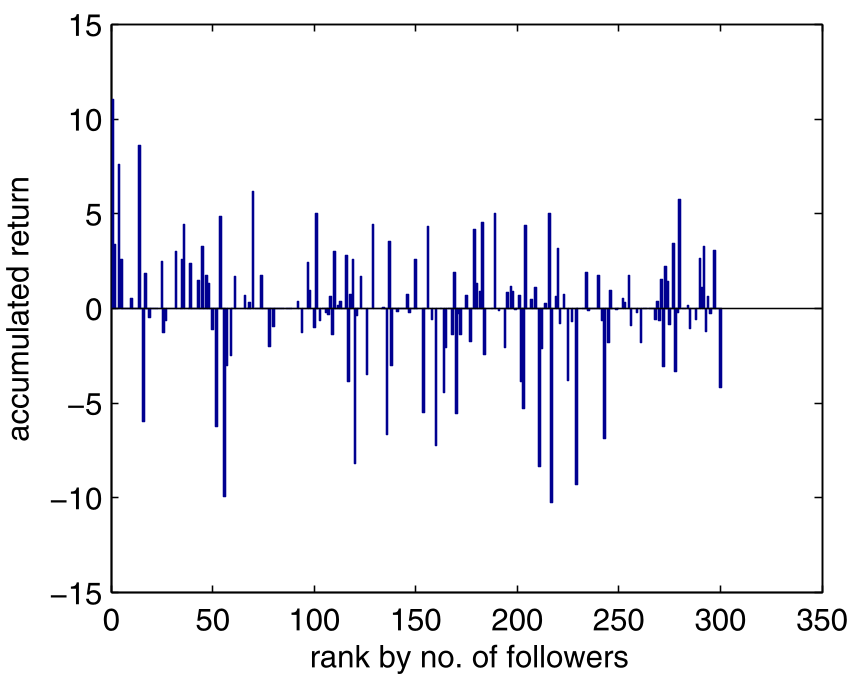 Fig 4: Note how trading skill (Return) decays exponentially, while popularity (Followers) shows a much flatter, power-law long tail.
Social Influence as a Volatility Engine
When users manually "Copy" a trade, they are exposed to explicit social influence. The study found that this exposure makes traders extreme.
- Increased Volatility: The variance in "Copy Trade" perspectives was five times higher than single trades.
- Market Overreaction: If individual sentiment is slightly "Long," social influence pushes the crowd into a "Strong Long" position, driving the market away from parity.
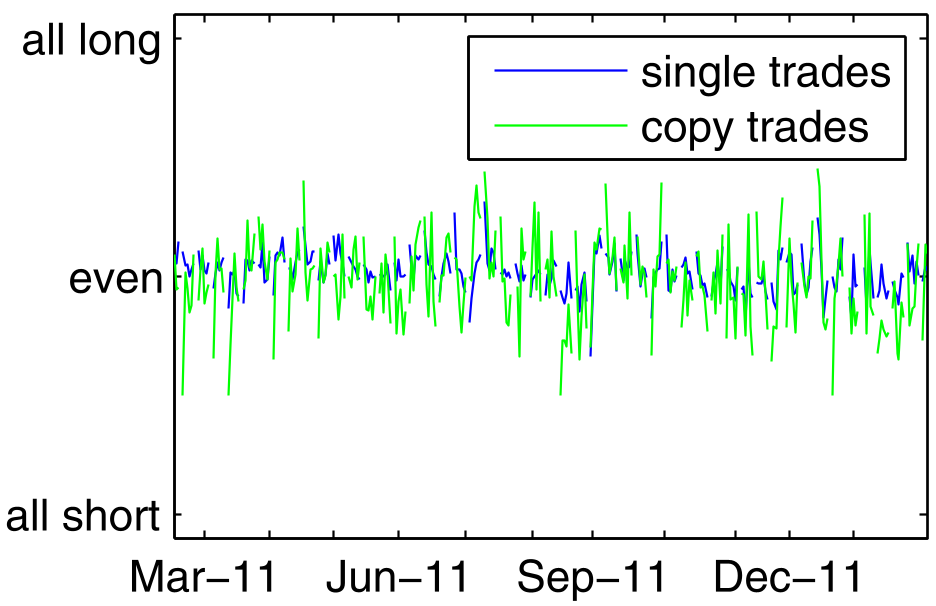 Fig 6: The "Crowd Market Perspective" (red) is significantly more volatile and speculative than the "Single Market Perspective" (blue).
Profit Opportunity: The Social Reversion Strategy
Interestingly, this social overreaction is predictable. The authors found a negative correlation (-0.35) between aggressive social trading today and the market trend tomorrow. Essentially, when the social crowd piles into a position, the market usually corrects in the opposite direction within 2-3 days.
By betting against the crowd when social bias reached extreme levels (e.g., >65% long), the researchers demonstrated a profitable Social Reversion Strategy.
Critical Analysis & Conclusion
This paper provides a rare, quantitative look at how social networks distort financial rationality.
- Takeaway: Social influence is strongest during periods of uncertainty. When high volatility hits, users actually trust their own judgment more; but in the "quiet" before a storm, social herd behavior creates the very speculation that leads to market crashes.
- Limitation: The study focuses primarily on EUR/USD. While highly liquid, different asset classes (like volatile Altcoins) might exhibit even more exaggerated social dynamics.
- Future Outlook: As "Copy-Trading" moves into DeFi and crypto, understanding these feedback loops will be essential for both regulators and hedge fund managers looking to hedge against "crowd-induced" flash crashes.
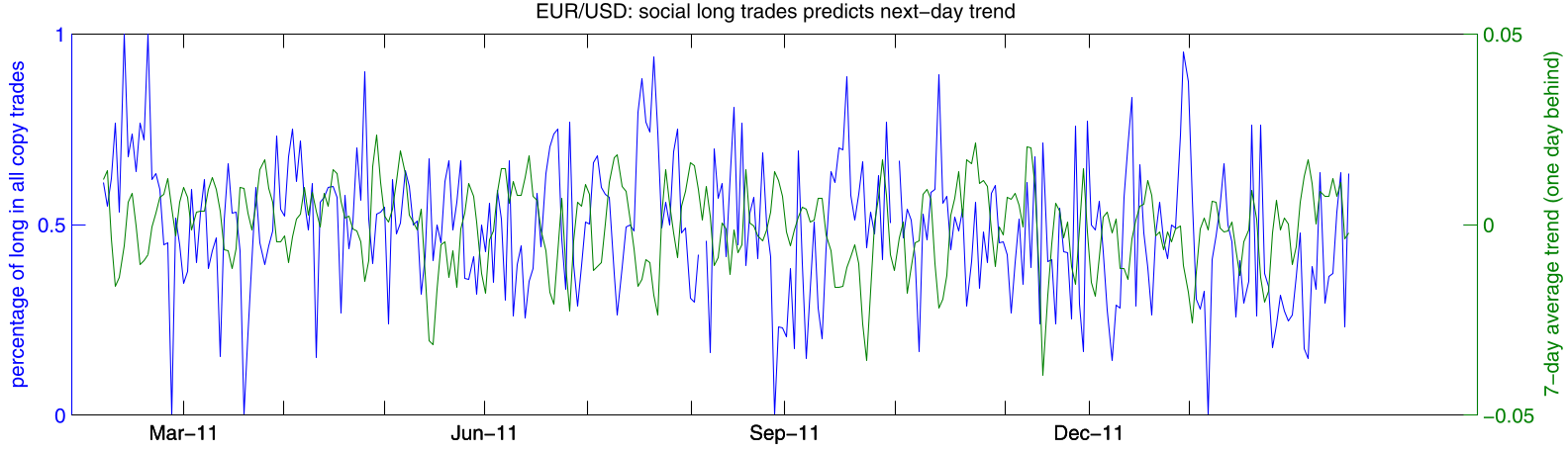 Fig 10: The mirror-image relationship between social sentiment and subsequent market movements.