
Deconstructing the Maker Myth: How Gender and Technology Co-Exist in the Workshop
Deconstructing sociotechnical identity in maker cultures
This paper explores "Deconstructing Sociotechnical Identity in Maker Cultures" through an ethnographic study of German children's computer clubs. It utilizes the "Co-Construction of Gender and Technical Identity" model to analyze how gender and technical abilities are synthesized during STEAM activities, ultimately arguing that maker identity is inherently gendered.
TL;DR
Is the "Maker" identity neutral, or is it coded masculine? This research deconstructs sociotechnical identity within German children's maker clubs. By applying a nuanced model of identity formation, the authors reveal that technical confidence and gender performance are inextricably linked. The study proves that while "masculine" technical tropes persist, the practice of bricolage (creative tinkering) offers a fertile ground for breaking down these binaries and fostering STEAM diversity.
Contextualizing the Maker Identity
The "Maker Movement" is often celebrated as a democratic revolution in innovation. However, look closely at any local hackerspace, and the demographic skew is hard to ignore. This paper argues that the very definition of "technical competence" is often framed through a masculinist lens. In the academic coordinate system, this work sits as a critical piece of Feminist HCI, moving beyond just "counting women" to analyzing the structure of how we perceive skill.
The Problem: The "Masculine" Ghost in the Machine
Early sociotechnical systems were built by men, for men. This has led to a persistent cultural friction:
- Prior Work Failures: Many HCI scholars continue to view feminine identities as "non-technical," even when those individuals are actively building complex systems.
- Gender Inauthenticity: When a female-identified individual uses a tool coded as "masculine," they face internal and external pressure to reconcile these conflicting identities.
- The Barrier: If STEAM is to be truly inclusive, we must understand how children—at the formative age of 8-12—first begin to weld their gender identity to their technical self-image.
Methodology: The Three Levels of Identity
The authors utilize a sophisticated model to dissect the interaction between a maker and their tools. They categorize identity into three powerful dimensions:
- Structural Gender: Societal roles (e.g., "Engineering is for boys").
- Symbolic Gender: The gender we assign to objects (e.g., "Soldering is masculine; Sewing is feminine").
- Individual Gender: How one chooses to express themselves.
Similarly, Technical Identity is split into Ability (what you know), Self-efficacy (your confidence), and Presentation of Agency (how much of that confidence you show to others).
 (Note: This conceptual framework illustrates how social pressures and individual experiences converge at the locus of human-technology interaction.)
Experimental Insights: Aesthetics as a Power Move
The study observed three clubs (A, B, and C) engaging in e-textile projects—incorporating LEDs, sensors, and LilyPad Arduinos into fabric.
The "Soldering vs. Sewing" Divide
In Maker Space A, a distinct split occurred: boys gravitated toward music programming, while girls chose "soft circuits." One boy famously exclaimed, "I can't sew. No way!" However, when the task shifted toward building something tangible to keep, or when collaboration became necessary to solve a circuit failure, these boundaries blurred.
Mastery Through Design
A key finding was that girls often focused on the aesthetics of their circuits. Far from being a "distraction," this focus required higher technical mastery. To make a flower-shaped circuit look "pretty," the girls had to understand complex circuit layouts and insulation to prevent short circuits—concepts the boys (who ignored aesthetics) sometimes overlooked.
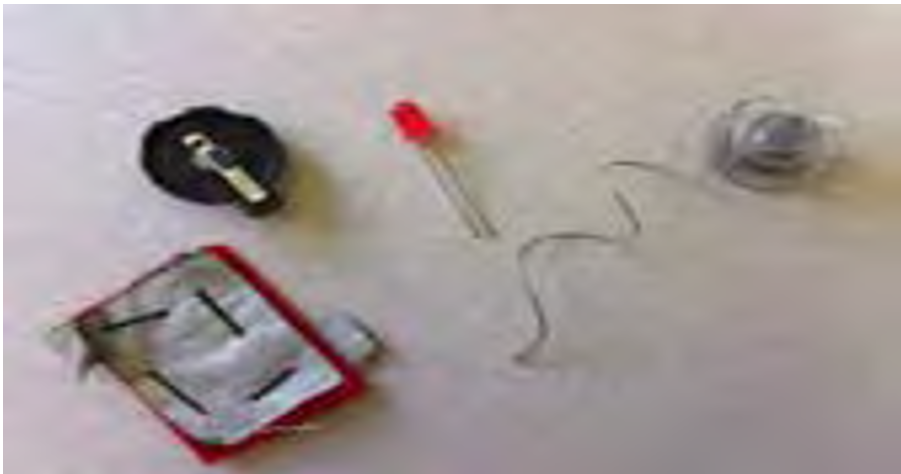 Figure 1: Flexible switches and conductive thread—tools that challenge the "Symbolic Gender" of traditional electronics.
Critical Analysis: Why This Matters for the Future
The research concludes that bricolage—the act of playful, non-linear tinkering—is the ultimate "disruptor of epistemic binaries." It allows children to experiment not just with kits, but with who they want to be.
Limitations & Future Work
The study focuses heavily on gender, yet the authors acknowledge that intersectionality (race, class, and colonial history) plays a massive role in who feels "welcome" in a maker space. Future research must look at how cultural and ethnic backgrounds further complicate the "technical self."
Final Takeaway
If we want to diversify the tech pipeline, we don't just need "more girls in tech." We need to change the Symbolic Gender of our tools. When we stop viewing sewing as "craft" and soldering as "engineering," and start viewing both as essential nodes of technical agency, we open the door for a truly inclusive sociotechnical future.