
Deep Learning for Dementia: Toward Intelligent Early-Stage Diagnosis
4111_Deep Analysis of Dementia Disorder Using Artificial Intelligence to Improve Healthcare Services.
This paper explores the application of Deep Learning (DL) and Artificial Intelligence (AI) for the early-stage diagnosis of dementia. Specifically, it reviews and proposes a framework utilizing Convolutional Neural Networks (CNN), Variational Autoencoders (VAE), and stacked Autoencoders to distinguish between normal brain aging and Mild Cognitive Impairment (MCI).
Executive Summary
Dementia is a burgeoning global health crisis, with cases expected to double by 2050. The core difficulty lies in early diagnosis, as the onset is deceptive and often confused with normal aging. This paper provides a deep dive into how Deep Learning (DL)—specifically CNNs, VAEs, and Autoencoders—can bridge the gap between "wait-and-see" approaches and proactive, intelligent medical intervention. By leveraging multi-modal imaging data (MRI, PET, CT), the authors aim to identify Mild Cognitive Impairment (MCI) long before clinical symptoms become debilitating.
The "Deceptive Onset" Problem
The fundamental pain point in neurodegenerative research is that once symptoms like severe memory loss or personality changes become obvious, the underlying brain damage is often irreversible. Current AI methods are frequently "post-hoc," identifying the disease at a moderate stage. The challenge is the subtlety of grey matter changes and the noise inherent in brain imaging, which requires highly sophisticated filters and non-linear feature extraction tools that go beyond basic medical imaging.
Methodology: The DL Diagnostic Toolkit
The paper outlines three critical architectures that serve as the backbone for the next generation of diagnostic tools:
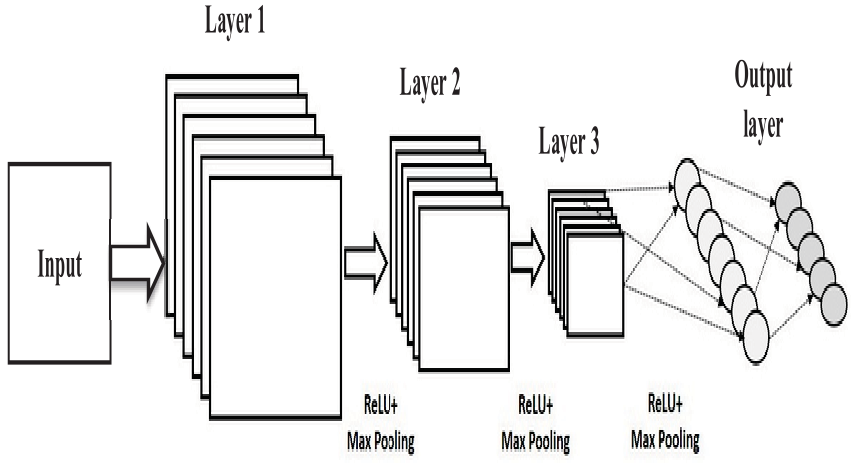
1. Convolutional Neural Networks (CNN)
The authors utilize CNNs to process 3D brain voxels. A critical step in their methodology is the pre-processing pipeline:
- Gaussian Filtering: Enhances voxel clarity.
- Skull-Stripping: Removes non-brain tissue to prevent the model from learning irrelevant features.
- Classification: Employs architectures like AlexNet to categorize different stages of cognitive decline.
2. Variational Autoencoders (VAE)
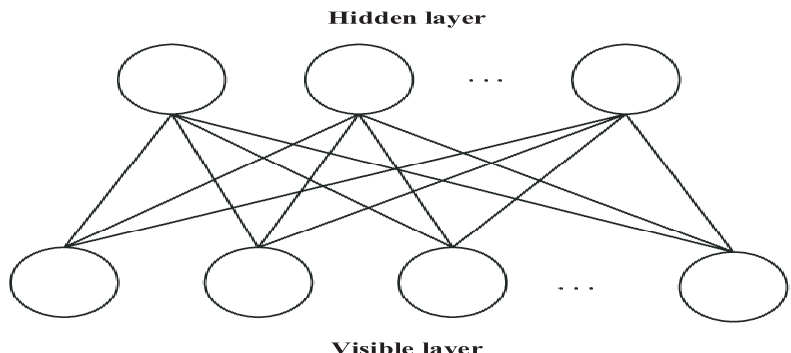
Unlike standard linear models, VAEs provide a probabilistic framework. They separate linear factors from operational brain imaging data, making them ideal for hierarchical and multi-modal extensions (e.g., combining MRI and clinical history).
3. Stacked Autoencoders
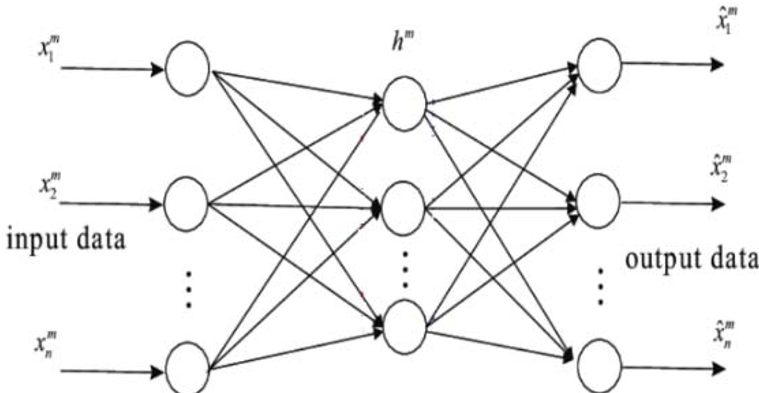
The Autoencoder acts as an unsupervised learning mechanism for efficient encoding. By forcing the network to reconstruct its own input, it learns the most salient "latent" features of a healthy vs. impaired brain.
Experiments and Results
The study reviews several benchmarks where DL-based approaches achieved significant breakthroughs:
- Volume Segmentation: Utilizing Automated Anatomical Labeling (AAL) with CNNs allows for precise segmentation of 90 cerebrum anatomical volumes, facilitating highly specific diagnosis.
- Classification Resilience: By using "denoising autoencoders," researchers have successfully isolated Alzheimer's signatures even from noisy, low-resolution datasets.
- Comparative Edge: The paper notes that deep models significantly outperform traditional statistical methods in identifying Mild Cognitive Impairment (MCI)—the "tipping point" for dementia.
Critical Insight: The Future of 5G Healthcare
The authors' vision extends beyond the lab. They advocate for a 5G-driven "Self-Determination Medicine" model. In this paradigm:
- Continuous Assessment: DL models can analyze patient data on a constant basis rather than yearly checkups.
- Edge Intelligence: The high bandwidth of 5G allows for complex medical imaging to be analyzed in real-time.
- Preventative Future: Moving from "diagnosis" to "prediction."
Limitations & Future Work
While the results are promising, the study acknowledges that dataset homogeneity remains a hurdle. Future models need to be validated on more diverse clinical populations to ensure that the DL algorithms do not inherit biases. Furthermore, the "Black Box" nature of DL requires more Explainable AI (XAI) research to help clinicians understand why a model flagged a specific patient for MCI.
Conclusion
This work underscores that the battle against dementia will be won in the early stages, powered by the fusion of neurological insights and Deep Learning. By refining how we extract features from the brain, AI is not just identifying disease—it is buying time for patients.