
Agricultural Semantic Mining: Bridging Deep Learning and Crop Science
Research on the Key Techniques of Semantic Mining of Information Digest in the Field of Agricultural Major Crops Based on Deep Learning
The paper presents a deep learning-based semantic mining model specifically designed for agricultural crop literature summaries. It utilizes an Attentional Seq2Seq (Sequence-to-Sequence) architecture to perform abstractive summarization, achieving state-of-the-art results on agricultural datasets.
Executive Summary
TL;DR: This research tackles the information overload in agricultural science by developing an automated, deep-learning-driven summarization system. By utilizing an Attentional Seq2Seq model, the authors successfully transform dense scientific abstracts into concise, semantically accurate titles and digests, outperforming traditional extractive methods like TextRank.
Background: Positioned at the intersection of NLP and Domain-Specific Data Mining, this work transitions agricultural information services from simple keyword searches to intelligent content generation. It serves as a performance benchmark for applying LSTM-based attention models to scientific literature.
Problem & Motivation: The Agricultural Information Bottleneck
Agricultural researchers are currently drowning in a sea of scientific papers. The primary pain points identified are:
- The Complexity of Scientific Text: Articles often contain multiple themes and complex relationships that simple search engines cannot parse.
- Limitations of Extractive Methods: Traditional algorithms like TextRank merely "copy-paste" sentences, often missing the underlying semantic synthesis.
- The Chinese NLP Dilemma: The authors argue that Chinese NLP faces a circular dependency where word segmentation requires semantic understanding, yet semantic understanding requires segmentation. This justifies their focus on English digests to build a robust semantic model first.
Methodology: The Core Architecture
The model relies on the Sequence-to-Sequence (Seq2Seq) paradigm, which consists of two main components:
- Encoder: A 3-layer bidirectional LSTM that compresses the input (scientific abstract) into a "think vector" (context vector).
- Decoder: A language model that generates the summary one word at a time, conditioned on the encoder's output.
- Attention Mechanism: To avoid the "bottleneck" problem of compressing long texts into a single fixed vector, the attention mechanism allows the decoder to "look back" at specific parts of the source text at each generation step.
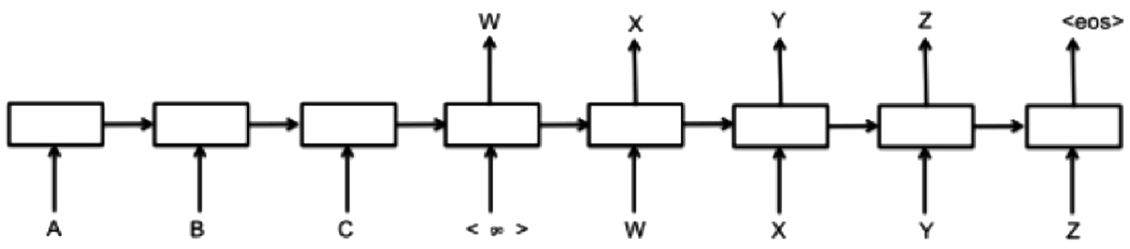
Table 1: Key Model Hyperparameters
| Function | Setting |
|---|---|
| Batch Size | 64 |
| RNN Layers | 3 (Bidirectional) |
| Embedding Size | 128 |
| Vocabulary Size | 200,000 |
Experiments & Results: SOTA Performance
The authors curated a dataset of 54,659 articles related to crop cultivation and molecular breeding. Following 130,500 training steps, the model reached a standard level of convergence (Loss < 1.0).
Quantitative Comparison
Using the ROUGE (Recall-Oriented Understudy for Gisting Evaluation) metric, the model demonstrated superior performance against several baselines:
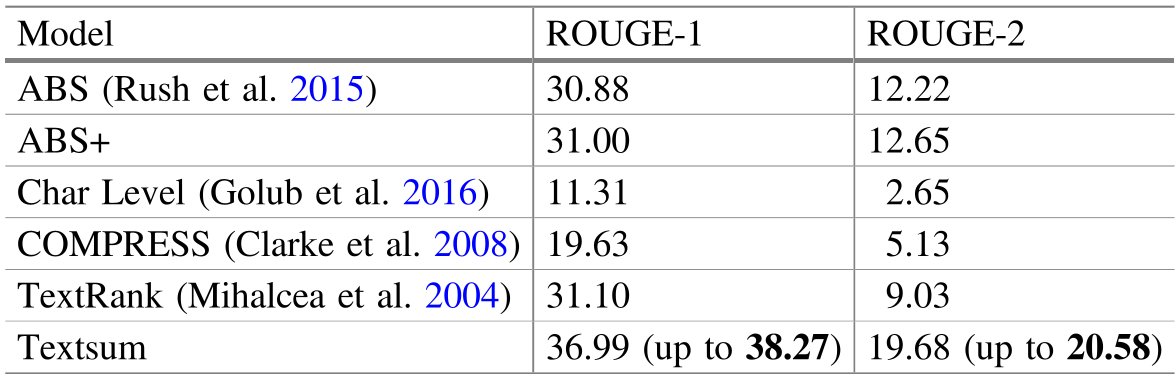
As shown in the data, the Textsum model achieved a ROUGE-1 score of 36.99, significantly higher than the ABS (30.88) and TextRank (31.10) methods. This indicates that the abstractive approach, powered by attention, generates summaries that more closely align with human-authored titles.
Critical Analysis & Conclusion
Takeaways
The primary advantage of this model is its domain-agnostic flexibility. By relying on deep learning, it requires minimal manual feature engineering or specific agricultural ontologies. The integration of AVX and SSE4.2 acceleration during training shows a practical commitment to engineering efficiency.
Limitations
- Hardware Constraints: The authors noted difficulties in replicating Google-scale environments, limiting their training steps compared to the 10 million steps used in industry-standard sets like Gigaword.
- Semantic Drift: In some "Decode" examples, the model generated titles that were grammatically correct but slightly deviated from the specific nuance of the source article (e.g., focusing on "organic manure" when the source was about "sucrose as a tracer").
Future Work
The research paves the way for a fully automated semantic mining system for agricultural science. Future iterations could integrate Unsupervised Learning to utilize the vast amounts of unlabeled agricultural data available online, potentially solving the data scarcity issue in specialized sub-fields.