
SN-CFM: Revolutionizing E-Commerce Predictions via IoT and Deep Collaborative Filtering
Predicting consumer preferences in electronic market based on IoT and Social Networks using deep learning based collaborative filtering techniques
This paper introduces the Similarity Neighborhood-based Collaborative Filtering Model (SN-CFM), a deep learning-enhanced recommendation framework designed to predict consumer preferences in electronic markets. By integrating data from IoT devices and Social Networks, the method utilizes Pearson correlation and neighborhood selection to outperform traditional collaborative filtering baselines in prediction accuracy.
TL;DR
Predicting what a consumer wants in the age of the "Internet of Everything" requires more than just looking at past purchases. This paper introduces SN-CFM, a framework that fuses IoT data and Social Network signals using deep learning-based collaborative filtering. By optimizing neighborhood selection and similarity computation, the authors achieved an Accuracy boost to 84% and significantly reduced prediction errors compared to traditional SVD and Slope One methods.
Problem & Motivation: The Context Gap
Traditional electronic markets rely heavily on explicit feedback (like star ratings). However, the modern consumer is surrounded by IoT devices and social media interactions that provide a much richer, albeit noisier, picture of their preferences.
The Pain Point: Current recommendation systems often suffer from the "sparsity" of direct ratings and fail to capture the subtle similarities between products in a global market context. The authors recognized that existing collaborative filtering (CF) isn't "smart" enough to filter out low-quality correlations, leading to poor accuracy in high-stakes electronic markets.
Methodology: The Power of Targeted Similarities
The core innovation lies in the Similarity and Neighborhood-based Collaborative Filtering Model (SN-CFM). The process follows a sophisticated multi-step pipeline:
- Deep Feature Extraction: Before any rating prediction, a deep learning network processes raw data from IoT and Social Networks to derive both local and global features of user preferences.
- Refined Similarity Computation: Instead of simple dot products, the model uses the Pearson Correlation Coefficient to identify how users who bought product A feel about product B.
- Threshold-based Neighborhood Selection: This is the "secret sauce." The model discards item pairs with negative correlations or those that don't meet a specific similarity threshold (), ensuring the prediction is built on a foundation of high-quality neighbors.
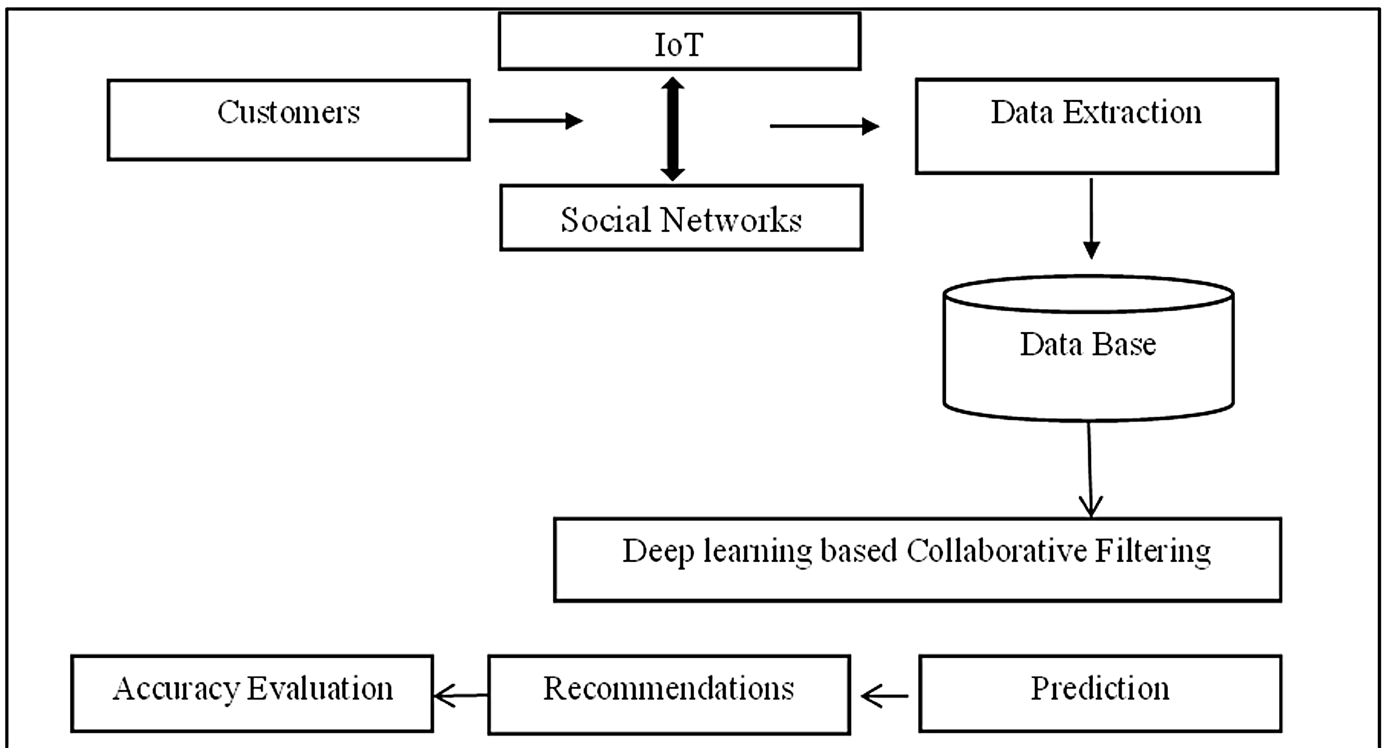 Figure 1: The architecture showing the flow from IoT/Social data to the Cloud and finally to the SN-CFM recommendation engine.
Experiments & Results: Proven Superiority
The authors validated their model against SVD (Singular Value Decomposition) and the Improved Slope One algorithm using a dataset collected from Amazon lists and user surveys.
Key Findings:
- Error Reduction: The Mean Absolute Error (MAE) for SN-CFM remained consistently lower across different user pool sizes (100 to 500 users). At the 100-user mark, SN-CFM achieved an MAE of 0.59, outperforming SVD (0.73).
- Precision and Recall: The Positive Predictive Value (PPV) reached 87% as the number of users increased, proving that the system scales effectively.
- Overall Accuracy: In final comparisons, the accuracy of SN-CFM reached 84%, a clear edge over Traditional CF (76%) and SVD (79%).
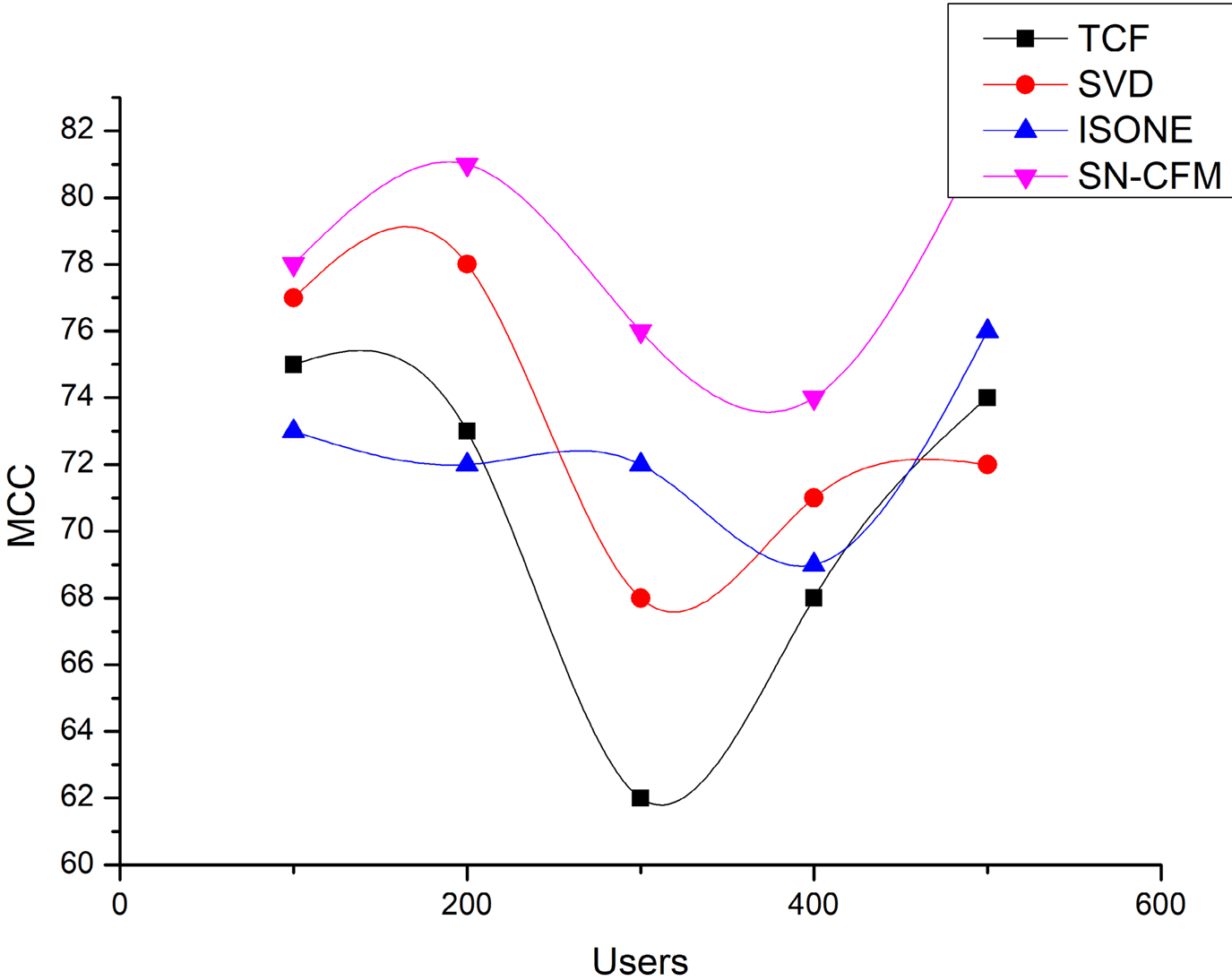 Figure 2: Accuracy measures showing the consistent lead of the introduced SN-CFM algorithm.
Critical Analysis & Conclusion
Takeaway
The integration of IoT and Social Networks isn't just a "data addition"—it's a paradigm shift. By using deep learning to preprocess these diverse signals before applying neighborhood-based filtering, SN-CFM creates a robust "identity-aware" recommendation environment.
Limitations & Future Work
While the results are impressive, the paper notes that datasets combining IoT and Social Network data are still limited in availability. The authors suggest that future research should look into optimized metaheuristic techniques (like genetic algorithms or swarm intelligence) to further refine the weights of the similarity computations.
As IoT becomes more pervasive in our homes, the logic presented in this paper—filtering noise through dynamic neighborhood selection—will be essential for any platform aiming to provide truly personalized consumer experiences.