
The Media Effect: Why Where You Get Your News Matters for AI Stock Prediction
Deep learning for financial sentiment analysis on finance news providers
This paper explores financial sentiment analysis by evaluating how news from different providers (NowNews, AppleDaily, LTN, and MoneyDJ) impacts stock price forecasting. The authors propose a Deep Neural Network (DNN) approach combined with a customized financial sentiment lexicon (iMFinanceSD), achieving a superior Return on Investment (ROI) of 22.43% in a 60-day trading simulation.
Executive Summary
TL;DR: In the world of FinTech, not all news is created equal. This research demonstrates that a Deep Learning model trained on specialized financial news (MoneyDJ) can achieve a 22.43% ROI, vastly outperforming general news sources like AppleDaily. By combining a custom-expanded Chinese financial lexicon (iMFinanceSD) with Deep Neural Networks, the authors prove that domain-specific media expertise is a critical feature for predictive accuracy.
Context: This paper sits at the intersection of Natural Language Processing (NLP) and Behavioral Finance. It marks a transition from traditional dictionary-based sentiment analysis to the era of Deep Learning (DL), emphasizing that the source of information is as important as the content.
The Problem: The "Noise" in General Media
Investors are bombarded with hundreds of news articles daily. However, previous studies often treated all news sources as a monolithic block. The authors identify a significant gap:
- Media Bias: Different outlets have different editorial standards and industry knowledge.
- Lexical Scarcity: General-purpose Chinese sentiment dictionaries (like NTUSD) fail to capture the nuances of financial jargon where words like "shock" or "inject" have specific market meanings.
Methodology: Beyond Simple Word Counting
The research utilizes a sophisticated pipeline that bridges the gap between traditional linguistics and modern AI.
1. The iMFinanceSD Lexicon
To solve the vocabulary problem, the authors integrated existing lexicons and used a Suffix Array algorithm to detect high-frequency "unknown" words in their corpus. This resulted in the iMFinanceSD, a specialized dictionary containing terms like "stabbed sharply" (sharp price drop) and "stabilize."
2. Deep Learning Architecture
Instead of simple linear regression, the study employs a Deep Neural Network (DNN).
- Features: 11 key eigenvalues, including positive/negative word counts and word differences across multiple lexicons.
- Activation: The use of ReLU (Rectified Linear Unit) was pivotal here for speeding up training and handling non-linear relationships between sentiment and market reaction.
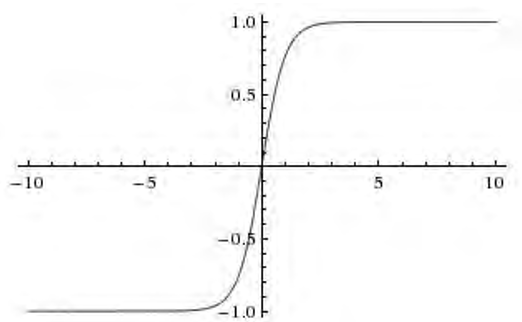 Figure 4: The Deep Neural Network structure used to map sentiment features to market trends.
Experimental Results: The MoneyDJ Superiority
The experiment covered 8,472 articles across 18 public companies over two years. The results were categorized by prediction windows (5, 20, and 60 days).
- The Winner: MoneyDJ, a dedicated financial news provider.
- The Quantitative Leap: Using the Deep Learning model on MoneyDJ data for a 60-day strategy yielded a 22.43% ROI.
- General vs. Specific: In contrast, general media like AppleDaily only reached a max ROI of around 1.5%, which the authors deem "unqualified for investment strategies."
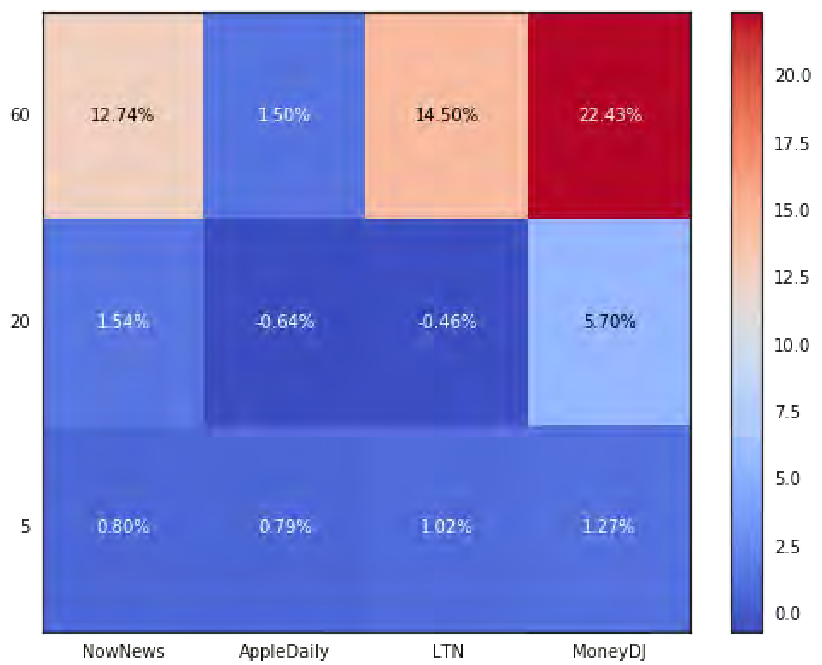 Figure 17: ROI Heatmap showing the clear dominance of specialized news providers in longer-term (60-day) forecasts.
Critical Insight & Conclusion
The core takeaway is that Information Efficiency varies by source. Financial news providers like MoneyDJ act as a filter, providing higher signal-to-noise ratios that Deep Learning models can exploit effectively.
Limitations: The study relies on manual feature engineering (11 eigenvalues). In the modern era of LLMs, we would expect "End-to-End" learning where the model reads the raw text directly. However, the fundamental insight remains: Source-weighting is essential. For developers building trading bots today, the lesson is clear—prioritize your data scrapers for specialized domains rather than casting a wide, shallow net.