
SAE-Clus: Leveraging Deep Learning for Real-Time Hot Topic Extraction in Social Streams
Deep Learning for Hot Topic Extraction from Social Streams
The paper introduces SAE-Clus, an evolving clustering method for extracting hot topics from social media streams using Stacked Autoencoders (SAE). By leveraging deep learning for unsupervised dimensionality reduction, the method transforms high-dimensional text data into compact representations that are then clustered via an adaptive K-Means approach to identify emerging trends in real-time.
TL;DR
Social media is a firehose of information where "hot topics" emerge and vanish in minutes. SAE-Clus is a novel clustering framework that uses Stacked Autoencoders (SAE) to compress high-dimensional tweet data into meaningful low-dimensional features. By combining deep representation learning with an evolving clustering mechanism, it outperforms traditional stream mining algorithms like DenStream and CluStream in both precision and adaptability to new vocabulary.
Problem & Motivation: The Chaos of Social Streams
Extracting topics from platforms like Twitter is notoriously difficult due to three factors:
- High Velocity: Data arrives too fast for complex batch processing.
- Concept Drift: What people talk about changes; yesterday's "hot" keyword is today's noise.
- Sparsity: Tweets are short, making traditional TF-IDF or binary vectors extremely sparse and high-dimensional.
Previous works like DenStream or Dstream relied on density-based or grid-based approaches that often struggled with the semantic nuances of text or required heavy parameter tuning. The authors of SAE-Clus argue that deep learning—specifically Autoencoders—can capture the latent structure of these streams more effectively than simple geometric clustering.
Methodology: The SAE-Clus Architecture
The core innovation lies in treating the stream as an evolving manifold. The process is split into a Static Phase (for initialization) and a Streaming Phase (for real-time updates).
1. Feature Evolution
Unlike static models, SAE-Clus updates its vocabulary. If a word’s frequency exceeds a threshold , it is added. If a word disappears for batches, it is pruned. This keeps the input space relevant to the current conversation.
2. Deep Representation Learning
The model uses a Stacked Autoencoder (SAE). The encoder maps a high-dimensional input to a hidden representation : By stacking multiple layers, the model learns hierarchical features. In the streaming phase, the input is a hybrid vector containing:
- The compressed representation of the previous batch (maintaining context).
- The binary representation of the current tweet.
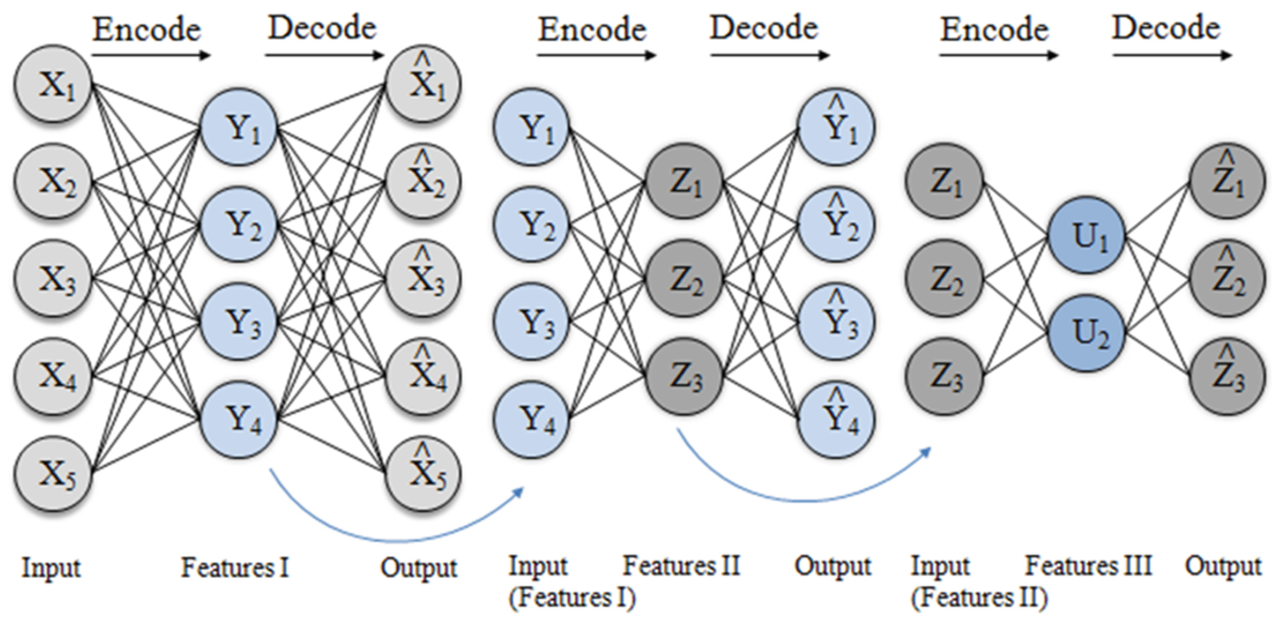 Figure 1: Iterative training of Stacked Autoencoders to reduce dimensionality.
3. Evolving Clustering
The latent codes are clustered using K-Means. To handle the "birth and death" of topics, the authors use a Fusion Parameter (FP) based on word overlap between clusters at time and . If the overlap exceeds a threshold, the topics are merged; otherwise, a new "hot topic" is born.
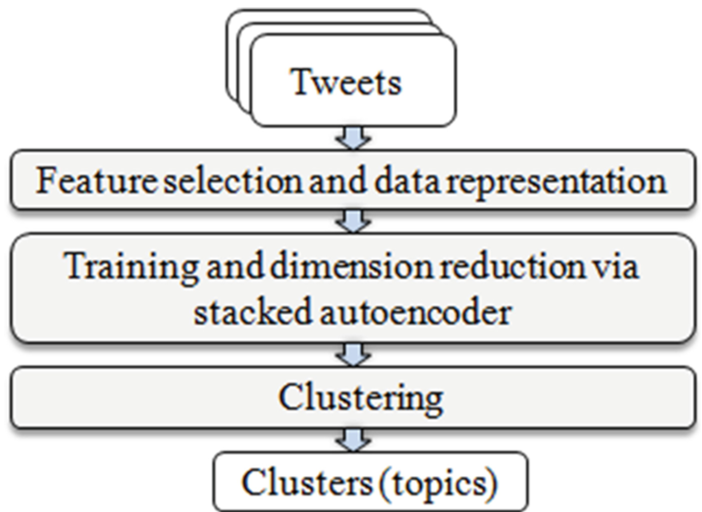 Figure 2: The Streaming Phase workflow showing text preprocessing and adaptive clustering.
Experiments & Results
The authors tested SAE-Clus against the Sanders (tech topics) and HCR (health care reform) datasets.
The Power of Representation
Before clustering, the authors validated the SAE's encoding quality using an SVM classifier. The results were staggering:
- Raw Binary Vectors: 49% accuracy (Sanders).
- SAE Latent Features: 99% accuracy (Sanders).
This proves that the SAE successfully filters noise and captures the "essence" of the topic in its bottleneck layer.
Benchmark Comparison
In direct comparison with CluStream and DenStream, SAE-Clus showed superior stability and precision.
| Dataset | Metric | CluStream | DenStream | SAE-Clus |
|---|---|---|---|---|
| Sanders | Precision | 0.49 | 0.50 | 0.89 |
| F-Measure | 0.65 | 0.56 | 0.88 | |
| HCR | Precision | 0.35 | 0.33 | 0.75 |
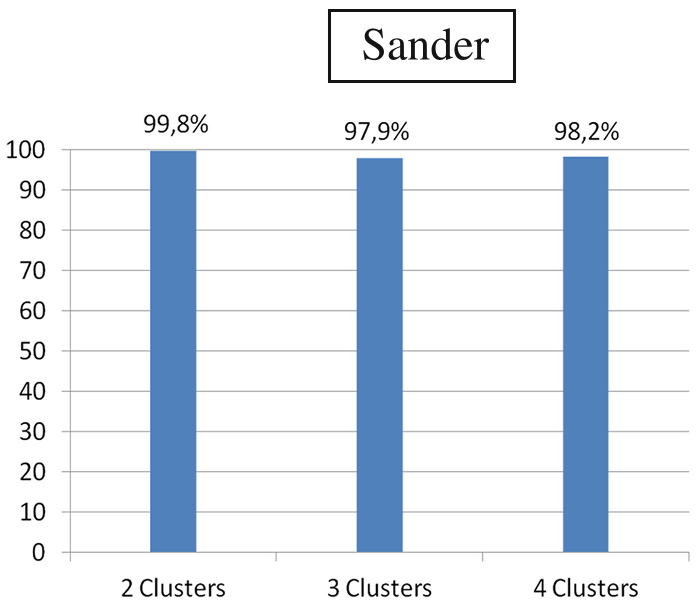 Figure 3: Accuracy evolution as new clusters are detected over the stream.
Critical Insight & Conclusion
The success of SAE-Clus stems from its non-linear dimensionality reduction. Traditional methods view clusters as spheres or densities in a Euclidean space, which often fails for text. By using SAEs, the model projects tweets into a space where semantic similarity is more accurately reflected by distance.
Limitations: The model relies on several user-defined thresholds () and fixed iterations for the SAE, which might need manual tuning for different stream velocities. Future research could look into automated hyperparameter optimization or replacing the SAE with a Transformer-based streaming encoder for even richer semantic capture.
Final Takeaway: SAE-Clus demonstrates that even "older" deep learning architectures like Autoencoders can significantly outperform specialized streaming algorithms when applied to high-dimensional social media data.