
Lexicon vs. Deep Learning: Decoding Public Sentiment on Telemedicine via Twitter
An Analysis on Use of Deep Learning and Lexical-Semantic Based Sentiment Analysis Method on Twitter Data to Understand the Demographic Trend of Telemedicine
This paper evaluates sentiment analysis techniques on 1.84 million health-related tweets to understand public perception of telemedicine, heart attacks, and epilepsy. It compares Lexical/Semantic methods (VADER, TextBlob) against Deep Learning models (LSTM, Stanford CoreNLP), finding that VADER achieves the highest overall accuracy (52%) in low-resource scenarios.
TL;DR
Researchers analyzed nearly 2 million health-related tweets to gauge the global pulse on Telemedicine. The surprising verdict? In the wild world of unstructured social media data, traditional rule-based methods (VADER) often beat sophisticated Deep Learning (LSTM) models when high-quality training data is scarce.
Contextual Positioning
This study serves as a comparative benchmark and application-oriented research. It transitions sentiment analysis from general movie reviews into the high-stakes domain of healthcare, specifically focusing on heart attacks, epilepsy, and the emerging field of telemedicine.
The "Small Data" Trap in Deep Learning
The core motivation for this research stems from a common paradox in AI: while Deep Learning (DL) is theoretically superior, it is "data-hungry."
- The Problem: Twitter data is messy. It has
@handles, emojis, and typos. - The DL Failure: When a Deep Learning model (like the one used from Stanford CoreNLP) is trained on one type of text and tested on another (medical tweets), its accuracy plummets because it cannot generalize across different "lingos."
- The Insight: Lexical methods, which rely on predefined dictionaries of sentiment-weighted words, provide a more robust "inductive bias" for short, informal texts.
Methodology: Rules vs. Neurons
The authors compared four distinct approaches:
- VADER: A rule-based model specifically tuned for social media.
- TextBlob: A simpler lexicon-based "bag-of-words" approach.
- LSTM: A four-layer Deep Learning architecture (Embedding -> SpatialDropout -> LSTM -> Dense).
- Stanford CoreNLP: A pre-trained recursive neural network model.
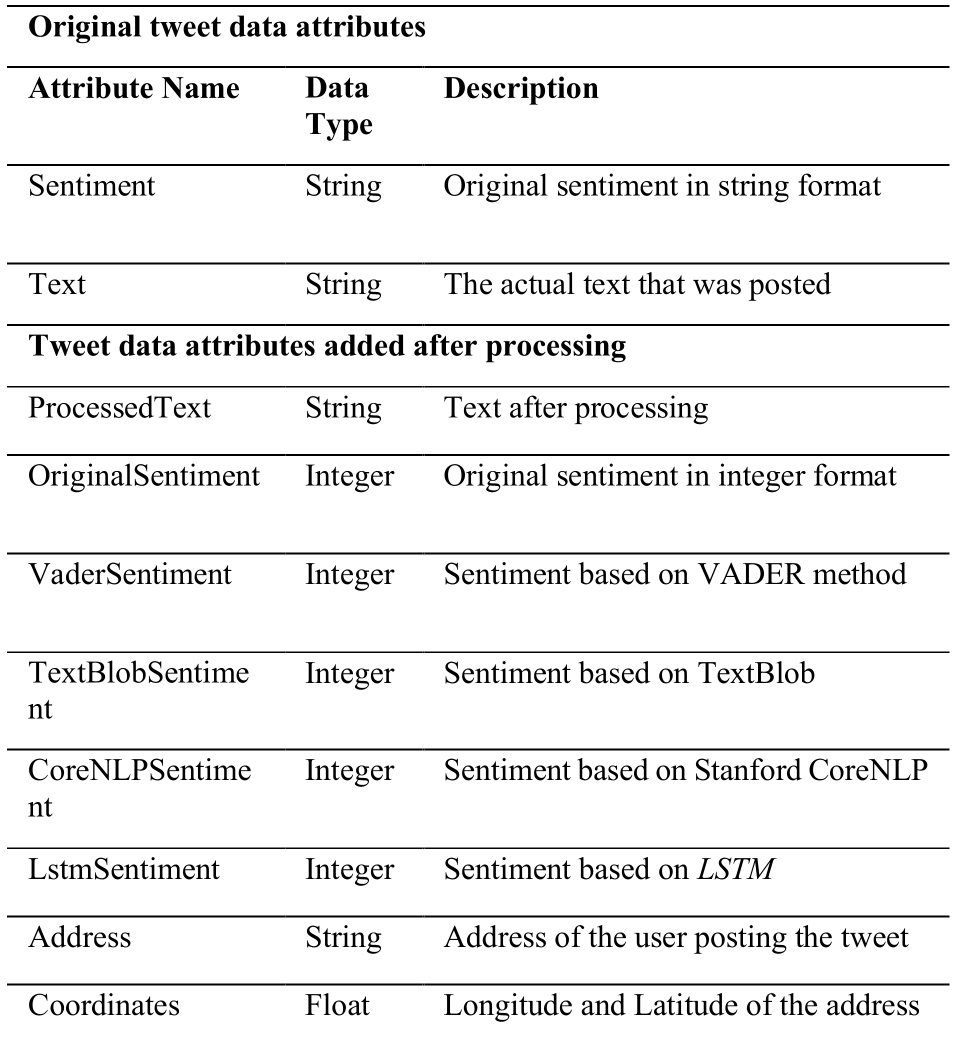
The researchers collected 1.48 million tweets for telemedicine, 269k for heart attacks, and 84k for epilepsy using a cloud-based scraper.
The Battle of Benchmarks
The results provided a reality check for DL enthusiasts.
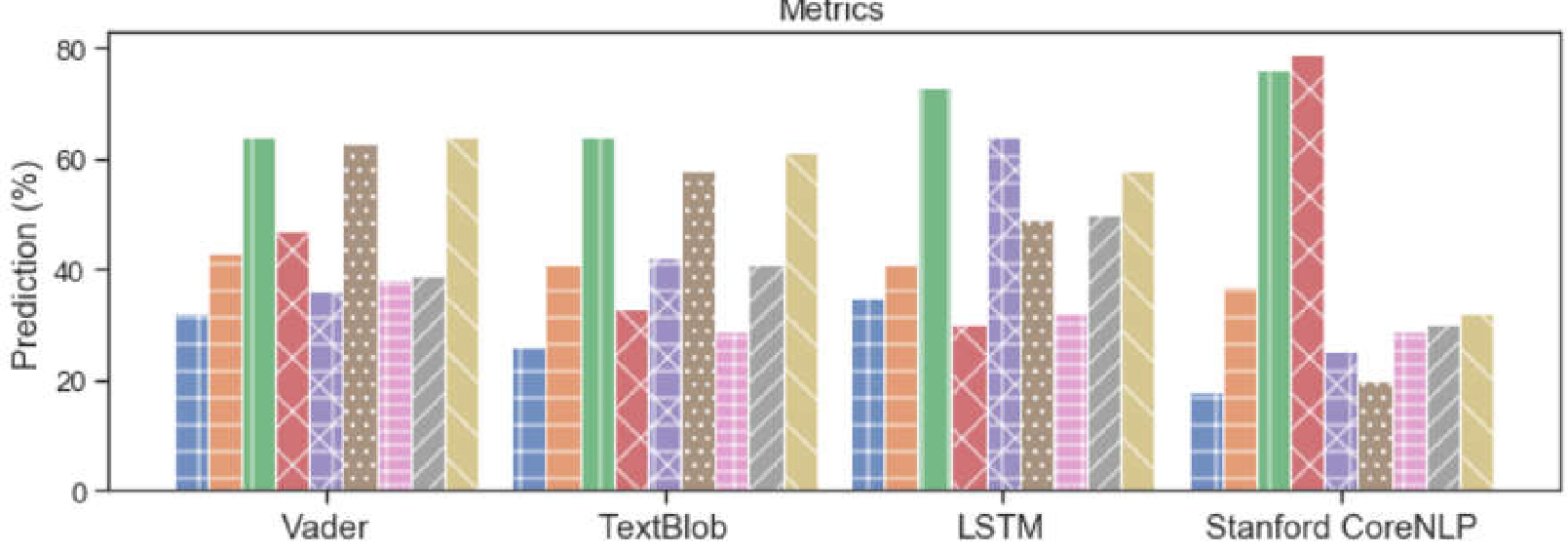
- Accuracy: VADER led with 52%, followed closely by LSTM at 51%. CoreNLP trailed at a dismal 30%.
- Efficiency: This is where the gap widened. VADER processed the test set in 519ms, while LSTM took 13,000ms and CoreNLP took 51,600ms.
- Domain Sensitivity: The study found that domain-specific words (like medical terms) significantly confused DL models that hadn't seen them during training, whereas lexical methods were more stable.
Demographic Insights: Telemedicine's "Infancy"
Beyond the code, the study offers a sociological glimpse into healthcare:
- Heart Attack tweets were overwhelmingly negative, correlating with the severity and mortality of the condition.
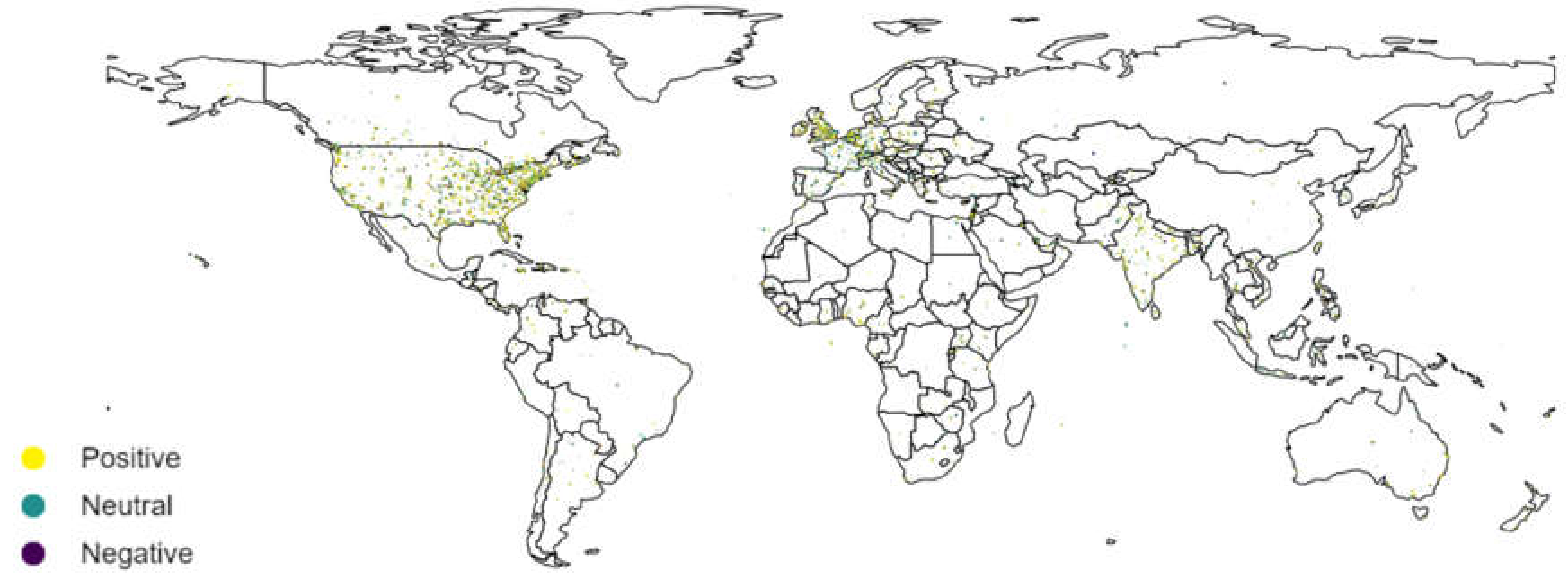
- Telemedicine tweets were largely positive. However, the geographic distribution (mapped using Geopandas) showed that telemedicine mentions are still sparse and concentrated, suggesting the technology is in its "infancy" and has significant room for growth in underserved regions.
Critical Analysis & Future Outlook
Takeaway: In the AI era, bigger isn't always better. For researchers dealing with niche domains (like medicine) and limited labeled data, VADER remains the "Gold Standard" for quick, interpretable, and accurate sentiment extraction.
Limitations: The study's LSTM was limited by a small training set (~20k tweets). Modern Transformers (like BERT or RoBERTa) might bridge this gap, but they would require even more computational power.
Future Work: The authors suggest that improving "text cleaning" methods—ensuring the core sentiment survives the removal of URLs and tags—is the next frontier for social media analytics.