
Deep Multi-Factor Models: Cracking the "Black Box" of Global Stock Markets
Deep Learning for Multi-factor Models in Regional and Global Stock Markets
This paper implements Deep Neural Networks (DNN) for cross-sectional multi-factor stock return prediction across North American, European, Pacific, and Global markets. The authors introduce Layer-wise Relevance Propagation (LRP) to solve the "black box" nature of deep learning, providing a method to decompose and interpret factor contributions in investment portfolios.
TL;DR
Financial researchers from Nomura Asset Management prove that Deep Neural Networks (DNN) significantly outperform traditional linear and ensemble models in predicting global stock returns. By integrating Layer-wise Relevance Propagation (LRP), they successfully transformed a "black box" model into an interpretable tool capable of showing exactly which economic factors (like Volatility or EPS Revision) drive portfolio performance during market crises.
Problem & Motivation: Beyond Linear Constraints
For decades, the Fama-French Three-Factor Model served as the bedrock of quantitative finance. However, as the "factor zoo" expanded to over 300 variables, two walls were hit:
- The Linearity Trap: Real-world markets are non-linear and dynamic. Linear regressions cannot capture the intricate interactions between a firm's valuation (B/P) and its momentum.
- The Geography Gap: While AI has been tested in specific markets like Japan or the US, few studies have validated a unified deep learning approach across the North American, European, and Asia-Pacific regions simultaneously.
The authors argue that a model must not only be accurate but also accountable. In the institutional world, "the model said so" is not an acceptable explanation for a loss.
Methodology: DNN Architecture and LRP
The researchers deployed a DNN with a specific focus on robust training.
1. The Model Architecture
The network consists of six hidden layers with a decreasing number of neurons (from 150 down to 50). Key technical choices include:
- ReLU Activation & Adam Optimizer: Standard but effective for deep non-linear mapping.
- Batch Normalization: Used to stabilize the learning process across different market regimes.
- Monthly Re-training: Using a sliding 120-month window to ensure the model adapts to recent market shifts.
2. The Core Innovation: LRP for Finance
LRP is the "Lens" used to look inside the DNN. It works by taking the output (Predicted Return) and redistributing it backward through the layers until it reaches the input factors. This ensures the Conservation Principle: the sum of the relevance of all inputs equals the final prediction score.
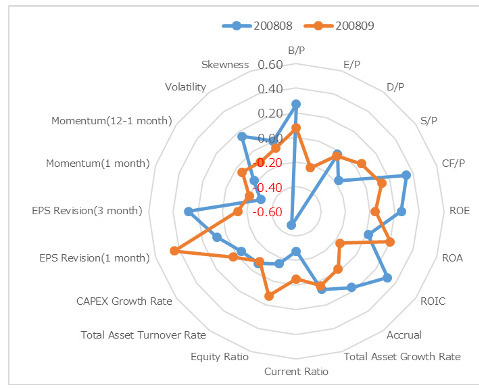 Fig 1: Toy example of relevance scores flowing back to input factors.
Experiments & Results: DNN vs. The World
The authors compared the DNN against Gradient Boosting (GB), Random Forest (RF), and Ridge Regression (RR).
Key Findings:
- Regional Dominance: The DNN achieved the highest Information Ratio (IR) in every single region tested.
- Efficiency Correlation: Performance was highest in the Asia-Pacific (less efficient market) and lowest in North America (highly efficient), validating the theory that AI alpha is easier to harvest in less "perfect" markets.
- Risk Mitigation: DNNs showed significantly lower volatility and maximum drawdown than tree-based models, which often overfit the financial noise.
 Fig 2: Comparative performance in North America showing DNN's superior Risk-Adjusted metrics.
Interpreting the 2008 Financial Crisis
Using LRP, the study analyzed the model's behavior during the 2008 Lehman collapse. They found that in September 2008, the DNN's "Volatility" factor contribution plummeted. This indicates the model autonomously became risk-averse as market conditions deteriorated—a shift that was far less pronounced in traditional linear models (Ridge Regression).
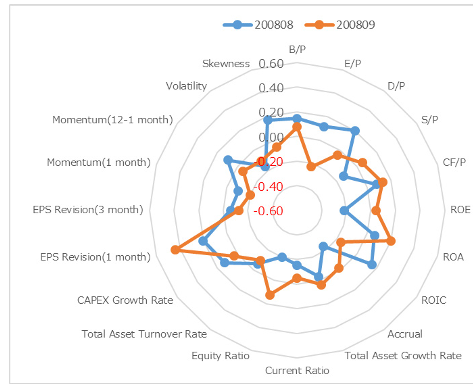 Fig 3: LRP factor attribution in North America before and after the 2008 crash.
Critical Analysis & Conclusion
Takeaway
Deep learning isn't just a "black box" hype; it is a demonstrably superior engine for multi-factor investing when combined with interpretability layers like LRP. It allows managers to see the "why" behind the alpha.
Limitations
- Transaction Costs: The study assumes equal weighting and does not explicitly account for the turnover costs of monthly rebalancing.
- Factor Selection: While 20 factors are robust, the inclusion of more alternative data feeds (sentiment, satellite) remains for future work.
Future Outlook
The marriage of XAI (Explainable AI) and deep finance is the new frontier. As global markets fluctuate, models that can explain their "logic" regarding risk (like Volatility) will likely become the standard for institutional asset management.