
Smart Connected Healthcare: Breaking the Efficiency Barrier in EEG Pathology Detection
2691_Deep Learning Based Pathology Detection for Smart Connected Healthcares.
The paper introduces a smart healthcare framework for EEG-based pathology detection utilizing a distributed architecture of Mobile Edge Computing (MEC) and Cloud servers. It leverages parallel Convolutional Neural Networks (CNNs)—specifically a highly efficient Tree-based Deep Model fused with a Stacked Autoencoder (SAE)—to achieve a SOTA accuracy of 89.9% on the TUH EEG Corpus.
TL;DR
This paper presents a distributed smart healthcare framework that combines Mobile Edge Computing (MEC) and Cloud Computing to detect brain pathologies from EEG signals. By replacing standard heavy-duty CNNs with a specialized Tree-based Deep Model and utilizing Stacked Autoencoders (SAE) for feature fusion, the researchers achieved a new SOTA accuracy of 89.9% while keeping bandwidth and parameter counts remarkably low.
The Challenge: Why Real-Time EEG Screening is Hard
The healthcare industry is moving toward decentralized monitoring, but two massive roadblocks remain:
- Bandwidth Bottlenecks: EEG signals generate high volumes of data. Transmitting raw, multi-channel streams to the cloud in real-time often leads to latency and errors.
- Computational Cost: Modern Deep Learning (DL) models like VGG-16 or AlexNet are "parameter-heavy," making them difficult to deploy on mobile edge servers (MEC) or IoT headsets.
- Subject Dependency: Brain signals vary wildly between individuals, making it difficult for standard classifiers to generalize across different patients.
Methodology: Parallelism and Sparse Fusion
The authors' core "Insight" is that medical signals don't require the same depth as ImageNet-scale visual recognition. Instead, they require efficient parallel feature extraction.
1. Stacked-Temporal Representation
Raw EEG signals are sampled and reshaped into 2D matrices (frames). These are stacked vertically to create a representation that captures both temporal signatures and spatial channel relationships.
2. The Tree-Based Deep Model
Instead of a linear stack of layers, the authors use a Tree-based CNN. This architecture splits input dimensions into smaller nodes, significantly reducing the "information density" requirements.
- Parameter Count: Only 3.5 Million (compared to VGG-16's 138M).
- Intuition: The branching factor (set to 4) allows for independent convolution operations that can be parallelized across multiple DL modules.
3. SAE Fusion (The Secret Sauce)
Most parallel models use a simple Fully Connected (FC) layer to merge features. This paper uses a Stacked Autoencoder (SAE). Because the SAE is trained to reconstruct features across different subjects, it acts as a regularizer that reduces subject dependency, ensuring the model identifies the pathology, not the individual.
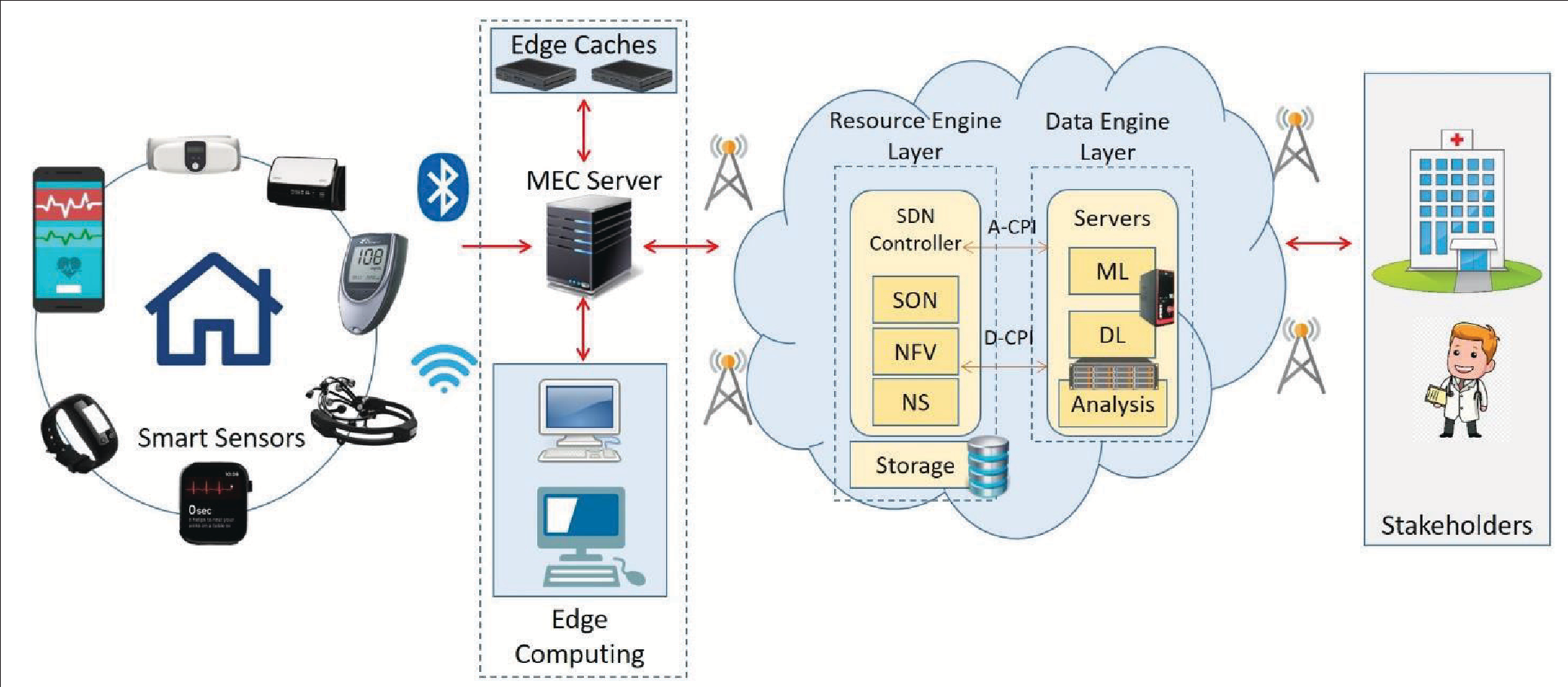 Figure 1: The proposed cloud-edge framework integrating SDN and Deep Learning.
Experimental Results: SOTA Performance
The system was validated on the Temple University Hospital (TUH) EEG Corpus, a massive public dataset.
- Accuracy Leadership: The Tree-based fusion model hit 89.9%, outperforming the existing AlexNet-MLP fusion (89.1%).
- Efficiency: Despite being 10x lighter than VGG-16, the Tree-based model provided better specificity (97.43%).
- Bandwidth: Testing data transmission stayed below 290 bps, confirming that 5G and even 4G networks can handle this framework seamlessly.
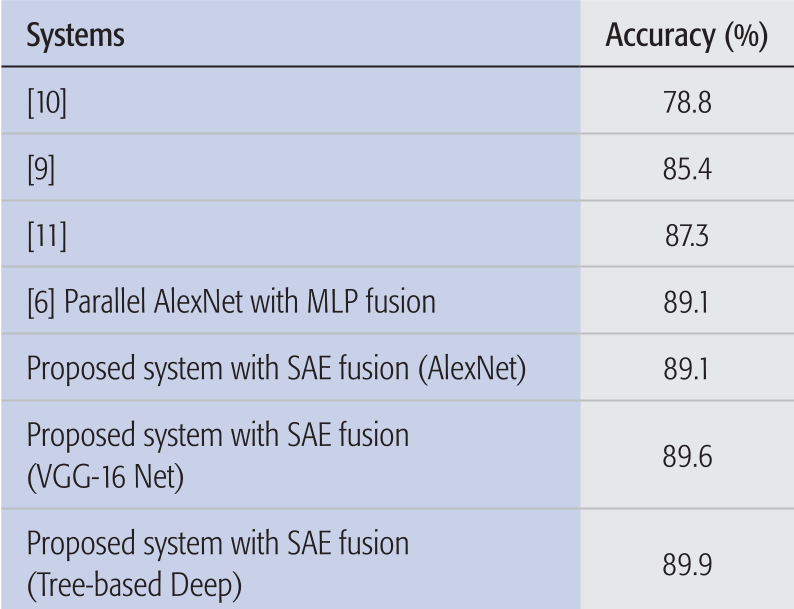 Table 1: Comparison of the proposed system against current SOTA (State-of-the-Art) methods.
Critical Analysis & Conclusion
The value of this work lies in its holistic system design. It doesn't just propose a better algorithm; it proposes a network architecture (MEC + SDN + Cloud) that makes the algorithm viable for the real world.
Takeaway: For medical Al to be practical, we must move away from "brute-force" deep learning. The success of the Tree-based model suggests that architectural inductive biases (how we structure the network) are more important than just adding more layers.
Limitations: While the system addresses subject dependency via SAE, it still relies on high-quality EEG signals which are sensitive to motion artifacts in mobile settings. Future work involving Extreme Learning Machines (ELM) or robust denoising could further improve field reliability.