
Fighting Zika from the Feed: Using Deep Learning to Turn Instagram into a Public Health Sentinel
Analyzing Social Network Images with Deep Learning Models to Fight Zika Virus
This paper presents a novel strategy to combat the Zika virus by applying deep learning to Instagram images. The authors utilize a Faster R-CNN ResNet model for detecting breeding sites (tires, bottles, flowerpots) and a custom CNN to classify mosquito species (Aedes aegypti vs. Culex), achieving 85% mAP and 82.5% accuracy, respectively.
TL;DR
Researchers have developed a dual-model Deep Learning system that scans Instagram images to detect Zika virus threats. By identifying potential mosquito breeding sites (like discarded tires) and distinguishing the Aedes aegypti mosquito from common species with over 82% accuracy, this system transforms social media into a real-time tool for epidemiological surveillance.
Background Positioning
In the fight against mosquito-borne diseases like Zika and Dengue, the bottleneck has always been localization. While traditional "VazaZika" projects used text-mining to find cases, this paper represents a shift toward Visual Crisis Informatics. It moves beyond laboratory-controlled entomology into the "wild" world of social media data.
Problem & Motivation: The Limit of Text and Lab Photos
Existing methods for tracking Zika often fall into two extremes:
- Expensive Satellite Tech: Useful for high-level shifts but unaffordable for local agencies in developing nations.
- Text Mining: Relies on users explicitly writing about Zika, ignoring the visual evidence of breeding grounds in their photos.
- Controlled Classification: Previous mosquito identification models required high-res, perfectly centered photos, which is not how people post on social media.
The authors' insight was simple: People post photos of their surroundings every day. If an AI can "see" a water-filled tire or an Aedes mosquito in an Instagram post, health agencies can intervene before an outbreak starts.
Methodology: The Two-Pronged Guard
The system utilizes two distinct Deep Neural Networks (DNNs) to provide a comprehensive risk assessment.
1. Breeding Site Detection (Faster R-CNN)
The first model addresses the environment. Using the Faster R-CNN ResNet architecture, the model was trained to identify objects where water collects:
- Bottles & Jars: Achieved a near-perfect 99% Precision.
- Flowerpots: 84% Precision (lower due to plant leaf occlusions).
- Tires: 73% Precision (the most challenging due to varied stacking positions).
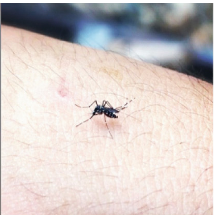 Fig 1: Examples of the training dataset including bottles, tires, and the Bounding Box (BB) logic.
2. Mosquito Genus Classification
The second model targets the vector. It distinguishes between the Culex (common mosquito) and Aedes aegypti (the Zika carrier). The authors used a custom CNN architecture with:
- Input: 225x225 resized images.
- Robustness: 6-fold cross-validation and Dropout layers to prevent overfitting.
- Expert Verification: Every training image was verified by specialists from a Zoonoses Control Center.
Experiments & Results: Real-World Performance
The true test of this research wasn't just the training accuracy, but the "Instagram Test."
- In-Lab Accuracy: 82.5% for mosquito classification.
- Instagram Test: When faced with 60 raw images from Instagram—where mosquitoes might be squashed, small, or poorly lit—the model maintained a 73.33% accuracy.
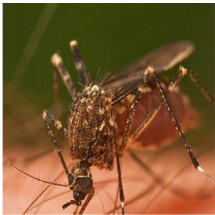 Fig 2: Real-world Instagram samples used for testing, showing high variability in scale and rotation.
The confusion matrix and ROC curves revealed that while the model is highly effective, the "Tire" class remains the most difficult to detect due to the sheer variety of tire types and lighting conditions in urban settings.
Critical Analysis & Conclusion
Takeaway
This research bridges the gap between high-level AI research and practical public health utility. By plugging these models into the VazaZika platform, the authors have provided a blueprint for "Passive Crowd-Sensing," where common social media habits contribute to saving lives.
Limitations & Future Work
- Data Scarcity: Humans don't post pictures of mosquitoes as often as they do food or pets, making real-world data collection difficult.
- Small Object Problem: As noted in the discussion, when a mosquito is a tiny fraction of the total pixels, accuracy drops.
- The Path Forward: The authors suggest exploring Auto-encoders and expanding the dataset through the VazaZika platform to improve generalization.
Ultimately, this work proves that AI doesn't need to be 100% perfect to be 100% useful; as a filtering tool for health agencies, an 85% detection rate is a massive leap forward from manual surveillance.