
Agricultural Pests Identification: Moving from Static Images to Real-Time Video Tracking
Agricultural Pests Tracking and Identification in Video Surveillance Based on Deep Learning
This paper introduces a deep learning-based framework for the automated identification and tracking of agricultural pests in video surveillance. By leveraging fine-tuned VGG16 and Faster R-CNN architectures, the system achieves state-of-the-art accuracy in complex farmland environments, significantly outperforming traditional machine learning methods.
TL;DR
This research presents a robust deep learning pipeline for identifying and tracking agricultural pests in real-time video. By employing Faster R-CNN and VGG16, the authors achieved a 95.33% classification accuracy, proving far superior to traditional SVM or shallow neural networks. The system effectively handles complex backgrounds and protective coloration, marking a significant step toward automated, IoT-driven pest control.
Background & Motivation: Beyond the Human Eye
In the vast agricultural landscapes of China, pest control is often hindered by the lack of professional expertise among farmers, leading to the misuse of pesticides. While computer vision has long promised a solution, early methods were "brittle"—they relied on manually selected features like wing color or texture which crumble under the noise of a real farm (changing light, overlapping leaves, and camouflage).
The authors argue that the industry must move beyond static image identification. In the real world, pests move. A truly useful system must not only know what a pest is but where it is moving in a surveillance stream.
Methodology: The Power of Deep Feature Extraction
The core of this work lies in the transition from manual feature engineering to Automatic Feature Learning using Deep Convolutional Neural Networks (DCNNs).
1. The Classification Backbone
The authors compared two legendary architectures: AlexNet (8 layers) and VGG16 (16 layers). By visualizing the intermediate Conv3 and Pooling layers, the study demonstrates how the network "ignores" background noise and "activates" only on the morphological outlines of the pest.
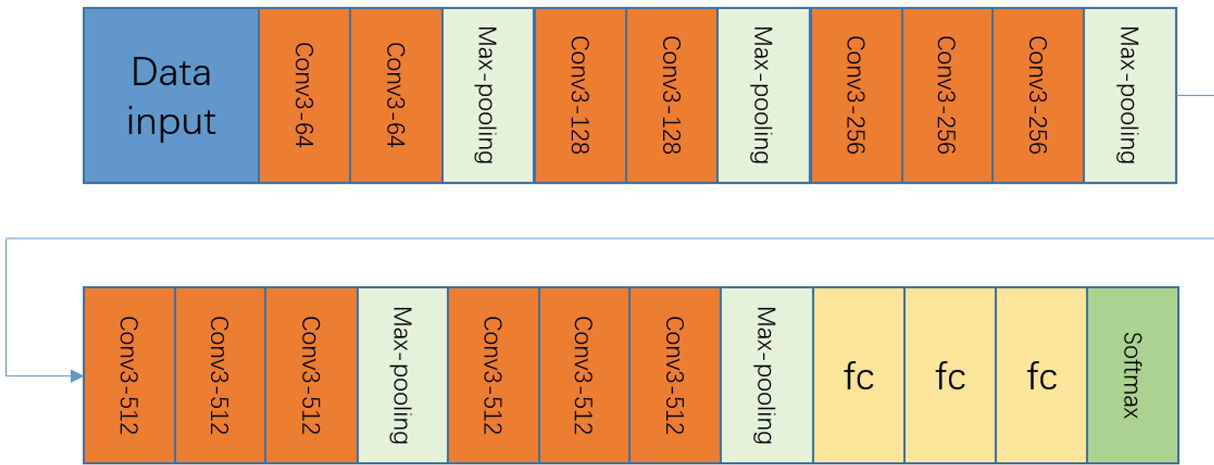
2. Detection and Tracking with Faster R-CNN
To handle video, the authors implemented Faster R-CNN. Unlike basic classifiers, Faster R-CNN uses a Region Proposal Network (RPN) to suggest candidate boxes where a pest might be. These suggestions are then classified by the VGG16 backbone. This allows the system to process video frames at roughly 10-11 FPS, providing a near real-time tracking experience.

Experiments: Performance in the Wild
The researchers tested their models against 550 images across 10 common pest species (e.g., Aelia sibirica, Tettigella viridis).
Quantitative Comparison
The results were conclusive. Traditional methods like SVM and BP Neural Networks struggled to reach even 30% accuracy because they could not distinguish the pests from the high-noise background. In contrast, the deep learning models thrived:
| Model | Accuracy |
|---|---|
| SVM | 25.33% |
| BP Neural Network (ReLU) | 27.33% |
| AlexNet | 86.67% |
| VGG16 | 95.33% |
Video Tracking Results
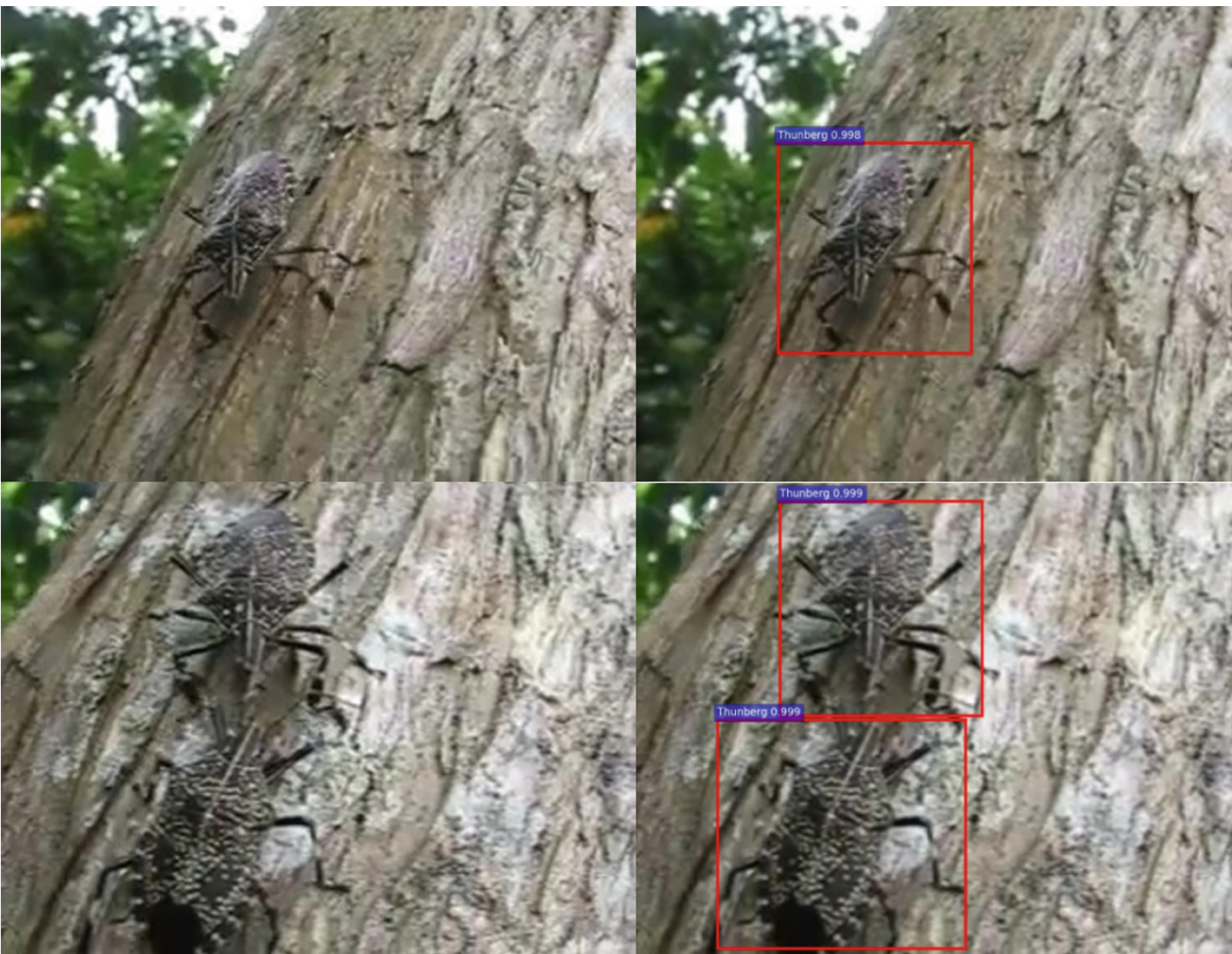
Testing on videos of Erthesina fullo and Gonepteryx amintha showed that the system could maintain tracking even during motion blur and when the insect's color closely matched the foliage. For E. fullo, the frame loss rate was a negligible 0.83%, while the G. amintha video achieved 100% detection across all frames.
Critical Insights & Future Outlook
The primary contribution of this paper is the validation of Faster R-CNN in a specialized domain where "protective coloration" (natural camouflage) usually defeats standard vision algorithms. By fine-tuning weights from the ImageNet dataset, the authors proved that "Transfer Learning" is highly effective even for niche biological tasks.
Limitations:
- Hardware Intensity: The dependence on high-end GPUs (GTX 1070) makes it difficult to deploy on low-power IoT sensors today.
- Inference Speed: 10 FPS is "interactive" but not yet "fluid" for very high-speed insect movements.
Future Work: To make this truly field-ready, we should look toward Model Compression (like Pruning or Quantization) to bring this 95% accuracy to mobile devices and drones.