
DeepMatching: Bridging the Seed Gap in Large-Scale Social Network Alignment
DeepMatching: A Structural Seed Identification Framework for Social Network Alignment
DeepMatching is a novel seed-free structural network alignment framework that identifies credible anchor nodes for large-scale social network de-anonymization. It combines graph embedding (DeepWalk/node2vec) with point set registration (Coherent Point Drift) to establish an initial mapping, achieving state-of-the-art accuracy and efficiency without requiring prior seed information.
TL;DR
Network alignment—the process of matching identities across different social platforms—traditionally requires a "gold standard" set of pre-mapped users (seeds). DeepMatching breaks this dependency. By treating graph structures as points in Euclidean space and introducing a statistical "Credibility" metric, it identifies high-precision seeds from scratch, outperforming existing seed-free methods in both speed and robustness against privacy-preserving anonymization.
The Motivation: Why Seeds Are a Bottleneck
In the era of privacy, social networks are often anonymized by removing names or altering edges. To realign these datasets (for research or de-anonymization), algorithms usually need a "kickstart" from known correspondences.
- The Manual Cost: Manually finding seeds in a million-node graph is impossible.
- The Structural Search: Finding common sub-structures like large cliques is computationally "hard" and often fails if the graphs are partially overlapping.
- The Reliability Gap: Even if you find a mapping, how do you know it isn't just a result of random chance?
DeepMatching addresses these by asking: How much does this mapping deviate from a random guess?
Methodology: From Topology to Algebra
DeepMatching follows a sophisticated four-stage pipeline to turn raw graph data into a reliable set of anchor nodes.
1. Feature Representation (Embedding)
Instead of comparing adjacency matrices directly, the framework uses DeepWalk or node2vec. These techniques perform random walks on the graph to learn d-dimensional vectors for each node. This converts the discrete graph matching problem into a continuous point-set registration problem.
2. Point Set Registration (CPD)
The framework treats the two sets of node vectors as "point clouds." It employs Coherent Point Drift (CPD), which fits a Gaussian Mixture Model (GMM) from one node set onto the other. This ensures that the global topological structure is preserved during the mapping.
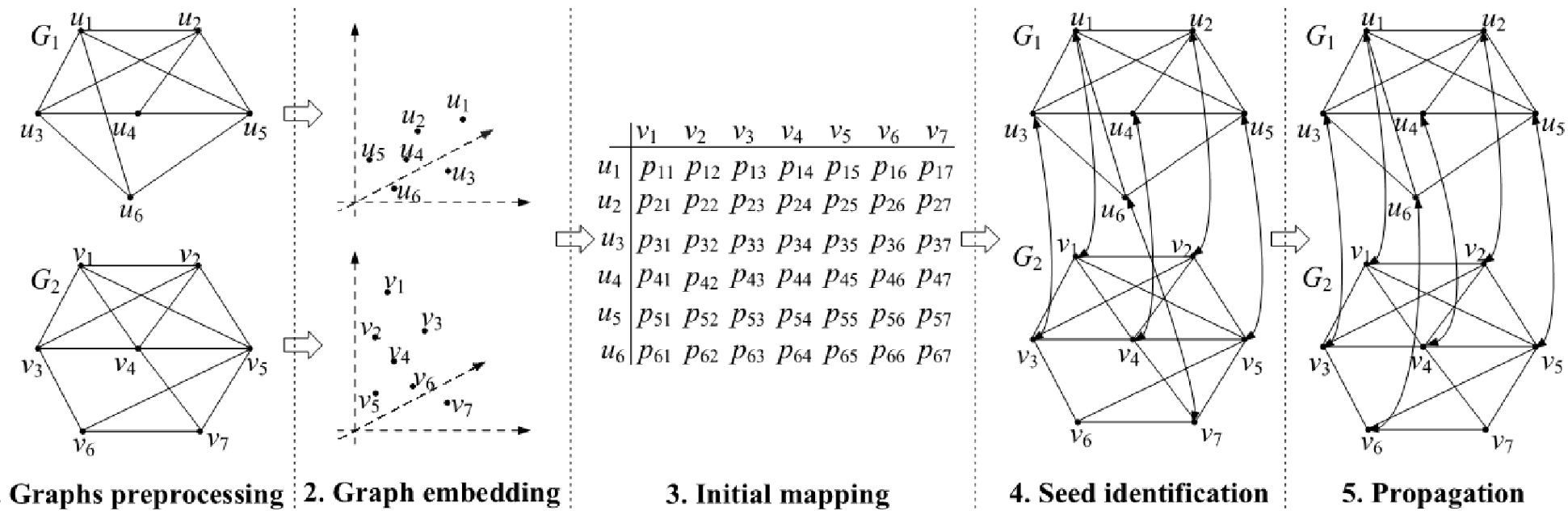 Fig 1: The DeepMatching framework workflow, from preprocessing to final propagation.
3. Credibility Quantification
This is the paper’s "Secret Sauce." The authors define Edge Consistency () and then calculate a Z-score: If , the mapping is statistically significant (less than 0.2% chance of being random). This allows the system to auto-reject poor seed candidates.
Experiments & Results: Robustness Under Fire
SOTA Comparison
Compared to Bayesian methods and Optimization-based De-Anonymization (ODA), DeepMatching shows superior scalability. While ODA's computation time explodes after 700 nodes, DeepMatching's growth remains nearly linear.
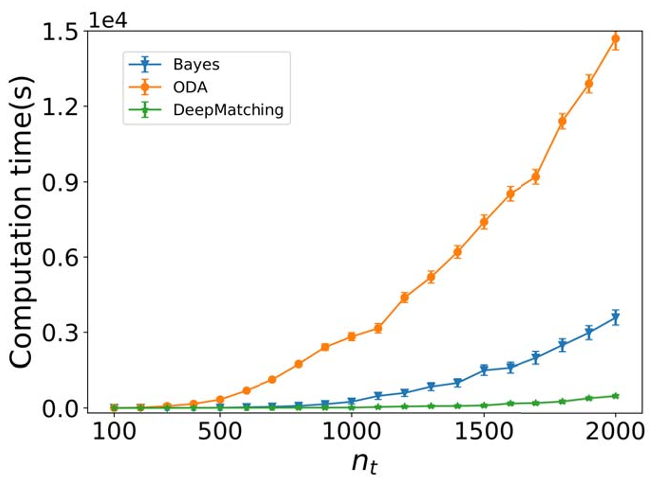 Fig 2: Comparison of computation efficiency (a) and effectiveness (b) against baseline methods.
Defeating Anonymization
The authors tested the framework against 6 anonymization techniques (e.g., Differential Privacy, K-Degree Anonymity). DeepMatching successfully de-anonymized most networks once the sampling rate (overlap) reached 0.8, proving that simple topological perturbations are often insufficient to protect user privacy against embedding-based attacks.
Critical Analysis & Takeaways
Summary of Contribution
- Novelty: The first to formalize "Credibility" for graph mappings.
- Performance: High precision (often >90%) in seed identification across diverse datasets (Emails, Citations, Social Networks).
- Utility: Bridging the gap between seed-free initialization and propagation-based scaling.
Limitations
While powerful, DeepMatching relies on the Topological Consistency assumption. If two networks represent the same users but have fundamentally different interaction behaviors (e.g., Twitter's broadcast vs. Facebook's bidirectional friendship), the embedding-based registration might struggle. Furthermore, it focuses on the "top nodes" (high degree), which may not represent the "long tail" of typical users accurately.
Final Thoughts
DeepMatching demonstrates that the "Cold Start" problem in network alignment is solvable through the marriage of Graph Representation Learning and statistical hypothesis testing. For privacy researchers, it serves as a wake-up call: structural anonymity is more fragile than it appears.