
Deciphering the Unspoken: Deep Learning for Real-Time Emotion Detection via Biofeedback
Deep Neural Networks for Detecting Real Emotions Using Biofeedback and Voice
This paper presents an Artificial Deep Neural Network (ANN) framework for real-time emotion detection by fusioning biofeedback data from the Empatica E4 wristband and voice recordings. The system achieves a state-of-the-art accuracy of 85% in testing sets and 79% in validation for determining emotional scales during interview scenarios.
TL;DR
This research introduces a deep learning framework designed to detect human emotions in real-time by analyzing physiological signals and voice. By moving beyond easily manipulated facial expressions, the study utilizes the Empatica E4 wristband to capture "involuntary" biological responses, achieving an impressive 85% accuracy in detecting emotional scales during interviews.
Background: The Limits of Visual Cues
In high-stakes environments like job interviews or requirements elicitation, human participants often "mask" their true emotions. While a person might smile, their biological markers—heart rate, skin conductance, and body temperature—tell a different story. The authors position this work as a shift from Computer Vision-based emotion recognition to Physiological Signal Analysis, arguing that internal stimuli offer a more reliable ground truth for emotional states.
1. The Core Challenge: Noisy Biological Data
One does not simply plug a wristband into a neural network. The researchers identified several critical hurdles:
- Asynchronous Sampling: Different sensors (EDA, BVP, Acceleration) record at wildly different frequencies.
- The IBI Gap: The Inter-Beat Interval (IBI) data is often misdetected (over 80% error in some sets).
- Feature Complexity: Mapping raw biometric data to a 100-label emotional scale initially yielded poor results due to lack of linear correlation.
2. Methodology: From Classification to Regression
The study’s breakthrough came from two specific architectural decisions:
A. Data Merging & Heuristic Pre-processing
To solve the IBI misdetection, the team implemented a heuristic approach. If an interval was missing, they attempted to isolate individual heartbeats by ensuring smooth coefficient transitions in a regressed model, preventing the erratic jumps that usually occur with naive data division.
B. The Deep ANN Architecture
The final model moved away from simple classification to a regression-based output, which better represents the "fluid" nature of emotional ranges.
 Figure 1: Conceptual workflow from sensor data collection via Empatica E4 to the Artificial Neural Network.
The optimized stack includes:
- Layers: 5 hidden layers with 35 units each.
- Activation: Leaky ReLU (to prevent dying neurons in the regression task).
- Optimizer: Adam (paired with Mean Squared Error loss).
- Regularization: A dropout rate of 0.3 to ensure generalization.
3. Experimental Results
The transition to regression using Mean Squared Error (MSE) proved superior to Mean Absolute Error. The model stabilized after a specific number of epochs, proving that simply increasing training time isn't as effective as optimizing the loss function structure.
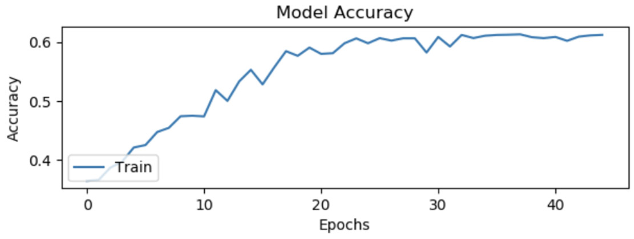 Figure 2: Performance metrics including loss curves and optimizer comparisons.
| Metric | Result |
|---|---|
| Training Accuracy | 100% (converged) |
| Testing Accuracy | 85.11% |
| Validation Accuracy | 79.00% |
4. Academic Insight: Why This Matters
The real value of this work lies in its Inductive Bias—the assumption that biological signals are a direct proxy for emotional intensity. By achieving nearly 80% validation accuracy on "real-world" noisy data, the authors prove that biofeedback can supplement or even replace voice/video in environments where people are incentivized to hide their feelings.
Limitations & Future Work
While the IBI isolation technique improved results, the authors acknowledge that real-time voice integration (using CNNs for spectrogram analysis) is the next frontier. Currently, the biofeedback does the heavy lifting, but a truly robust system must perfectly sync the vocal tone with the heart rate to achieve "Confidence-Level" detection.
Conclusion
This paper moves us closer to a future where "Emotional Intelligence" in AI is not just about reading a face, but understanding the physiological pulse of a conversation. For industries ranging from HR to mental health, this deep-ANN approach provides a blueprint for building high-integrity affective computing systems.