
ResNet18 + BLSTM: Master-Class in Speech Emotion Recognition
Deep Neural Networks for Emotion Recognition
The paper presents a hybrid deep learning ensemble, ResNet18+BLSTM, designed for Speech Emotion Recognition (SER). By combining convolutional feature extraction from spectrograms with bidirectional temporal modeling, the method achieves a state-of-the-art accuracy of 74.87% on the RAVDESS dataset, significantly outperforming traditional machine learning baselines.
TL;DR
Recognizing raw human emotion from audio is notoriously difficult due to the subtle variations in pitch, intensity, and rhythm. This paper introduces a powerful ensemble model that combines ResNet18 (for visual spectrogram patterns) and Bidirectional LSTM (for temporal context). Achieving 74.87% accuracy on the RAVDESS benchmark, it proves that deep ensemble learning is the superior path forward for paralinguistic analysis.
The "Blind Spot" in Traditional Audio Analysis
For decades, Speech Emotion Recognition (SER) relied on Support Vector Machines (SVM) and Hidden Markov Models (HMM). While these models work for simple tasks, they are brittle when faced with:
- Temporal Dynamics: Emotions aren't static; they evolve across a sentence.
- Noise Sensitivity: Audio quality varies wildly between recording devices.
- Ambiguity: The difference between "calm" and "neutral" is often a minute change in spectral flatness.
The authors argue that we need a model that can "see" the frequency distribution like an image and "hear" the sequence like a story.
Methodology: The Hybrid Powerhouse
The core innovation lies in the Stacked CNN-RNN architecture. Instead of choosing between spatial or temporal features, the authors use both.
1. Spectrograms as "Images"
The raw audio is converted into Mel-spectrograms. These are 2D representations where the Y-axis is frequency (scaled to human hearing) and the X-axis is time. A ResNet18 with 18 convolutional layers processes these "images," using skip-connections to avoid the vanishing gradient problem.
2. Bidirectional Context
A standard LSTM only looks forward. However, in speech, the end of a sentence often provides the context needed to understand the beginning. The BLSTM processes the encoded features in both directions, capturing a holistic view of the emotional arc.
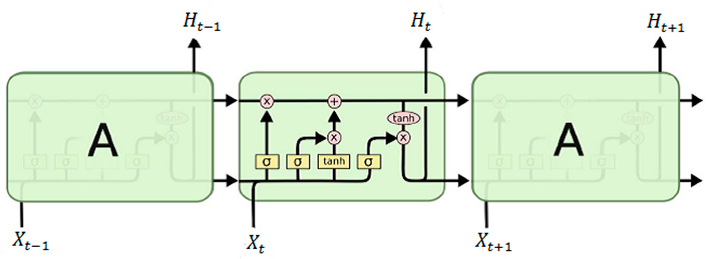 Figure 1: The model utilizes a deep residual framework to extract high-level acoustic features.
Experimental Showdown
The authors tested their ensemble against a gauntlet of 7 other models (including Logistic Regression, XGBoost, and standard CNNs).
| Model | Accuracy (Test) | Avg. AUC |
|---|---|---|
| Logistic Regression | 17.23% | 0.5219 |
| Random Forest | 55.71% | 0.7425 |
| Standard CNN | 69.84% | 0.7266 |
| ResNet18+BLSTM | 74.87% | 0.8612 |
The results are clear: Traditional ML algorithms (LogReg, SVC) fail miserably at this complexity level. Even a standalone CNN is outperformed by the ensemble, proving that sequence modeling (the "RNN" part) is non-negotiable for audio.
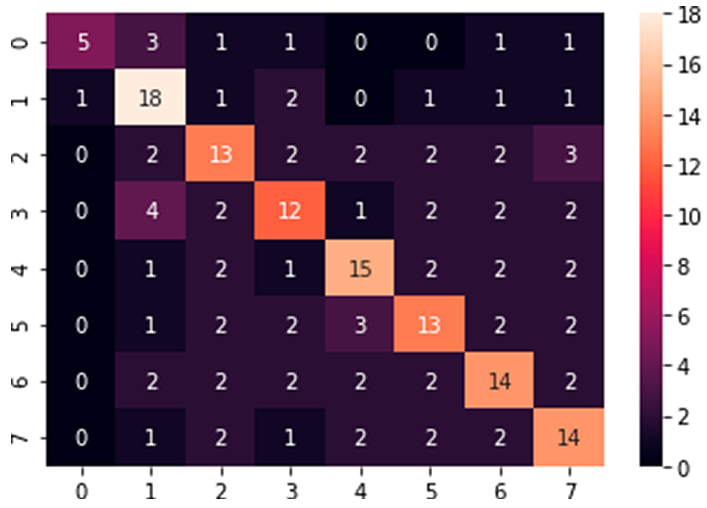 Figure 2: The Confusion Matrix reveals that while the model is highly accurate, it still occasionally confuses "neutral" with "calm"—a challenge even for human listeners.
Critical Insight: Why Does It Work?
The success of the ResNet18+BLSTM ensemble stems from its ability to handle unbalanced data and multidimensionality. By removing the last fully connected layer of the ResNet and feeding the raw feature maps directly into the BLSTM, the network maintains a high "information density" throughout the pipeline.
The authors also noted that when they reduced the classification task to simpler binary categories (e.g., Male vs. Female or Positive vs. Negative), accuracy skyrocketed to over 97%. This suggests the "backbone" of the model is extremely robust at identifying paralinguistic markers, even if fine-grained emotional labels remain challenging.
Conclusion and Future Outlook
This work demonstrates that for SER, the combination of ResNet (Spatial) and BLSTM (Temporal) is currently the SOTA approach for 1D signal analysis converted to 2D representations.
Future Directions:
- Multimodality: Integrating video (facial expressions) to resolve audio-only ambiguity.
- Data Augmentation: Using Generative Adversarial Networks (GANs) to synthesize more "angry" or "scared" samples to balance the training sets.
- Transfer Learning: Pre-training on massive audio datasets (like AudioSet) before fine-tuning on RAVDESS.
Final Takeaway: If you are building a voice assistant or a sentiment analysis tool, stop using basic spectral features. Move to a hybrid CNN-RNN architecture to capture the true human "soul" behind the voice.