
The Intelligence of Wind: How Deep Neural Networks are Decarbonizing the Grid
Deep Neural Networks for Future Low Carbon Energy Technologies: Potential, Challenges and Economic Development
This paper explores the pivotal role of Deep Neural Networks (DNN) and Artificial Intelligence in optimizing low-carbon energy technologies, specifically focusing on Wind Power Forecasting (WPF). It highlights how machine learning algorithms like Support Vector Regression (SVR) and DeepMind's predictive models mitigate the stochastic nature of weather, resulting in significant improvements such as a 20% value increase in wind energy generation.
TL;DR
The volatility of weather is the "Achilles' heel" of renewable energy. This paper demonstrates that by replacing classical forecasting with Deep Neural Networks (DNN) and Support Vector Regression (SVR), we can transform unpredictable wind farms into reliable, schedulable power assets. Real-world applications, such as Google’s DeepMind, have already proven that AI can boost the economic value of wind energy by a staggering 20%.
Background: The Stochastic Burden
As we pivot away from fossil fuels, the power grid faces a paradox: it is becoming cleaner but more unstable. Fossil fuels provided "predictable" energy; wind and solar provide "stochastic" energy. When the wind stops unexpectedly, the grid faces congestion or total failure. The transition to a low-carbon economy requires more than just better turbines—it requires a digital nervous system.
Problem & Motivation: Beyond Point Forecasting
Most prior works relied on point forecasting—predicting a single value for future energy. However, wind power is a random variable with a complex Probability Density Function (PDF). Traditional models cannot capture the "tails" of this distribution, leading to massive errors in energy market commitments.
The author identifies that the utility industry needs a move toward probabilistic and deep learning-based analytics to make renewable energy an "equal player" in the energy supply chain.
Methodology: High-Dimensional Insights
The core of the proposed "Intelligent Wind Speed Forecasting" (I-WSF) lies in the use of Support Vector Regression (SVR) and Deep Neural Networks.
1. The Power of Kernels
For non-linear atmospheric data, linear models are insufficient. The paper details how SVR uses Kernel Functions (Polynomial and Gaussian) to map lower-dimensional weather data into higher-dimensional feature spaces where a "Hyper Plane" can accurately predict continuous target values within a margin of tolerance ().
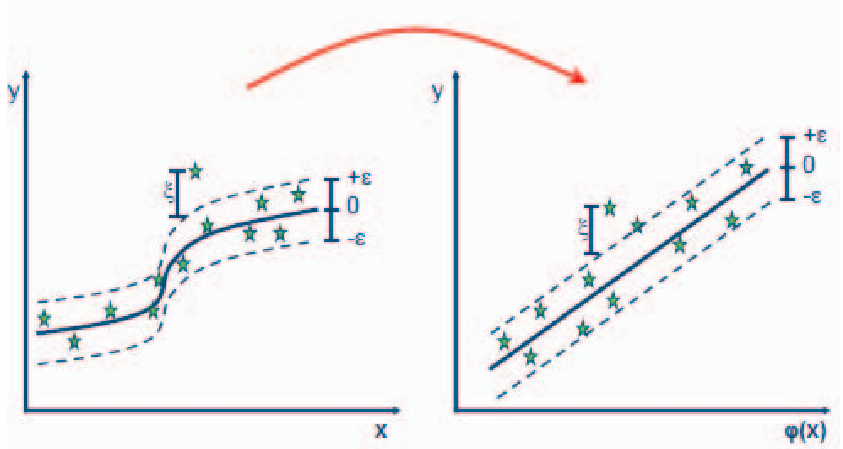 Fig 1: Schematic of the non-linear SVR model used to find the optimal decision boundary for wind speed.
2. DeepMind’s Predictive Edge
The paper highlights the Google DeepMind approach, which trains DNNs on historical turbine data and weather forecasts to predict output 36 hours in advance. This allows operators to make "hourly delivery commitments," effectively treating the wind farm like a traditional power plant.
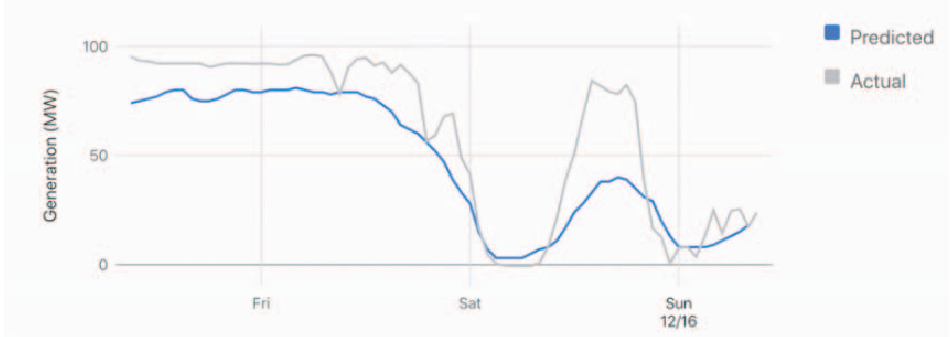 Fig 2: DNN training workflow utilizing weather predictions and historical turbine data.
Experiments & Results: Case Studies in Impact
The research provides compelling evidence from three major global projects:
- Google DeepMind: Achieved a 20% boost in wind generation value.
- Australia’s AMS: Developed hundreds of DNN variations to manage risk in markets with high renewable penetration.
- Makani Shell Wind Kites: Replaced tons of steel with "lightweight electronics and smart software," using AI to manage flight patterns and predict failure.
In the Scotland case study, the integration of AI is shown as the primary driver for meeting peak demand (52,500 MW) while maintaining a grid that is increasingly subsidy-free.
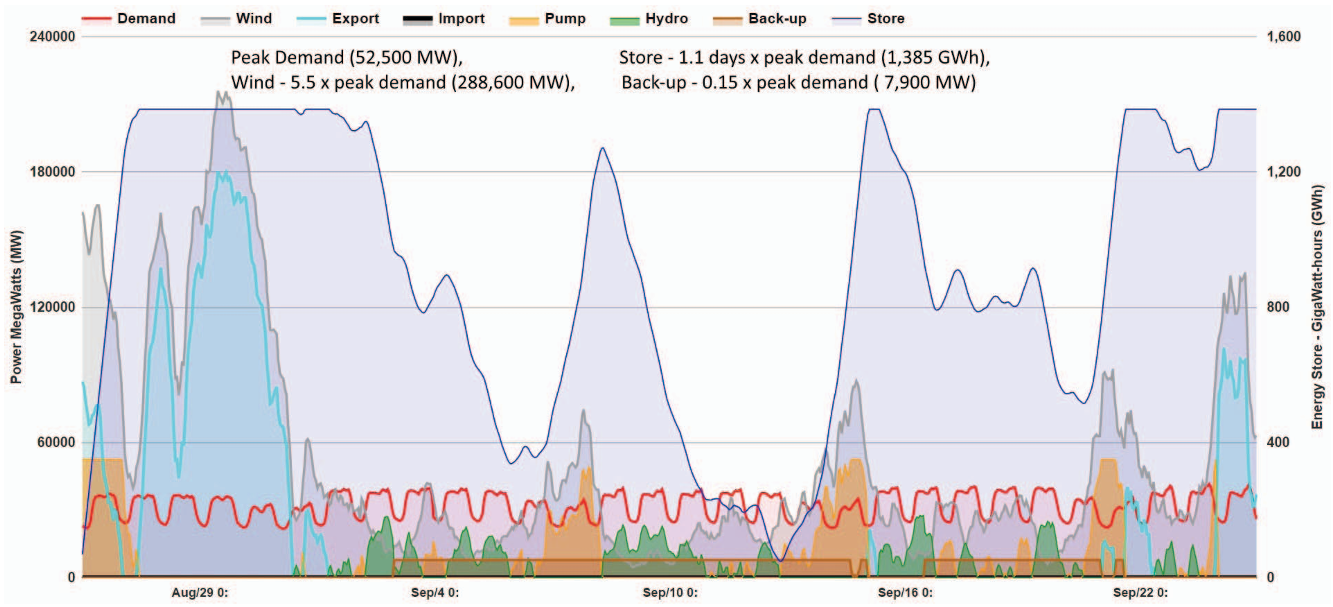 Fig 3: Data-driven modelling of low carbon energy generation and storage in the UK (Scotland).
Critical Analysis & Conclusion
Takeaway
The paper successfully argues that the future of low-carbon technology is data-centric. By leveraging the inductive bias of neural networks to model atmospheric physics, we can overcome the intermittency of renewables.
Limitations
While the paper focuses on the forecasting accuracy of SVR and DNN, it spends less time on Cyber-security. As the grid becomes more reliant on AI and IoT sensors, it becomes more vulnerable to adversarial attacks on data inputs—a critical area for future research.
Future Outlook
The next frontier is the integration of Intelligent Energy Storage (IES) with AI forecasting. When the AI knows a surplus of wind is coming 36 hours in advance, it can pre-optimize storage allocation, virtually eliminating the need for fossil fuel backups.