
DeepEthnic: Mastering Multi-Label Ethnic Classification via Transfer Learning
DeepEthnic: Multi-label Ethnic Classification from Face Images
DeepEthnic is a multi-label ethnic classification framework that leverages transfer learning from the VGG-16 architecture to categorize facial images into four groups: African, Asian, Caucasian, and Indian. By fine-tuning a pre-trained model on a diverse, consolidated dataset, it achieves state-of-the-art accuracies, peaking at 99.76% for the Asian category.
TL;DR
DeepEthnic represents a significant leap in facial demographic analysis, moving beyond simple binary classification to a high-accuracy four-way ethnic classifier. By repurposing the powerful VGG-16 architecture through Transfer Learning, the authors achieved a 99.18% average success rate across African, Asian, Caucasian, and Indian groups, while significantly reducing the computational overhead.
Problem & Motivation: The Limits of Handcrafted Features
For nearly two decades, ethnic classification was dominated by traditional Machine Learning. Methods like Gabor Wavelets, Local Binary Patterns (LBP), and Linear Discriminant Analysis (LDA) were the standard. However, these "appearance-based" and "geometry-based" methods shared a common fatal flaw: they were fragile.
When introduced to "noise"—changes in lighting, background distortion, or subject pose—their accuracy plummeted. Furthermore, while some models performed well on binary tasks (e.g., Asian vs. Non-Asian), they struggled to scale to three or more ethnic groups simultaneously. The authors identified that a more robust, "feature-rich" approach was needed to handle the messy reality of unconstrained facial images.
Methodology: The Power of Transfer Learning
The core insight of DeepEthnic is that the early layers of a massive classification network (like VGG-16) already "know" how to see. They have learned to detect edges, curves, and textures that are universal to all objects, including human faces.
1. Data Harmonization
The researchers compiled a massive, diverse dataset from 10 different sources, including LFW, FERET, and IMFDB. To ensure a clean signal, they applied:
- Grayscale Conversion: To remove color-bias and focus on structural morphology.
- Denoising: Using non-local means algorithms.
- Normalization: Cropping all faces to a standard 80x80 resolution.
2. Architectural Evolution
Instead of building a network from scratch, the team took a pre-trained VGG-16 and "surgically" modified it:
- Removed: The final three fully-connected layers designed for 1,000-class ImageNet labels.
- Added: A new fully-connected layer with 500 neurons and a 4-way Softmax layer for the target ethnicities.
- Training Strategy: Retraining using Stochastic Gradient Descent (SGD) to fine-tune the weights for facial nuances.
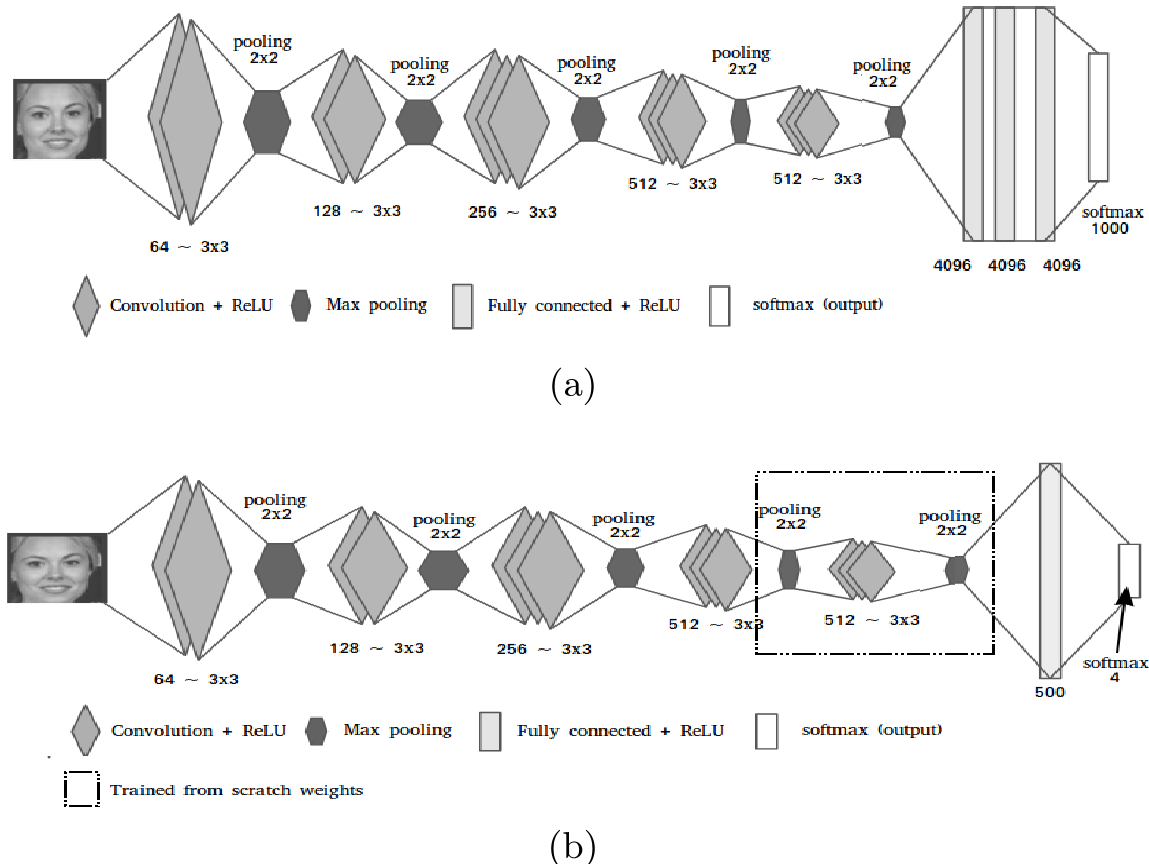 Figure 1: The transition from standard VGG-16 to the DeepEthnic architecture.
Experiments & Results: Breaking the 99% Barrier
The results were Stark. Compared to traditional methods which hovered between 92% and 97% on simpler tasks, DeepEthnic maintained near-perfect performance even across four labels.
| Ethnic Group | Success Rate |
|---|---|
| Asian | 99.76% |
| Caucasian | 99.18% |
| African | 99.02% |
| Indian | 96.72% |
Key Findings:
- Efficiency: Using transfer learning reduced training time from 11.5 hours to 4.5 hours.
- Inference Speed: Once trained, the model evaluates an image in just 10ms, making it viable for real-time applications.
- Robustness: The use of minor Gaussian noise for data augmentation helped the model overcome the imbalance in the training samples.
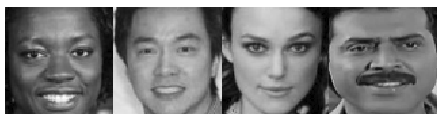 Figure 2: Sample preprocessed images showing the diversity of the training set.
Critical Analysis & Conclusion
DeepEthnic proves that Transfer Learning is not just a shortcut for training; it is a mechanism for superior feature extraction. By leveraging "ImageNet knowledge," the model escapes the brittleness of handcrafted filters.
Limitations: The "Indian" group showed slightly lower accuracy (96.72%) compared to others, likely due to higher intra-class variance or overlap in facial features with other groups in the consolidated dataset.
Future Outlook: The roadmap for this technology includes expanding the ethnic labels (to include Hispanic and other groups) and further hardening the model against extreme head poses and lighting conditions. As facial recognition becomes a ubiquitous part of the digital landscape, DeepEthnic provides a vital blueprint for high-speed, high-accuracy demographic understanding.