
DeepOpp: Solving the "Subway Dead-Zone" for Social Media via Context-Aware Prefetching
DeepOpp: Context-Aware Mobile Access to Social Media Content on Underground Metro Systems
DeepOpp is a context-aware mobile system designed to provide offline access to social media content on underground metro systems using opportunistic networking. It integrates a mobile signal tracking method, a GPS-free localization scheme based on station WiFi mapping, and a context-aware optimization routine to prefetch and cache content during intermittent connectivity.
TL;DR
DeepOpp is a context-aware mobile system that allows commuters to browse social media underground by intelligently prefetching content during brief windows of connectivity. By using crowdsourced signal maps and a WiFi-based location scheduler, it reduces energy consumption by 2.5x compared to standard methods while ensuring the most relevant content is cached.
The Subterranean Connectivity Crisis
For millions of daily commuters in cities like London, Paris, or New York, the "underground" is a digital black hole. GPS doesn't work, and cellular signals disappear the moment a train enters a deep-level tunnel. While some stations offer WiFi, the connection windows are too short for typical app behavior, leading to failed requests, wasted battery, and user frustration.
Existing solutions either try to fetch data at fixed intervals (wasting energy when there's no signal) or wait for any signal (often too weak for large media). The authors of DeepOpp identified that to solve this, a system needs to know three things: Where is the user?, When will the next signal appear?, and What content matters most?
Methodology: The Architecture of Intelligence
DeepOpp operates as an Android background service that bridges the gap between the volatile physical environment and the social media application.
1. GPS-Free Localization & Signal Crowdsourcing
Since GPS is unavailable, DeepOpp uses a WiFi-to-Station mapping scheme. By identifying the unique MAC addresses of station WiFi (e.g., London’s Virgin Media WiFi), the system can determine its location within seconds of reaching a platform.
The system also relies on Reliable Crowdsourcing. It collects signal strength (ASU), bandwidth, and latency from various users. To filter out noise from different phone models, it uses a Two-stage Estimator with a Gaussian model and "control items" to score worker reliability.
2. The Context-Aware Optimization
The core of DeepOpp is its ability to turn content caching into a mathematical optimization problem. It uses Facebook’s EdgeRank to understand user preference and treats caching as a 0-1 Knapsack Problem.
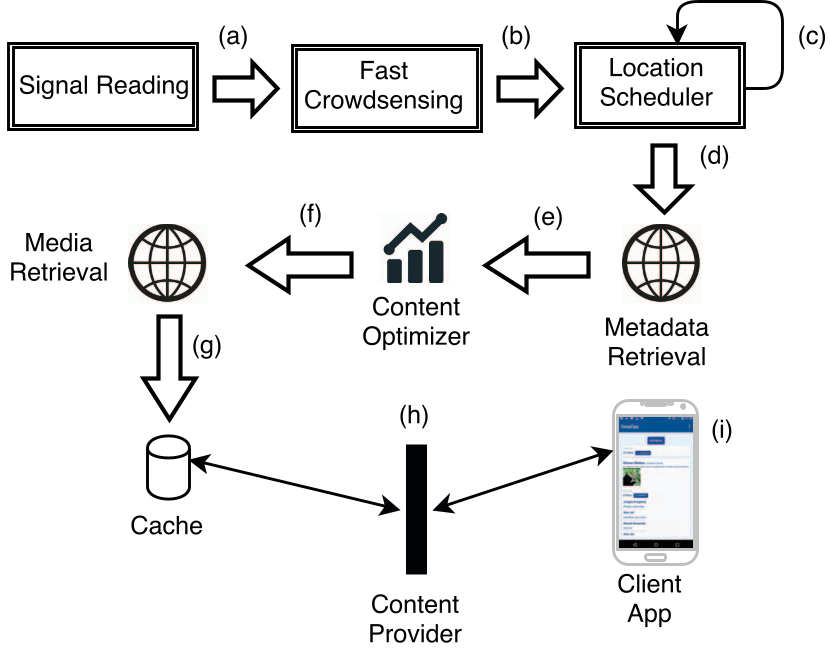
The system considers:
- Energy Budget (): Avoids draining the battery if levels are low.
- Storage (): Manages limited phone space.
- Data Plan (): Prioritizes WiFi over 3G to save money.
Experimental Results: Efficiency Reimagined
The system was rigorously tested on the London Underground's Circle Line.
- Success Rate: DeepOpp achieved a 50% success rate for requests, compared to just 25-36% for standard schedulers (O2SM and EarlyBird), which often attempted to connect in dead zones.
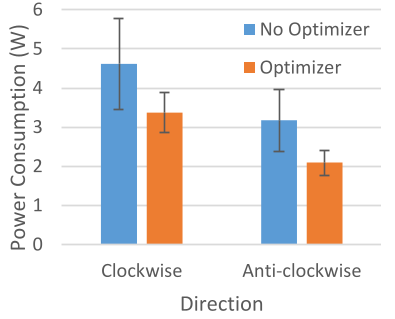
- Energy Efficiency: Because it avoids "wasted" connection attempts, DeepOpp is 2.58 times more power-efficient.
- Storage Savings: The optimizer intelligently filtered out roughly 55% of the data, ensuring that only the highest-affinity posts were stored.
Critical Insight & Conclusion
The brilliance of DeepOpp lies in its "Predictive Opportunism." Instead of fighting the lack of signal, it maps the environment to exploit the few connectivity "islands" that exist.
Takeaway for the Industry: As apps become more data-intensive, developers cannot rely solely on the OS to handle connectivity. Context-aware middleware like DeepOpp represents a shift toward "Infrastructure-Aware" software, capable of delivering a seamless experience in even the most hostile networking environments.
Limitations: The current implementation relies on station WiFi MAC addresses; if a transit authority changes their hardware, the mapping requires a refresh. Future work could integrate IMU (inertial measurement unit) data to track train movement even more precisely between stations.