
DelQue: Redefining Information Search in DTNs via Socially-Aware Delegation
DelQue: A Socially Aware Delegation Query Scheme in Delay-Tolerant Networks
DelQue is a socially aware, two-hop delegation query scheme designed for information search in Delay-Tolerant Networks (DTNs). It integrates both the query and response phases into a closed-loop system where selected neighbors (relays) are responsible for fetching data and returning it to the source, significantly reducing network overhead.
TL;DR
In the world of Delay-Tolerant Networks (DTNs), search is often an expensive, multi-hop marathon. DelQue (Delegation Query) changes the game by treating search as a two-hop "closed-loop" task. By predicting human mobility using a lightweight semi-Markov model, it delegates search tasks to specific neighbors who act as both the query carrier and the data courier. The result? A 300-500% reduction in energy cost compared to classic flooding methods while maintaining SOTA query success rates.
The Problem: The High Cost of Searching in the Dark
Information search in DTNs is fundamentally harder than in the connected Internet. Most existing schemes rely on Epidemic Routing (flooding) or Social Forwarding (multi-hop).
- The Overhead Trap: Multi-hop search involves too many nodes, draining batteries and filling buffers across the entire network.
- The Response Gap: Many papers focus only on finding the data, neglecting the high difficulty of returning that data to a source that might have moved.
The authors' core insight is that one-hop neighbors actually cover most of the network range over a reasonable period. If you pick the right neighbor, two hops are all you need.
Methodology: The "Social Utility" and Semi-Markov Prediction
The heart of DelQue is a probabilistic selection mechanism. The source node asks: "Which of my neighbors is most likely to hit the destination community and then find me again before my deadline?"
1. The Mobility Model
Instead of tracking massive history logs, DelQue uses a Time-Homogeneous Semi-Markov Process.
- Transitions: Where do you go next (Matrix )?
- Sojourn Time: How long do you stay there (Distribution )?
This makes the scheme "lightweight"—perfect for resource-scarce mobile devices.
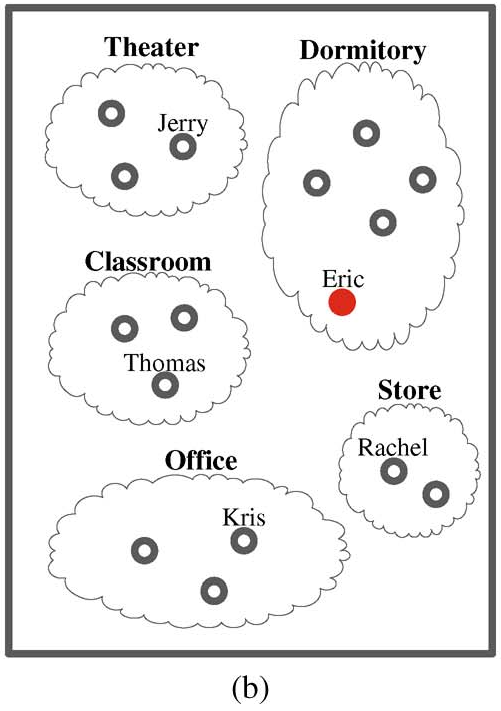 Fig 1: The DelQue process—selection, movement to the community, and returning the response to the source.
2. QSS vs. QMS
DelQue handles two scenarios:
- Querying for Static Source (QSS): The requester stays put (e.g., a soldier at a base).
- Querying for Mobile Source (QMS): The requester is on the move. DelQue uses the source's own predicted schedule to find re-encounter probabilities, a much harder but more realistic problem.
Experimental Battleground: SOTA Comparisons
The authors tested DelQue against Epidemic, Spray-and-Wait, and BUBBLE Rap using the Infocom 06 (iMotes) and MIT Reality (Smartphones) datasets.
Performance Highlights:
- Cost Efficiency: DelQue uses a fraction of the relays. When the TTL is 8 hours, DelQue's cost is only 20% of Epidemic and 35% of BUBBLE Rap.
- Stability: Unlike Spray-and-Wait, which has a fixed cost (), DelQue dynamically adjusts the number of relays to met a target query ratio (), ensuring high reliability without wasting resources.
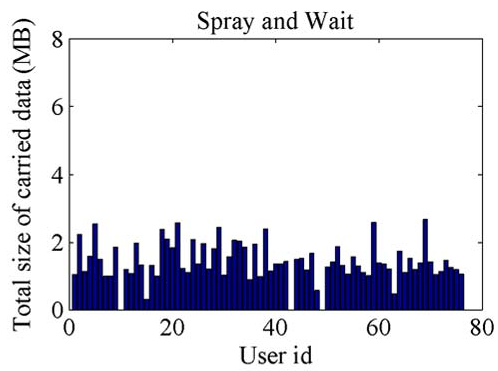 Fig 2: Performance comparison showing DelQue's superior query ratio and significantly lower average cost.
Critical Insight: Why it Works
The success of DelQue lies in its Inductive Bias regarding human social patterns. Most humans are "creatures of habit" moving between geo-communities (offices, gyms, cafes). By identifying "Geo-Communities," DelQue maps abstract interests to physical locations. The spatio-temporal prediction doesn't just predict contact; it predicts timing, allows the source to solve a Knapsack Problem to minimize the number of relays while meeting a performance threshold.
Conclusion & Future Look
DelQue proves that "socially aware" isn't just a buzzword—it's a mathematical tool for network optimization. By transforming search from a broadcast problem into a delegation problem, it achieves extreme efficiency.
Limitations: The model assumes users know their own schedules in QMS, which might not always hold. Future work involving multi-interest queries and data-centric security will be essential to deploy this in hostile environments like battlefields or disaster zones.
Takeaway for Engineers: If your edge network is intermittent, don't flood. Delegate based on probability.