
C3PO: Reclaiming Social Interactivity through Spontaneous and Ephemeral Networks
Demo Spontaneous and Ephemeral Social Networks: an Event-based Framework
This paper introduces C3PO, an event-based framework for Spontaneous and Ephemeral Social Networks (SESNs) designed for localized happenings like conferences. It leverages opportunistic computing and a modular plugin-based architecture to enable decentralized multimedia content exchange without relying on an Internet connection or central authority.
TL;DR
C3PO is a novel framework for creating Spontaneous and Ephemeral Social Networks (SESNs). Unlike Facebook or X, it requires no internet, no central server, and no permanent accounts. By utilizing the mobile devices already in our pockets, it builds a temporary P2P network specifically for localized events (festivals, conferences, etc.), using an event-based data flow to share content opportunistically.
Background: The Localization Paradox
In a crowded stadium or a massive tech conference, the irony of modern networking is that you are physically closest to people but digitally furthest due to network congestion or outages. Traditional social networks are ill-equipped for these "happenings" because:
- They require cloud connectivity which fails in high-density crowds.
- They are permanent, whereas many interactions at an event are naturally transient.
- They sacrifice privacy to a central authority.
C3PO addresses this by defining a network that only exists as long as the event does, and only where the people are.
Methodology: The Architecture of Opportunism
The core of C3PO is split into two distinct yet collaborative layers: Inter-device and Intra-device communication.
1. Inter-Device: Store, Carry, and Forward
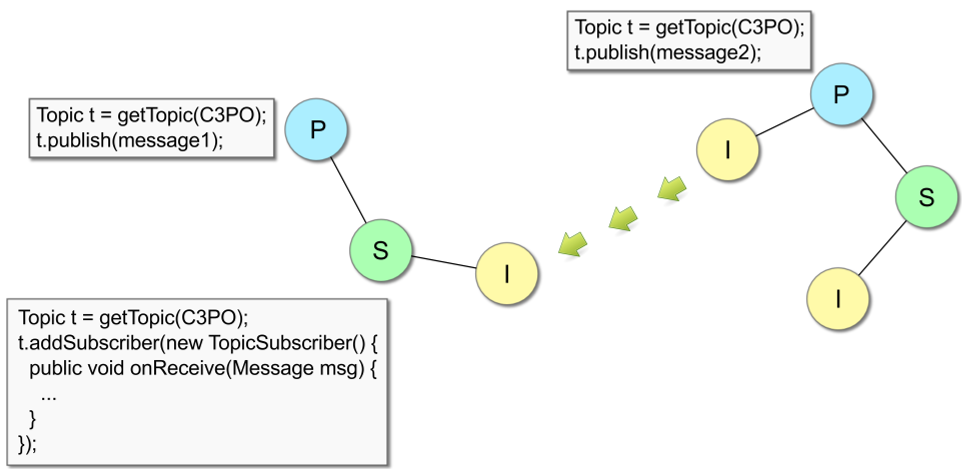
Since users are constantly moving, a stable connection between all participants is impossible. C3PO uses Opportunistic Networking. If person A isn't near person C, but both meet person B at different times, person B acts as a "carrier," passing the data along.
The framework supports two main strategies:
- Simple Flooding: Best for small groups; every message is sent to every neighbor.
- Gossiping: Best for crowds; devices exchange "catalogs" of what they have first, only transferring missing data to save bandwidth.
2. Intra-Device: The Plugin Ecosystem
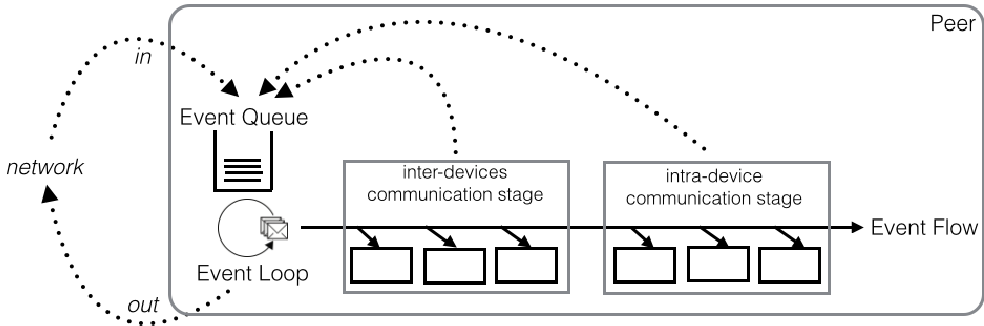
Inside the device, C3PO treats every piece of data (a photo, a "like," a text) as an Event. These events are pushed through a local flow where various Plugins reside.
Each plugin filters the event flow based on specific criteria (e.g., an "Image Plugin" only looks for events containing image URLs). This design allows the app to be highly modular—developers can add a "Voting Plugin" or a "Trending Plugin" on the fly without rewriting the core engine.
Experimental Validation: DEBS'15 Demo
The authors validated the framework at the DEBS'15 conference. Attendees installed an Android app that allowed them to:
- Publish content locally via Bluetooth or Wi-Fi Direct.
- Promote events (similar to a 'Like'), which triggered a "Trends" plugin to calculate popularity across the decentralized network.
- Participate in paper voting, with results aggregated opportunistically.
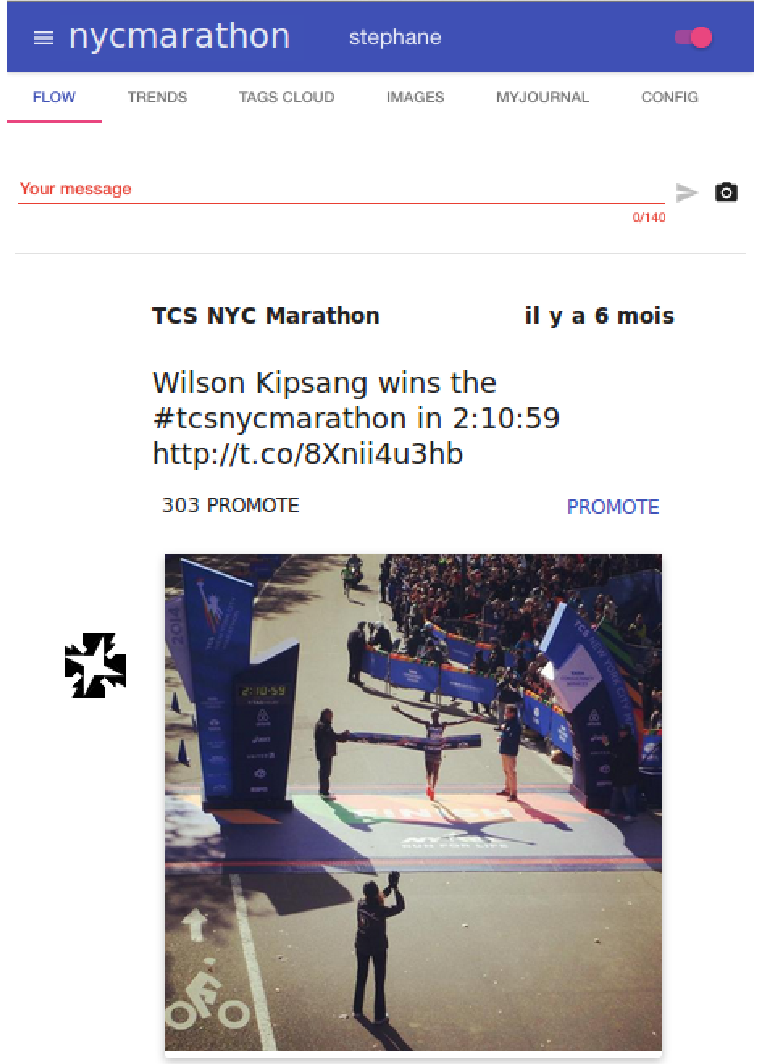 The "Flow" plugin interface, showing time-ordered events captured from the local vicinity.
Critical Insight & Future Outlook
The brilliance of C3PO lies in its In-Browser/Hybrid strategy. By using AngularJS and JavaScript components, the authors aimed for OS agnosticism, which is critical in a heterogeneous device environment.
Limitations: While the "epidemic" nature of content spread works well for data, it poses challenges for security and moderation. Without a central authority, preventing spam or malicious content requires complex distributed trust models not fully explored here.
Future Prospect: This framework is a blueprint for the future of Edge Social Computing. As we move toward 6G and ubiquitous IoT, the ability to form "instant" networks for localized collaboration—be it in a smart stadium or a search-and-rescue zone—will be indispensable.