
Crocheted Memes: When Yarn Becomes a Weapon of Democratic Participation
Democratic Participation through Crocheted Memes
This study investigates the phenomenon of "crocheted memes"—physical protest banners made of yarn found in a UK city—and their digital lifecycle on social media. By interviewing individuals who shared these images, the research explores how the tactile nature of craftivism translates into digital democratic participation and emotional engagement.
TL;DR
Can a piece of crochet be a meme? This paper explores how physical, handcrafted protest banners in Edinburgh function as "physical memes" when photographed and shared online. It reveals that the time and effort visible in the yarn square-work creates a unique form of "gentle activism" that cuts through the noise of modern social media, fostering community values and local resistance against corporate urban development.
The Problem: The "Fast Food" of Digital Thought
Digital democracy was once envisioned as a vibrant public sphere, but it has increasingly become an arena for "information pollution," media manipulation, and superficial engagement. As one interviewee put it, modern memes can be the "fast food of thought"—a lazy way of participating in a discussion without actually presenting an argument.
The authors identify a gap: how do we facilitate positive democratic behavior that feels authentic and rooted in local reality? They look toward the "crocheted banner" as a bridge between the physical world (placed in contested urban spaces) and the digital world (shared on Twitter).
Methodology: The Five Pillars of a Meme
To analyze these banners, the researchers didn't just look at them as "art"; they treated them as memes. They identified five core characteristics that determine if a piece of media functions as an Internet meme:
- Spreadability: The inherent "share-worthiness."
- Ingroup/Outgroup Identification: Creating a sense of "us" vs. "them."
- Value Promotion: Advertising personal or communal moral stances.
- Aesthetic Consistency: Belonging to a recognizable "collection" of media.
- Format: The classic juxtaposition of image and text.
How It Works: The Power of "Granny's Craft"
The study’s central insight is that the materiality of the banners—the wool and the crochet process—radically changes how the political message is received.
1. The Value of Labor
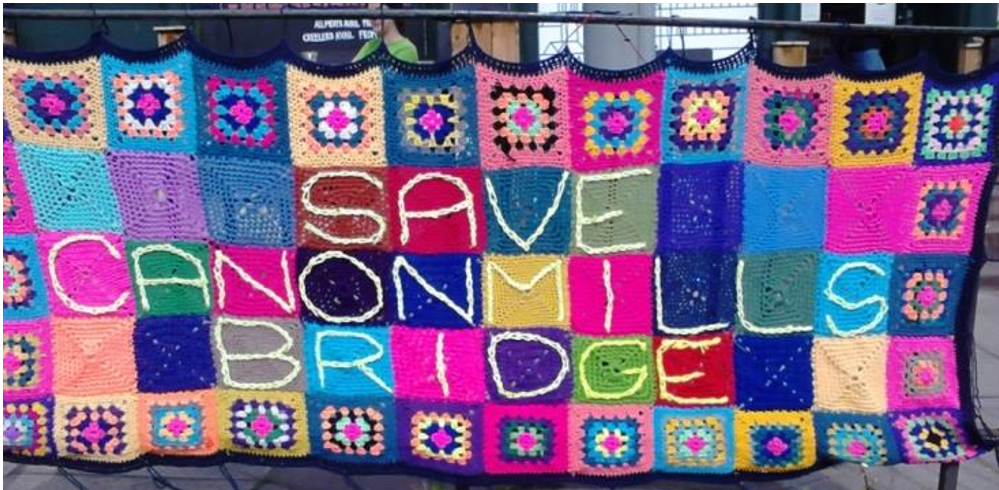
Unlike a digital image created in seconds on "MakeAMeme.org," a crocheted banner represents hours of anonymous labor. Interviewees noted that the visible "effort" acted as a proxy for the creator's passion. If someone spent weeks crocheting "Save Canonmills Bridge," the message gained an automatic weight of sincerity that a typed tweet lacks.
2. Emotional Resonance and Memory
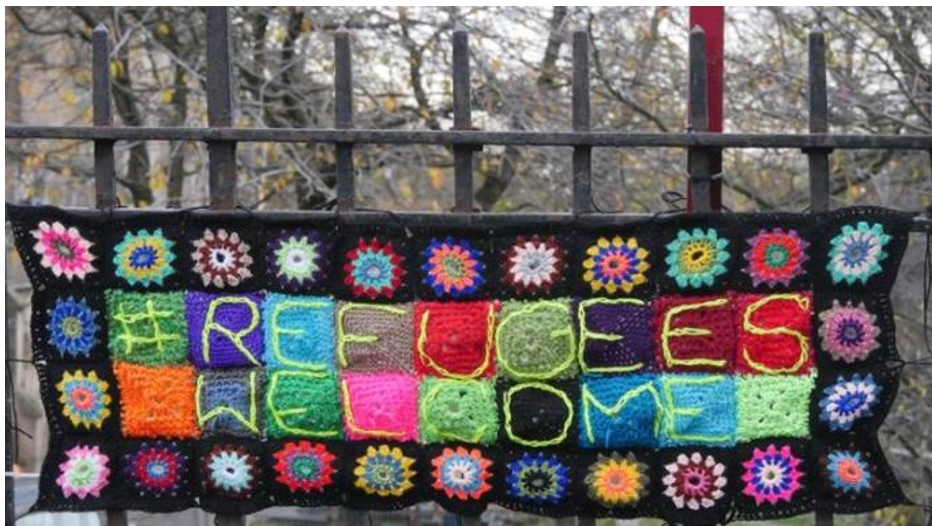
The banners often triggered "warm" emotions. For many, crochet is associated with grandmothers, family, and domestic safety. When these techniques are used to protest refugees' rights or the destruction of historic buildings, it creates a "quiet conversation" rather than a "shouting match."
3. Placing the Meme
Crucially, these banners are place-based. They are attached to the very railings or scaffolding of the buildings they are trying to save. When photographed, they carry the "aura" of that physical location into the digital feed, making the protest feel grounded and real.
Results & Insights
The research found that these banners effectively "hacked the attention" of social media users. Even if a user disagreed with the specific political stance (such as anti-tram developments), they often respected the medium. This "tension" is a rare find in the echo chambers of social media, where disagreement usually leads to immediate blocking or vitriol.
However, the study also noted limitations:
- Virality vs. Depth: Most participants felt these weren't "true" memes because they didn't spread globally or instantly. They were "micro-concepts in a tiny basket."
- Representation: Tension arose when a banner claimed to speak for a whole community (e.g., "[District] says NO"), causing frustration among locals who felt their identity was being hijacked by an anonymous crafter.
Conclusion: A New Fabric for Democracy
The takeaway for researchers and activists is clear: the offline history of digital content matters. In an era of AI-generated content and "fast-food" opinions, the "crocheted meme" represents a form of "progressive activism"—one that is non-destructive, deeply personal, and surprisingly effective at demanding attention in a crowded digital economy.
The future of democratic participation might not just be about better algorithms, but about finding ways to weave the physical effort of our lived lives back into our digital expressions.