
Alpine Meadow: Democratizing Data Science through Interactive ML Pipelines
Democratizing Data Science through Interactive Curation of ML Pipelines
The paper introduces Alpine Meadow, a first-of-its-kind interactive Automated Machine Learning (AutoML) system. It utilizes a combined systemic and algorithmic approach, leveraging rule-based optimization, cost-aware Multi-Armed Bandits (MAB), and Bayesian Optimization (BO) to achieve SOTA performance with interactive latencies.
TL;DR
Building high-quality Machine Learning (ML) pipelines typically requires a rare intersection of domain expertise and statistical wizardry. Alpine Meadow is a breakthrough AutoML system that shifts the paradigm from "batch-processing" to "interactive curation." By fusing database query optimization techniques with Bayesian logic and Multi-Armed Bandits, it produces SOTA pipelines in seconds rather than hours, allowing users to guide the search process in real-time.
The Problem: The "Black Box" Latency Trap
Traditional AutoML frameworks (e.g., auto-sklearn, TPOT) operate on a "submit and wait" model. They treat the entire pipeline space—from data cleaning to model selection—as one massive, complex optimization problem.
This leads to two major pain points:
- Exclusion of Domain Experts: If a system takes three hours to suggest a model, a doctor or analyst cannot "course-correct" the search if they see the model relying on questionable features.
- The Cold Start & Complexity: Optimization in highly heterogeneous spaces is slow. Purist deep learning approaches fail on small datasets (common in industry), and existing tools don't efficiently use history to speed up new, similar tasks.
Methodology: Thinking Like a Data Scientist
Alpine Meadow's core "secret sauce" is its hierarchical optimization strategy. Instead of a flat search, it mimics the iterative workflow of an expert:
1. Rule-Based Search Space
The system uses Primitive, Parameter, and Enforcement Rules to generate "Logical Plans" (e.g., "Scale Encode SVM"). This ensures that only feasible, best-practice pipelines are even considered, significantly reducing the search space.
2. The Two-Layer Optimizer
- Logical Selection (MAB): It treats logical plans as "arms" in a Multi-Armed Bandit problem. It balances exploitation (using historically successful plans) and exploration (trying new ones). The selection is "Cost-Aware," prioritizing faster pipelines to maintain interactivity.
- Physical Selection (BO): Once a logical plan is chosen, Bayesian Optimization (SMBO) handles the "Physical Plan" by fine-tuning hyperparameters.
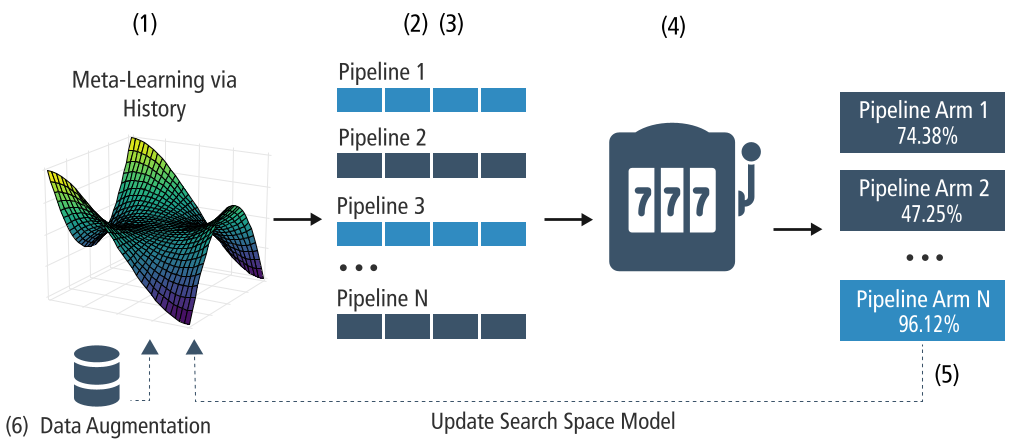 Figure 1: The Alpine Meadow Optimization Loop: From Logical Plans to Incremental Execution.
3. Adaptive Pipeline Selection (APS)
To achieve sub-second response times, Alpine Meadow uses Progressive Pruning. It trains models on increasing sample sizes (). If a pipeline's training error on a small sample is already worse than the best-seen validation error, the system "kills" it immediately (the Halting Criterion).
Experiments: Performance at Speed
The authors tested Alpine Meadow on over 300 datasets from the DARPA D3M competition. Unlike competitors, it supports Tabular, Image, Audio, and Graph data.
Key Findings:
- Interactivity: Alpine Meadow found initial solutions for 1/3 of datasets in < 1 second. In contrast, auto-sklearn often took over 100 seconds to generate its first valid output.
- Accuracy: It consistently held a higher average rank than TPOT and auto-sklearn over time, proving that speed does not come at the cost of quality.
- Expert Comparison: In 80% of unseen datasets, the system outperformed human-generated solutions.
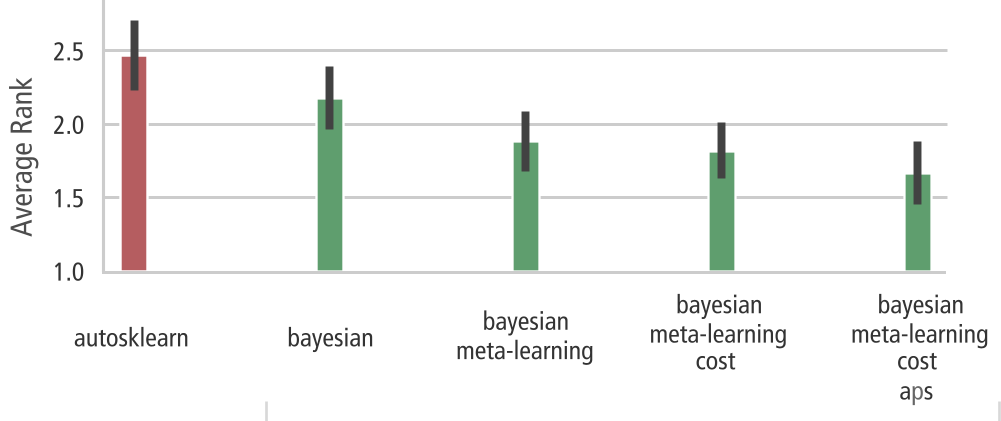 Figure 2: Success over time compared to state-of-the-art baselines.
Critical Insight & Conclusion
The brilliance of Alpine Meadow lies in its recognition that AutoML is a Query Optimization problem. By re-interpreting ML pipelines as logical and physical plans—and using bandits to manage the cost-quality tradeoff—the authors have created a tool that finally moves ML model building into the realm of interactive data exploration (similar to BI tools like Tableau).
Future Work: The authors aim to expand into "Data Augmentation," where the system doesn't just find a model but actively suggests new features or external data to improve performance—further bridging the gap between automated tools and human intuition.
Takeaway
For practitioners, Alpine Meadow signifies a shift toward Augmented Intelligence. It isn't about replacing the data scientist; it's about providing a high-speed "search engine" for models that allows the human to focus on high-level domain strategy.