
Denouncing Sexual Violence: How Culture and Language Rewrite the #MeToo Narrative
Denouncing Sexual Violence: A Cross-Language and Cross-Cultural Analysis of #MeToo and #BalanceTonPorc
This paper presents a cross-language and cross-cultural quantitative analysis of the #MeToo movement using LIWC-based linguistic modeling. It compares English #MeToo tweets with the French #BalanceTonPorc and examines cultural variations in #MeToo usage between the US and India to understand how global social movements are localized.
Executive Summary
TL;DR: The global #MeToo movement is not a unified digital monolith but a collection of culturally distinct "voices." By comparing French and English hashtags and US vs. Indian contexts, this study reveals that while the US focuses on survivor solidarity, the French movement is more accusatory, and the Indian movement is deeply intertwined with religious and societal critique.
Positioning: This work moves beyond "Hashtag Activism" as a general concept, offering a rigorous quantitative autopsy of how the Framing Theory manifest in social computing. It transitions from a "What happened" perspective to a "How does culture define the response" analysis.
Problem & Motivation: The Illusion of Global Unity
Most social media research treats global trends as uniform. However, sexual violence is a deeply "gendered-and-cultural" phenomenon. The authors hypothesize that the linguistic lens of a community acts as a primary filter. For instance, does the shift from the empathic #MeToo to the aggressive #BalanceTonPorc ("Expose Your Pig") change the psychological content of the discourse? The study seeks to prove that language and place are not just conduits for a message, but the creators of its core meaning.
Methodology: The Anatomy of a Tweet
The researchers utilized a comparative framework across four distinct datasets, utilizing LIWC (Linguistic Inquiry and Word Count) to extract psychological signatures.
The Data Strategy
- Cross-Language: English (#MeToo) vs. French (#BalanceTonPorc).
- Cross-Culture: English #MeToo in the US vs. India.
- Stability Control: Neutral datasets (sports, TV) to ensure findings weren't just artifacts of general language structure.
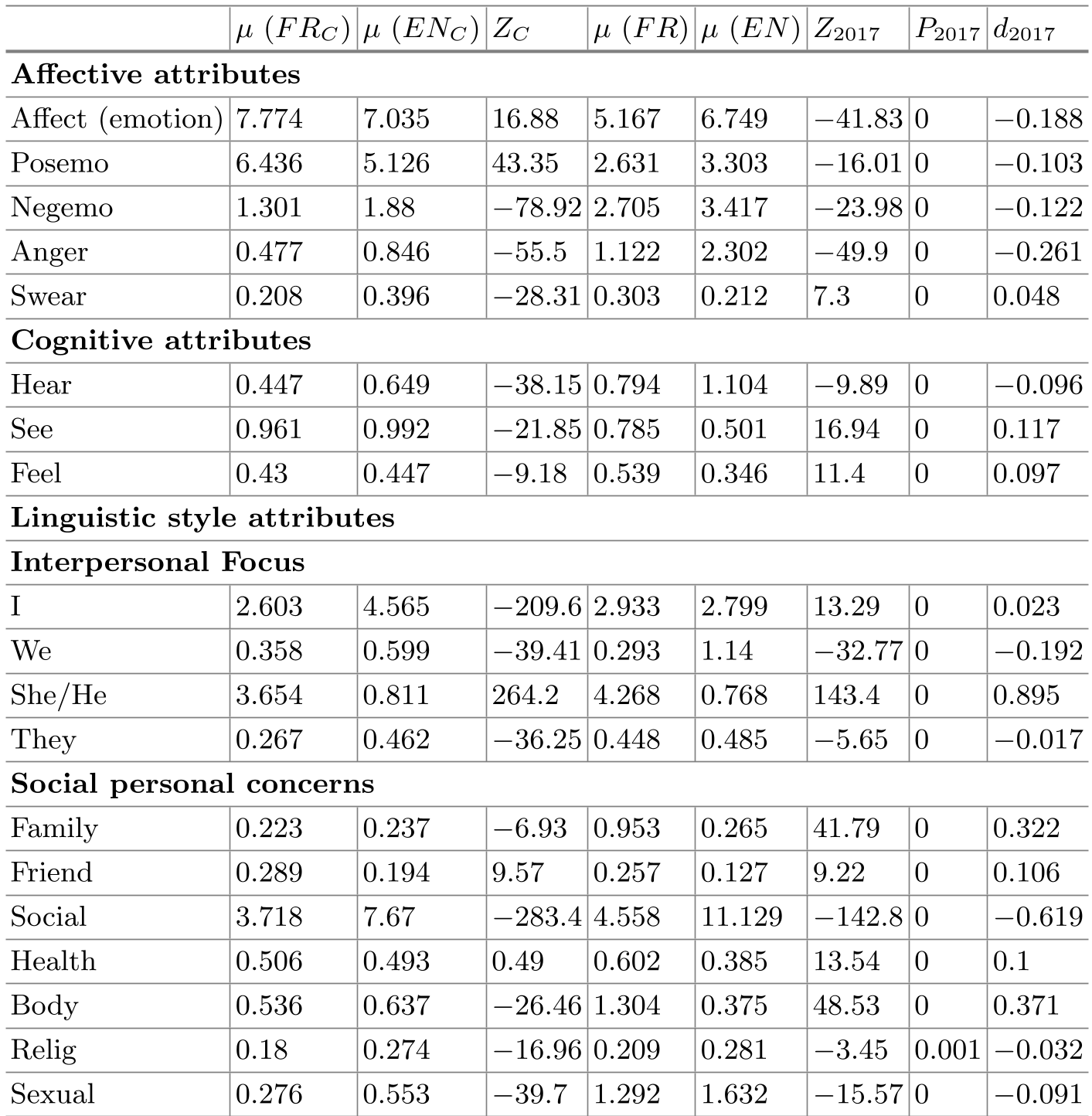
The methodology moves beyond simple sentiment analysis (positive/negative) by looking at Interpersonal Focus (who are we talking about?) and Social Concerns (family, body, religion).
Key Insights: Solidarity vs. Denunciation
1. The French "Accusation" vs. the English "Solidarity"
The analysis shows a stark contrast in "framing." The English #MeToo suggests a collective "us," while #BalanceTonPorc is an imperative to "out" someone else.
- Accusatory Tone: French tweets were significantly more vulgar and used aggressive language, focusing on the perpetrator.
- The Narrative "I": French users were more likely to use first-person pronouns to describe specific, detailed accounts of assault, whereas English users used "We" 90% more often, signaling a focus on social cohesion.
2. The Cultural Divide: India vs. the USA
Even when the language (English) and the hashtag (#MeToo) are identical, the cultural context remains dominant.
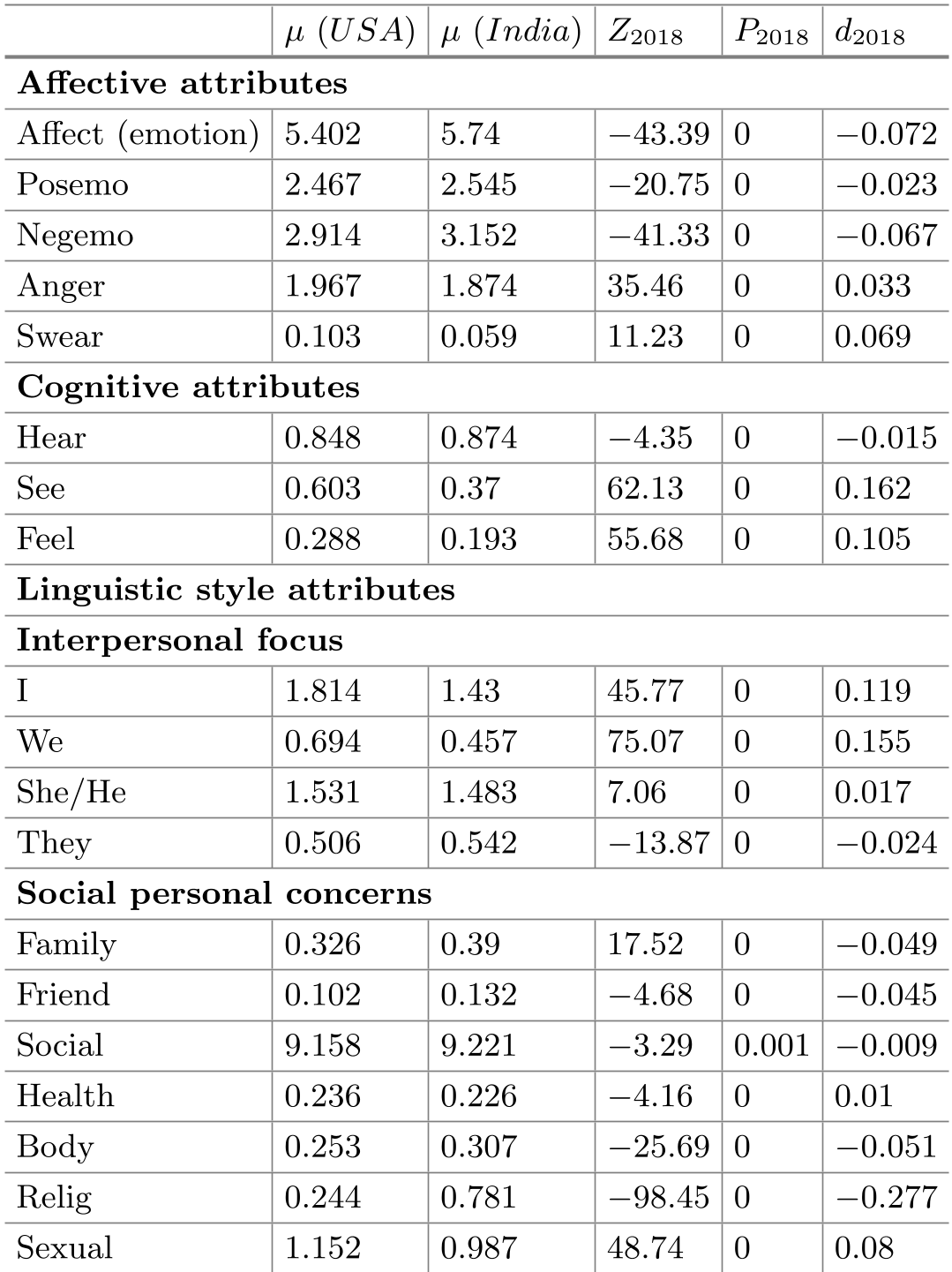
- Social & Religious Anchors: Tweets from India were far more likely to mention Religion (z-score difference of -98.45) and Society, reflecting a struggle against institutionalized norms rather than just individual perpetrators.
- Implicit vs. Explicit: US tweets used more explicit sexual terminology, whereas Indian tweets were more "veiled" in language but more likely to denounce men as a collective group.
Critical Analysis & Conclusion
Takeaway
The study successfully demonstrates that localization is the true engine of social media movements. The movement's efficacy depends on its "fit" within the local social reality. In France, the movement became a weapon of public shaming; in the US, a blanket of support; in India, a critique of the social and religious fabric.
Limitations
A major limitation is the reliance on the 2007 LIWC dictionary to maintain consistency between languages, potentially missing nuances captured by newer NLP models (like Transformers or LLMs) that understand context better than word-count tools. Furthermore, the analysis is limited to Twitter, which represents a specific demographic of tech-savvy, often urban users.
Future Outlook
Future research should investigate if these "frames" persist over time or if they eventually merge into a global standard. Additionally, applying this framework to visual social media (Instagram/TikTok) could reveal whether imagery bridges the cultural gaps that language maintains.