
Precise Dental Age Estimation: Leveraging Least Squares Regression for East Asian Populations
Dental Age Estimation in East Asian Population with Least Squares Regression
This paper introduces a machine learning approach using Least Squares Regression (LSR) for dental age estimation in the East Asian population. By leveraging Tooth Development Stages (TDS) as features, the method achieves significantly higher accuracy and lower bias compared to traditional forensic standards like Demirjian’s and Willem’s methods.
TL;DR
Researchers have successfully applied Least Squares Regression (LSR) to dental age estimation, solving the long-standing "overestimation bias" found in traditional methods like those of Demirjian and Willem. By treating tooth development stages as machine learning features, the model achieved a near-zero mean error (roughly 0.02 years) on a large dataset of 1,695 East Asian subjects.
Problem & Motivation: The Limits of Experience-Based Tables
In forensic science and clinical dentistry, estimating biological age from teeth is often more reliable than bone age due to lower developmental variability. However, the gold standards—Demirjian’s and Willem’s methods—were developed decades ago based primarily on Caucasian populations.
When these methods are applied to East Asian populations, they fail in two major ways:
- Systematic Overestimation: They frequently predict a "dental age" much higher than the actual chronological age.
- Lack of Adaptability: These methods rely on hard-coded maturity scoring tables that cannot "learn" or adjust to the specific growth patterns of different ethnic groups.
The authors recognized that dental maturity stages are not just categories but ordinal signals—perfect inputs for a regression-based machine learning model.
Methodology: From Clinical Stages to Linear Weights
The core innovation lies in transforming the qualitative Tooth Development Stages (A through H) into quantitative features for a regression model.
1. Data Feature Engineering
The research utilized 1,695 orthopantomograms. Following the Demirjian framework, seven permanent teeth from the left mandible were analyzed. The authors mapped the maturity letters (A-H) to integers (1-8).
2. The Least Squares Model
Instead of using a lookup table, the researchers defined the dental age () as a linear combination of these stages: Where:
- : Maturity stage of tooth .
- : Learned weights for each tooth's contribution to age.
- : Bias constant.
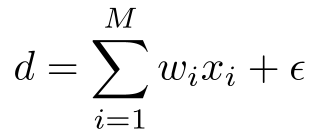
By minimizing the Sum of Squared Residuals (SSR), the model finds the "line of best fit" that represents the average growth trajectory of the Shanghai-based sample population.
Experiments & Results: A New Ceiling for Accuracy
The study compared the new LSR approach against the Demirjian and Willem baselines using Analysis of Variance (ANOVA) and Root-Mean-Square Error (RMSE).
Performance Breakthrough
The results showed a dramatic reduction in error:
- Demirjian Error: Overestimated age by ~1.05 years (boys) and ~1.34 years (girls).
- LSR Method Error: Achieved a mean difference of only 0.029 years (boys) and 0.026 years (girls).
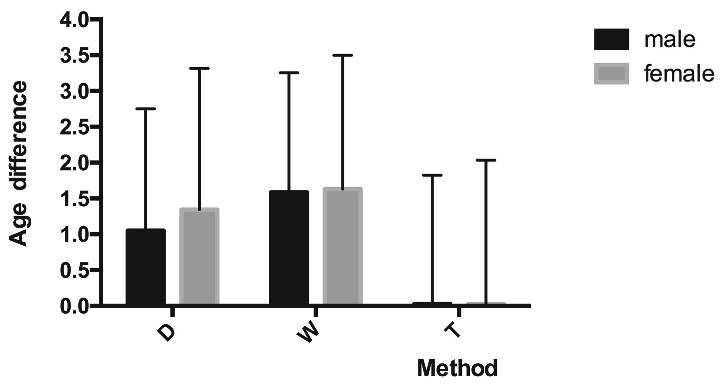 Fig 1: Notice how the LLS method (labeled "Our method") centers tightly around the zero-error axis compared to the significant upward bias of the traditional methods.
RMSE Comparison
| Method | Male RMSE | Female RMSE |
|---|---|---|
| Demirjian | 1.998 | 2.384 |
| Willem | 2.302 | 2.485 |
| LSR (Proposed) | 1.794 | 2.008 |
The lower RMSE confirms that not only is the bias removed, but the overall prediction is more consistent.
Critical Analysis & Conclusion
Takeaway
The value of this paper isn't just in the specific coefficients found for the East Asian population, but in the methodological shift. It demonstrates that for biological metrics, "hard" tables should be replaced by "soft" learnable models that can be re-trained for any specific sub-population (e.g., geographically or nutritionally distinct groups).
Limitations & Future Work
- Population Specificity: The authors acknowledge that while this model is highly accurate for East Asians, it would likely require re-training for other ethnic groups.
- Technological Evolution: The current study still relies on human experts (six observers) to label the stages. The next logical step is integrating Computer Vision (e.g., CNNs) to automatically classify these stages from the radiographs.
Ultimately, this work serves as a vital bridge between traditional forensic odontology and modern data science, proving that even simple regression can outperform decades-old manual standards.