
Engineering Trust: A Formal Framework for Social Network Group Dependability
Dependability of social network groups
The paper introduces a formal framework for Social Network Groups (SNGs)—small-scale business collectives—and proposes a computational model for their "dependability." Utilizing reliability engineering principles, it defines SNG dependability through quantified metrics of availability, reliability, and maintainability to foster collaborative product development.
TL;DR
In the world of small-scale business collectives, known as Social Network Groups (SNGs), trust is often subjective. This paper, published at the CUBE IT Conference, shifts the paradigm by treating human-centric business groups as "systems" that can be measured using cold, hard reliability engineering metrics. By formalizing Availability, Reliability, and Maintainability, the author provides a roadmap for quantifying the dependability of social collaborations.
Problem & Motivation: The Risk of Collaboration
SNGs (often evolving from Self-Help Groups) are vital for economic empowerment, especially in marginalized communities. However, they operate with limited resources. To grow, they must collaborate, but choosing a partner is fraught with risk. If a group fails to deliver a task on time, the entire business chain collapses.
The author's insight is profound: SNGs are essentially manufacturing units. Therefore, why not apply the same dependability standards used for high-availability computers or industrial machinery to human groups?
Methodology: The Math of Social Reliability
The paper formalizes SNGs into entities: Members, Resources, and Tasks. A task is not just a job; it’s a time-constrained business process with specific goals and subtasks.
The Core Dependability Pillars
The author breaks dependability into quantifiable components:
-
Availability (): The probability that the SNG is ready to take up a task. Where is Mean Time To Failure and is Mean Time To Repair (recovery from organizational faults).
-
Reliability (): The probability that the SNG will perform its function without failure for a specific duration.
-
Maintainability (): The ease with which an SNG can repair internal faults (e.g., skill gaps, equipment failure) or adapt to new requirements.
State Modeling
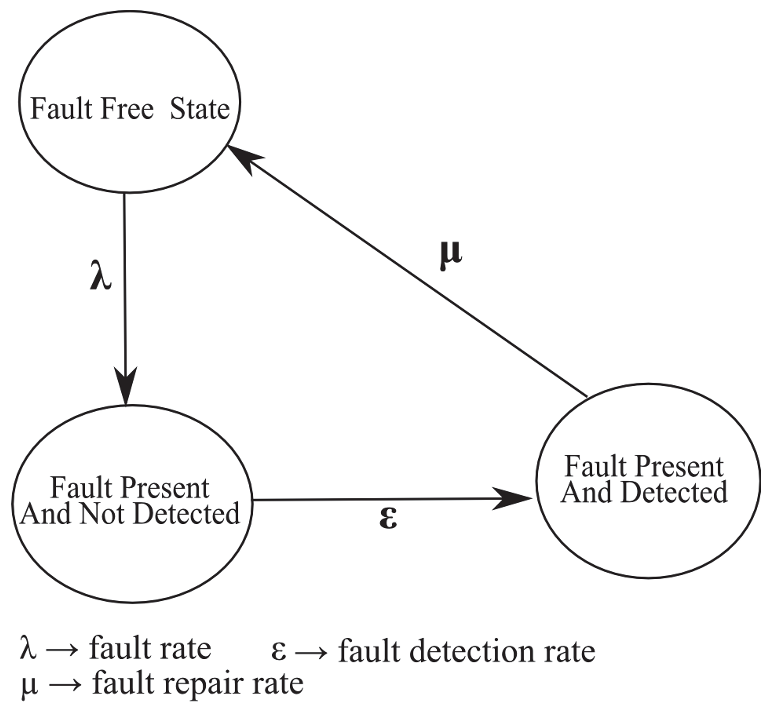
To simplify computation, the author suggests that an SNG exists in one of three minimal states:
- State 1: Fault-free.
- State 2: Fault present but undetected.
- State 3: Fault present and detected.
Insights: The "Human Redundancy" Strategy
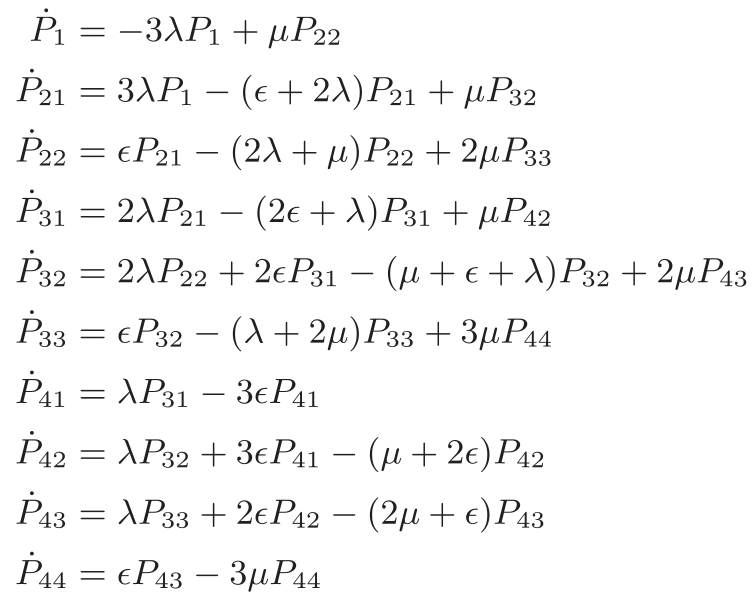
One of the most compelling parts of the methodology is the quantification of Skill Redundancy. In engineering, we use "TMR" (Triple Modular Redundancy). The author proposes a 2-out-of-3 members (2∨3) skill model.
If a group has three members with similar skills, the probability of task success remains high even if one member becomes "unavailable." This transforms a social trait (group composition) into a mathematical safety function .
Critical Analysis & Conclusion
Takeaway
The paper provides a refreshing "systems view" of social organizations. By defining a Metric for Dependability (), it allows for a data-driven approach to social entrepreneurship.
Limitations
- Human Complexity: Unlike hardware, human "failure rates" () are highly unpredictable and influenced by external social factors not fully captured in the exponential distribution formulas.
- Data Acquisition: Measuring in a social context requires rigorous logging of internal group conflicts and resolutions, which may be difficult to implement in real-world marginalized communities.
Future Outlook
As we move toward more automated and decentralized business models (like DAOs), this framework's attempt to bridge the gap between human behavior and reliability mathematics will become increasingly relevant. It lays the groundwork for "Social Reliability Engineering."