
Depression Management as Lifestyle Management: Why "Everyday Tools" Trump Specialized Apps
Depression Management as Lifestyle Management: Exploring Existing Practices and Perceptions Among College Students
This paper explores how U.S. college students manage depression using a mix of digital and non-digital tools. Through a mixed-methods survey of 109 students, the authors identify that depression management is conceptualized by students as "lifestyle management," where general-purpose tools (like social media and paper planners) are habitually appropriated for therapeutic ends.
TL;DR
For college students, depression isn't managed in a vacuum—it's managed between lectures, social media scrolls, and study sessions. This research reveals that students don't just want clinical apps; they want tools that help them manage their lifestyle. Surprisingly, non-digital tools like paper and art are often perceived as more effective than digital ones, serving as vital outlets for catharsis that digital screens struggle to replicate.
The "Clinical" vs. "Lived" Gap
The tech industry is currently obsessed with "digitizing" therapy—pumping out thousands of depression-tracking apps that often sit unused. The problem? Most of these tools treat depression as a medical condition to be "fixed" rather than a daily experience to be "managed."
The authors of this study argue that we have overlooked the existing practices of students. Before we build the next AI therapist, we need to understand the "toolboxes" students have already built for themselves.
Methodology: Listening to the Student "Toolbox"
The research team surveyed 109 college students with varying levels of depression (mean BDI-II score of 28.16, indicating moderate-to-severe symptoms). They didn't just ask about apps; they asked about everything used to cope.
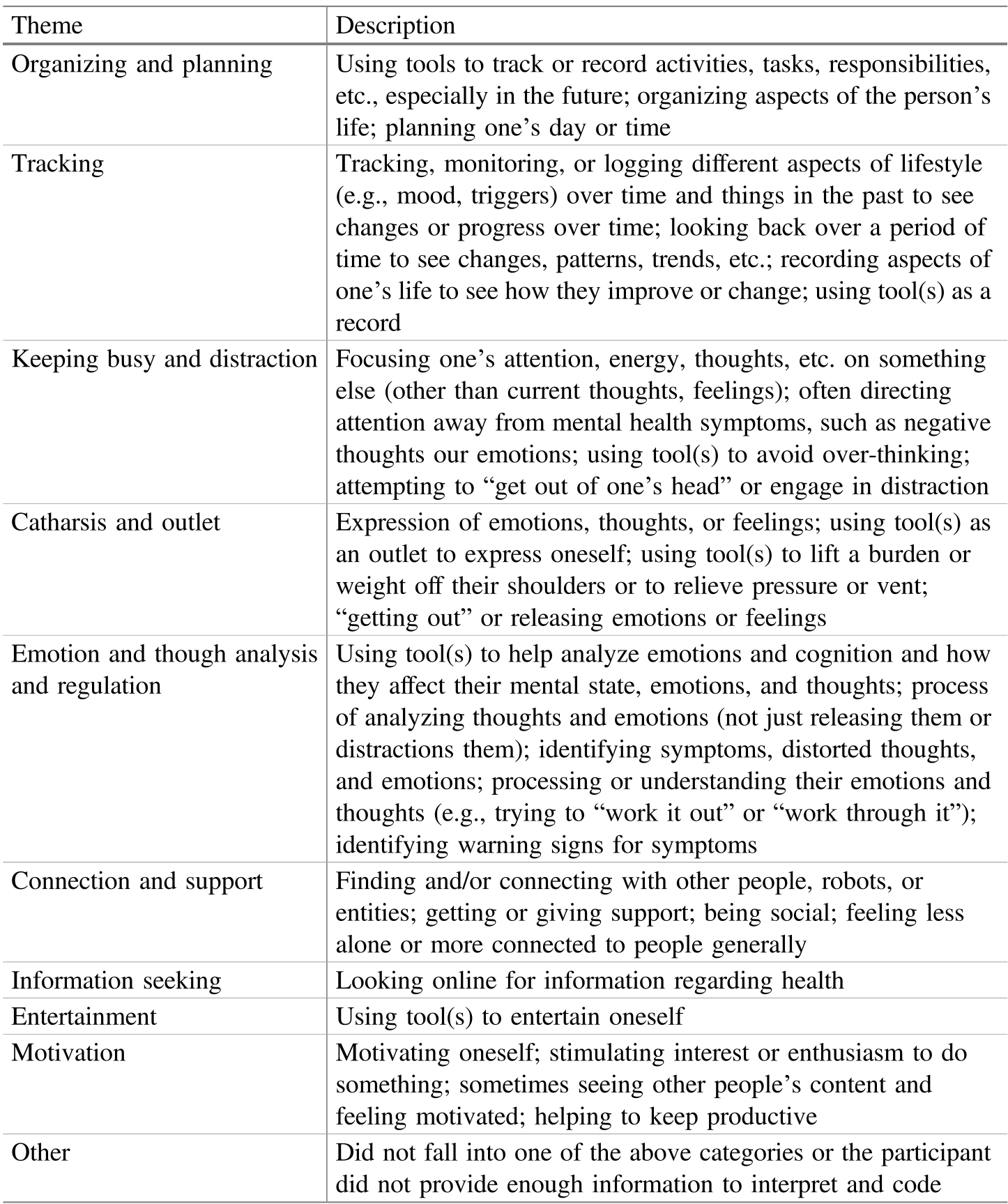
The Qualitative Taxonomy of Self-Management
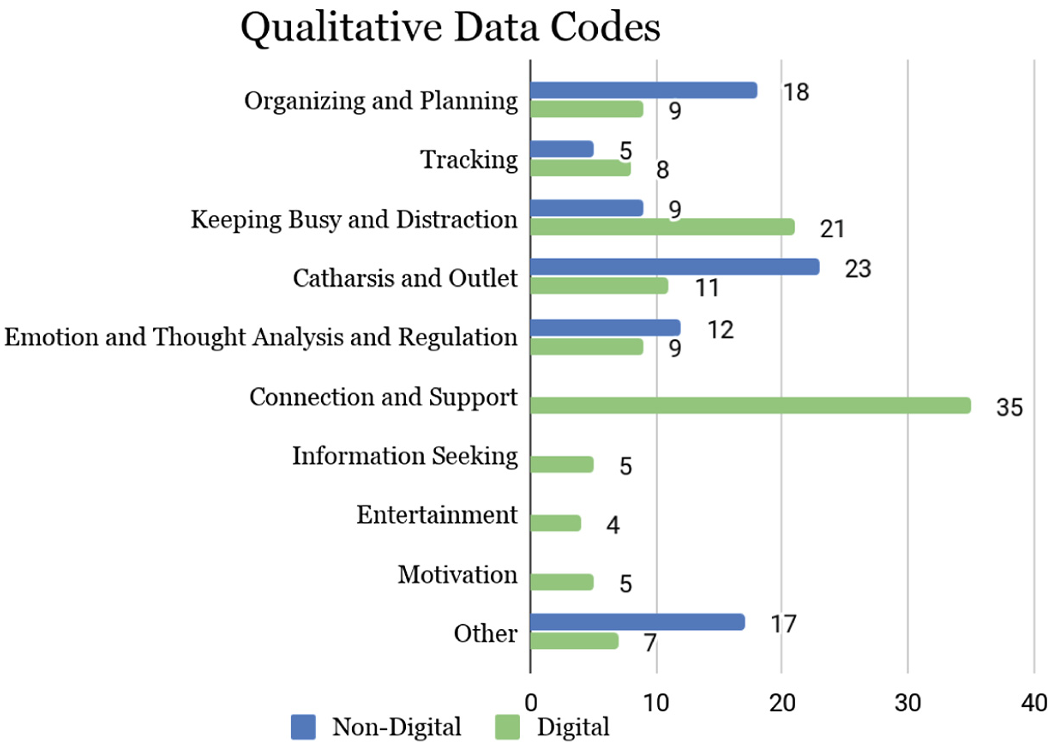
Through inductive coding, the researchers identified how students actually use their tools. The contrast between digital and non-digital affordances is striking:
Key Insight 1: The Surprising Dominance of Non-Digital Tools
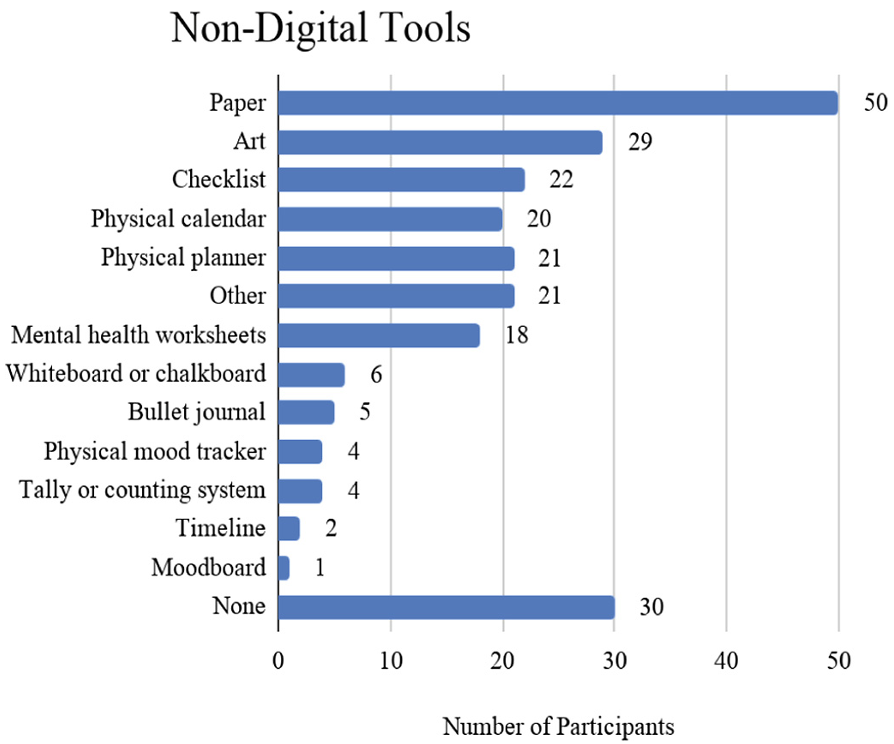
While we assume Gen Z is "digital native," 71.5% of participants utilized non-digital tools like paper, art, and physical checklists.
- Catharsis and Outlet: Students overwhelmingly preferred paper for "venting." As P15 noted, the ability to physically throw away a piece of paper after venting provides a sense of closure that deleting a digital file does not.
- Efficacy: 66.7% of students found non-digital tools effective, beating out the 59.8% who said the same for digital tools.
Key Insight 2: Digital Tools for Connection and Distraction
Digital tools (used by nearly 80% of the sample) serve a different purpose. They aren't usually for "processing" emotions but for Connection and Keeping Busy.
- The Double-Edged Social Media Sword: YouTube and Discord provide "semi-endless distraction" from intrusive thoughts and a sense of "anonymity" (as seen in Fig 4). However, students also acknowledged the risks of "social comparison" which can exacerbate symptoms.
- Appropriation: Students rarely used specialized "Depression Apps." Instead, they appropriated general tools. Google Docs became heart-felt unsent letters; YouTube became a tool for "vegging out" of bad thoughts.
Rethinking Design: Depression Management is Lifestyle Management
The core takeaway is profound: Illness management is inseparable from academic and life management.
Students use checklists and calendars to avoid the "overwhelm" that triggers depression. If a student is too depressed to get out of bed, an app that only tracks "mood" is less helpful than a tool that helps them break a scary academic task into manageable pieces.
Critical Analysis & Future Directions
- Integration over Isolation: Future digital mental health tools should perhaps live inside productivity apps (like Notion or Google Calendar) rather than being separate clinical islands.
- Privacy & Control: The preference for physical paper highlights a latent need for absolute privacy and the "tactile" release of venting.
- Limitations: The study sample was relatively homogeneous (majority White, female). Cultural differences in how "lifestyle" is managed remain a key area for future inquiry.
Final Thought
We don't need "smarter" depression apps as much as we need "more empathetic" lifestyle tools. By understanding that a student’s paper planner is as much a mental health tool as a therapy session, we can begin to design systems that actually fit into the messy, stressful reality of college life.