
Bridging the Physical and Social: An AR-Driven Approach to Social Media Connectivity
Design and Development of Applications on Smartphone of Connection to Social Media Via 3D
This paper presents a smartphone application on the Android platform that connects users to social media profiles using Augmented Reality (AR) and 3D models. By scanning physical markers, the app triggers 3D animations that facilitate quick access to digital personal information, aiming to modernise and simplify the process of establishing social connections.
TL;DR
This research introduces a novel Android application that utilizes Augmented Reality (AR) to streamline social media connections. By scanning physical markers with a smartphone, users can view 3D animations that provide instant links to personal profiles, effectively eliminating the manual search process and enhancing the user experience through 3D visualization.
Implementation Motivation: Beyond the "Search Bar"
In our current "Social Rush" era, connecting with someone new on social media remains surprisingly manual. We often find ourselves spelling out usernames or scrolling through a list of identical names to find the right profile. The author argues that this process is redundant and time-consuming.
The insight behind this project is to turn physical everyday items—like bags or accessories—into "markers" that carry digital identities. By blending the "Real" and "Virtual" worlds, the researchers sought to make digital connection as simple as a single camera scan.
Methodology: The AR Pipeline
The system architecture relies on a standard AR pipeline involving image analysis and 3D rendering. The development stack includes:
- 3D Modeling: Created using Autodesk 3ds Max 2012 to build custom 3D graphics for different user categories.
- AR Engine: Developed using Unity coupled with the Vuforia plugin, which handles marker detection and pose estimation.
- Platform: Native Android SDK deployment.
The application follows a three-step internal process:
- Image Analysis: Finding the printed Marker and comparing it against a pre-defined database.
- Pose Estimation: Calculating the 3D angular position of the marker relative to the smartphone camera.
- 3D Rendering: Overlaying the digital 3D model onto the real-world view in real-time.
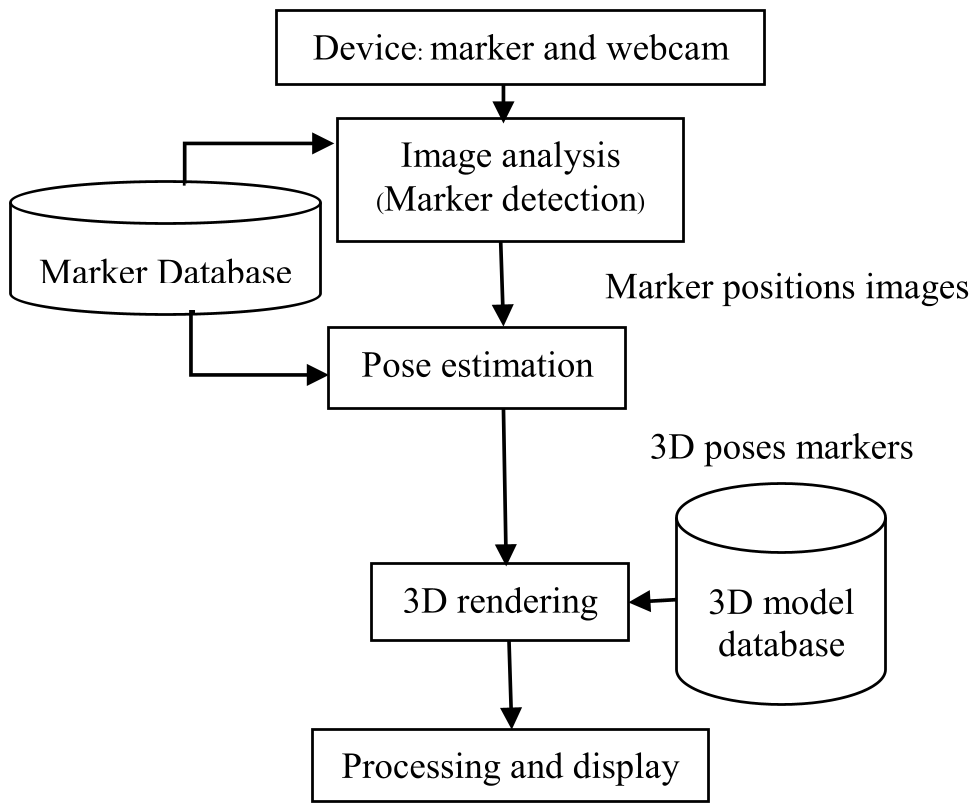 Fig 1. Operation of virtual reality/AR technology within the app.
Experiments & Results
The app was evaluated by both technical experts and a sample group of 30 users. The evaluation focused on three pillars: 3D Graphic Quality, Application Functionality, and User Interaction.
Professional Benchmarks
Experts rated the visual components highly:
- Modern 3D Graphics: 4.33/5.0
- Interactive Forms: 4.33/5.0
- Running Speed: 4.33/5.0
User Satisfaction
The sample group highlighted the interaction potential of the app, giving it a score of 4.39 for User Interaction. Users noted that the application was particularly effective at "saving time" when reaching social media compared to traditional methods.
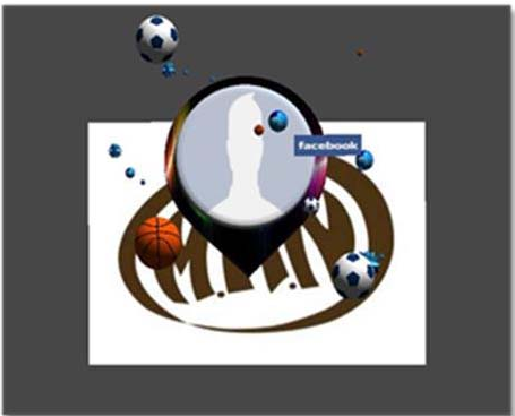 Fig 2. The results of the augmented reality system design for media technology.
Critical Analysis & Conclusion
Takeaway
The study successfully proves that AR can serve as a functional bridge between physical presence and digital identity. By turning static markers into interactive 3D buttons, the research moves the concept of the "business card" into the 21st century.
Limitations
- Hardware Dependency: The research is focused on Android systems and relies heavily on environmental lighting for successful marker scanning.
- Marker Necessity: The current iteration requires a physical printed marker; future work could explore "markerless" AR (using SLAM technology) to identify people or objects without pre-printed tags.
Future Outlook
This technology has significant potential beyond simple social links. It could be integrated into E-Museums, Smart Campus guides, or even retail, where scanning a product doesn't just show a price, but a 3D interactive story of the brand's social presence.