
Designing for Collective Intelligence: The Rise of Pop-up Communities in MOOCs
Design for collective intelligence: pop-up communities in MOOCs
This paper introduces the concept of "Pop-up Communities" within the context of the HANDSON MOOC, a teacher-training program designed to foster collective intelligence. By employing a social design that transitions from facilitator-led to peer-to-peer interaction, the study demonstrates that a genuine sense of community can emerge even among "networked individuals" in a massive online setting.
Executive Summary
TL;DR: In an era dominated by "networked individualism," where online learners often act as isolated agents, this paper explores how specific "Social Designs" can trigger the emergence of Pop-up Communities. By analyzing the HANDSON MOOC project, the researchers prove that massive online courses can transition from instructor-centric models to autonomous, peer-driven ecosystems that harness collective intelligence.
Background Positioning: This work sits at the intersection of Social Design and Networked Learning. It moves beyond the traditional xMOOC vs. cMOOC debate by proposing a middle ground: temporary, goal-oriented social structures that serve the "common good" without requiring long-term commitment.
The Problem: The Loneliness of the Networked Individual
The primary challenge identified by the authors is Networked Individualism. As defined by Rainie and Wellman, users in a networked world connect primarily to achieve personal goals. In education, this manifests as learners who prioritize facilitator feedback over peer interaction, viewing the "crowd" as a distraction rather than a resource.
The authors argue that this trend threatens the "Collective Intelligence" necessary for deep learning. If every learner remains an island, the potential for mutual growth and "common good" inside a MOOC is lost.
Methodology: Engineering Social Synergy
To solve this, the HANDSON MOOC underwent two iterations of design based on the ACAD framework (Goodyear and Carvalho).
1. Epistemic Design (The Tasks)
The course adopted a "Learning Design Studio" approach. Participants weren't just consuming content; they were tasked with creating an ICT-based lesson plan. This project-based requirement made peer feedback a functional necessity rather than an optional social extra.
2. Social Design (The Interaction)
The shift between the first and second editions was crucial:
- Multilingual Support: Realizing that language is a barrier to intimacy, the second edition facilitated seven language groups (Greek, Spanish, Bulgarian, etc.).
- Peer Mentoring: Mandatory peer-review tasks were introduced, supported by specific rubrics to ensure feedback quality.
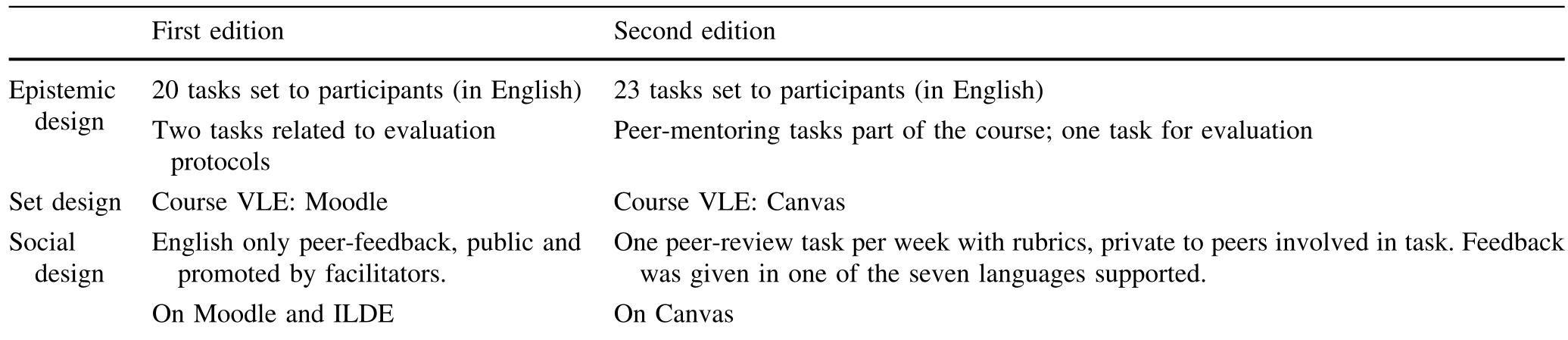 Table 1: Key differences in design between the two MOOC editions.
Collective Intelligence in Action: Results
The study’s analysis of forum interactions reveals a fascinating trend. As the course progressed, the "center of gravity" shifted.
- Facilitator Fade: In the early weeks, facilitators (blue nodes) were the primary drivers of conversation.
- Peer Emergence: By the final weeks, participants (orange nodes) were interacting directly with one another, effectively forming a self-sustaining network.
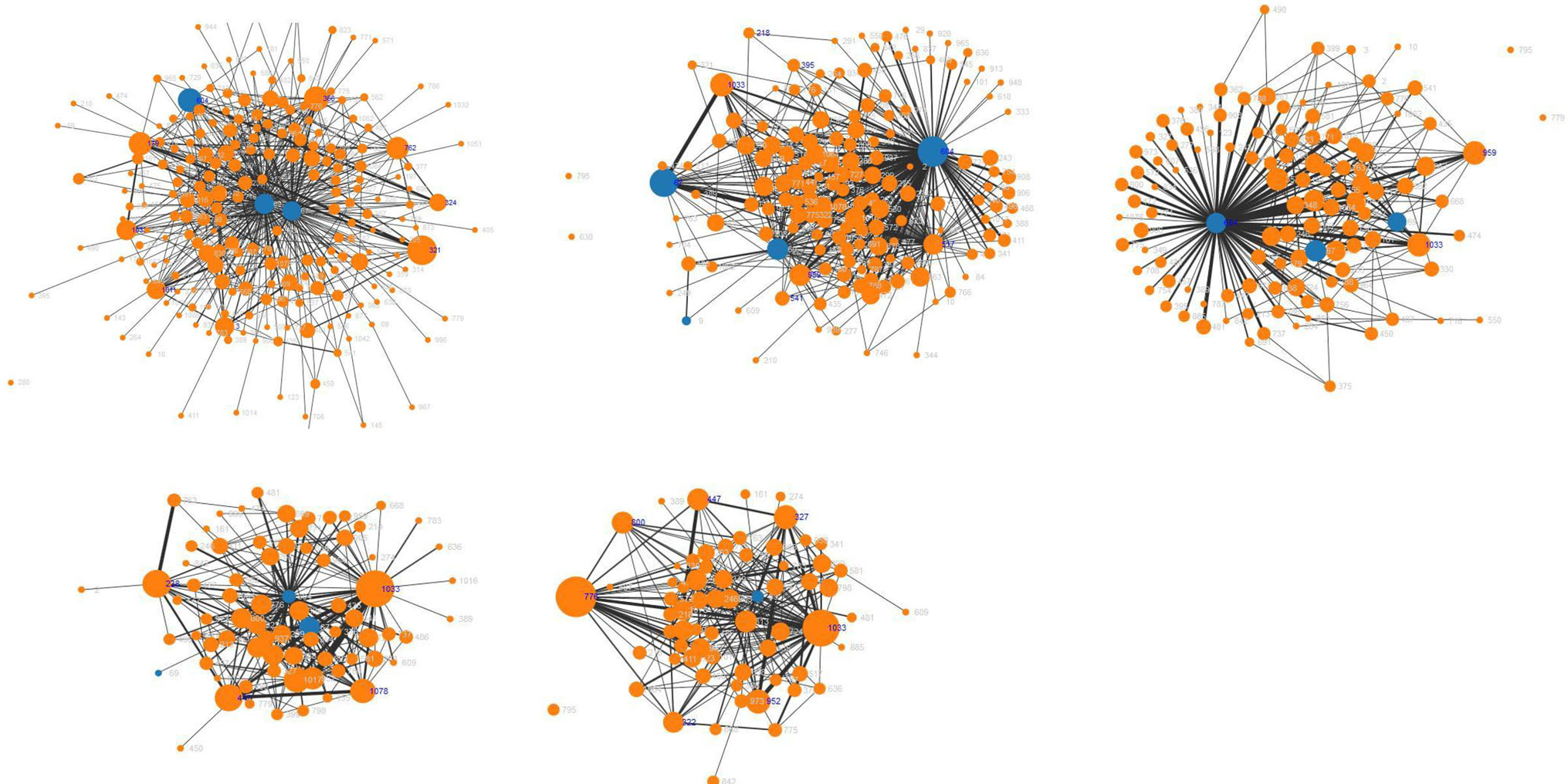 Figure 1: Visualization of the transition from facilitator-led to peer-led interaction over 5 weeks.
The data showed that while learners started with an individualistic mindset (expecting the most value from tutors), they finished with a high appreciation for the sense of community. In the second edition, 74.4% of participants agreed that the course successfully provided a sense of community.
Deep Insight: The Theory of "Pop-up Communities"
The paper’s most significant contribution is the formalization of Pop-up Communities. Unlike traditional "Communities of Practice" which are long-lasting and identity-based, Pop-up Communities are:
- Purposeful: They form to solve a specific task (e.g., peer-reviewing a lesson plan).
- Temporary: They dissolve once the goal is achieved.
- Frictionless: They allow "networked individuals" to enter and exit without the heavy social overhead of traditional groups.
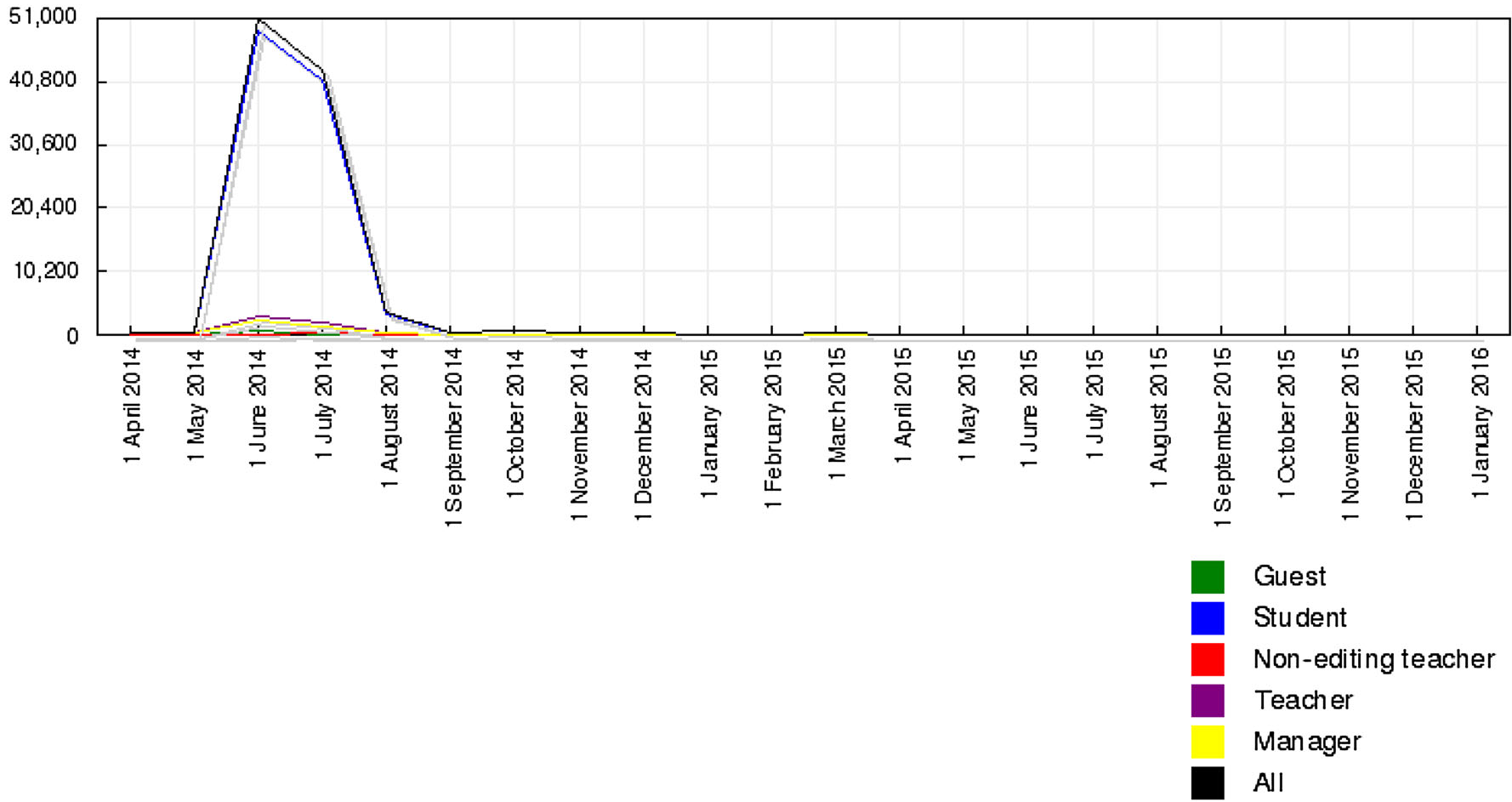 Figure 2: Moodle activity spikes, reflecting the "pop-up" nature of engagement tied to specific course milestones.
Critical Analysis & Conclusion
Takeaway
The research demonstrates that we don't need to fight individualism to achieve collective intelligence. Instead, we should design "socio-technological systems" that facilitate these brief but intense collaborative moments. Pop-up communities act as a "first step" toward the common good, proving that even weak digital links can foster a genuine sense of belonging.
Limitations
A major caveat of this study is the short lifespan of these communities. Post-course surveys showed that once the "pop-up" purpose ended, activity in almost all language groups (except those with pre-existing ties) ceased immediately.
Future Outlook
For future MOOCs and online platforms, the challenge is scalability. Can we use matching algorithms or AI to automatically form these pop-up communities based on learner needs in real-time? The HANDSON project provides the structural blueprint; the next step is automating the "spark" that brings these temporary communities to life.