
Engineered Sociality: A Robust MVC Framework for Scalable Social Networks
Design and Implementation of a Framework for a Social Network Application
The paper presents a framework for a high-performance Social Network Application built on the Yii2 PHP framework. It leverages an MVC architectural pattern and AJAX-driven interactions to create a scalable, secure, and user-centric platform featuring feeds, profiles, and internationalization.
TL;DR
Building a social network from scratch requires more than just a frontend; it demands a rigorous architectural foundation. This paper details the design of a social network using the Yii2 PHP framework, MVC architecture, and Docker, focusing on high performance, secure data flow, and an interactive user experience through AJAX.
The Challenge: Complexity vs. User Experience
In the landscape of social media, the two greatest hurdles are system complexity (managing massive data/traffic) and UX responsiveness. Standard web applications often fail to scale because logic and presentation are tightly coupled. The authors identify that users demand high customizability and privacy, necessitating a back-end that can adapt without breaking.
Methodology: The Architecture of Connection
The backbone of the proposed system is the Yii2 Advanced Framework, selected for its scalability and built-in security features.
1. The MVC Blueprint
To manage the complexity, the authors utilized the Model-View-Controller (MVC) pattern:
- Model: Manages data logic and database rules (ActiveRecord).
- View: Handles the HTML output and representation.
- Controller: Orchestrates the input and commands.
2. Deployment with Docker
Unlike traditional local environments (like XAMPP), the authors advocate for Docker to ensure environment consistency. By separating the web server, database, and application into distinct containers, they achieved a portable "plug-and-play" stack.
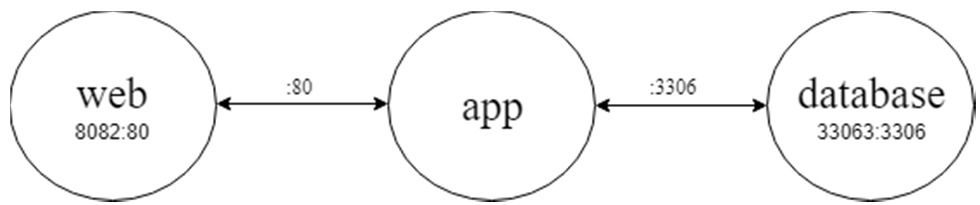 Figure 1: Docker container diagram showing the isolation of App, Web, and Database services.
3. Data Integrity and Migrations
Instead of manual SQL management, the framework uses a migration system. This allows the team to "track" database changes like code, ensuring every developer is working with the same schema.
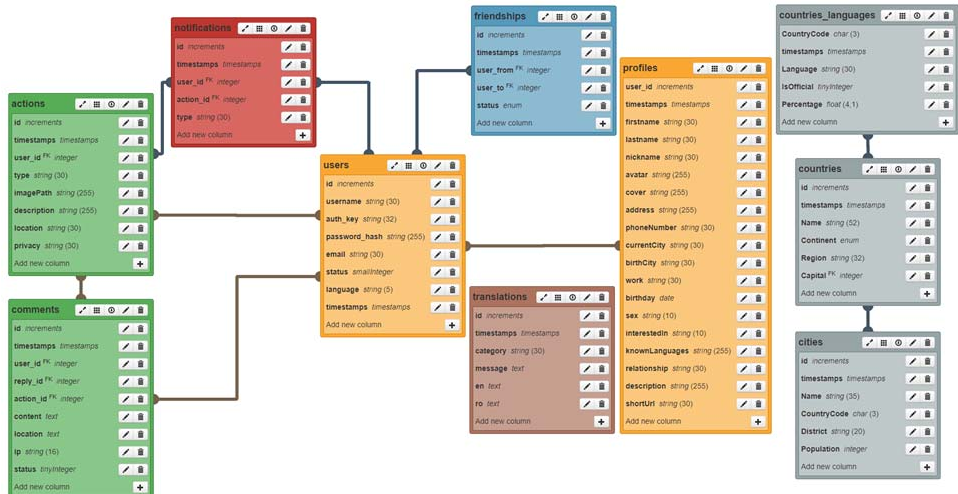 Figure 2: The E-R diagram illustrating the relationships between users, profiles, friendships, and actions.
Implementation Highlights: UX and Interaction
To bypass the "refresh-heavy" nature of traditional PHP, the authors integrated AJAX across the core user flow:
- Dynamic Feeds: The news feed initially loads only 10 posts. As the user scrolls, AJAX fetches the next 10, preventing database saturation and improving initial load speed.
- Asynchronous Notifications: A polling mechanism (every 30 seconds) refreshes the notification bell without a full page reload, providing a "live" feel without the high infrastructure costs of Redis/WebSockets.
- Social Integration: The system utilizes RESTful APIs to allow authentication via LinkedIn, Google, and Twitter.
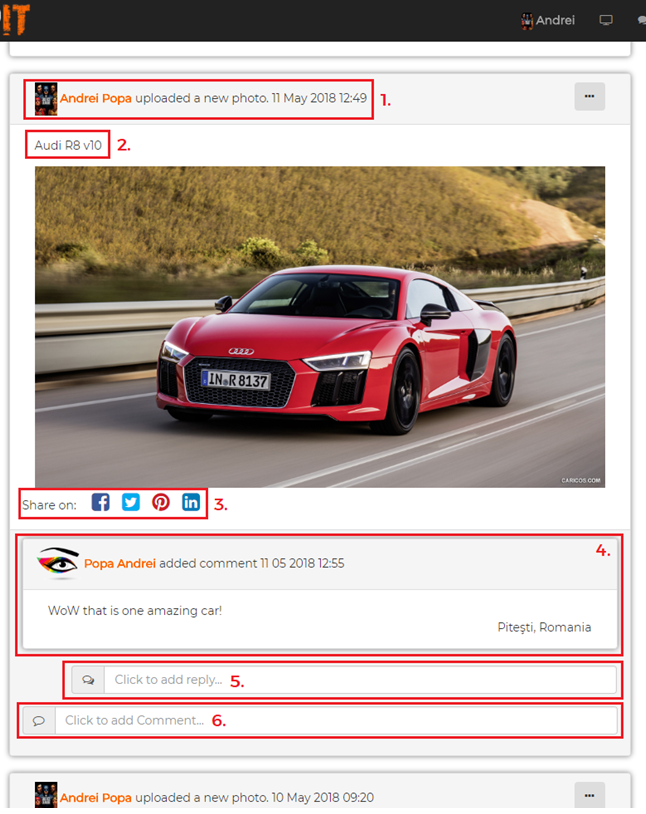 Figure 3: A detailed view of a feed item, showcasing modular rendering of posts, social sharing, and nested comments.
Testing and Real-World Results
The application was successfully deployed on the skipIT.ro domain. During stress testing, the authors identified and patched an XSS vulnerability by implementing server-side sanitization using htmlspecialchars.
Key Technical Metrics:
- Database Optimization: Lazy-loading posts reduced server response time during heavy scrolling.
- Modularity: Views (like the post panel) are reused across the homepage and profiles, drastically reducing code redundancy.
Critical Insight & Conclusion
The true value of this work lies in its scalability-first approach. By choosing the Yii2 Advanced template and Docker, the authors moved away from a "scripting" mindset toward a "software engineering" mindset. While modern frameworks like React or Vue are now dominant for frontends, this paper proves that a server-side MVC framework, if properly combined with AJAX, can still offer a highly competitive and secure social media foundation.
Future Directions: The authors suggest incorporating IP-based GEOLocation and building an internal REST API for mobile (iOS/Android) parity.